Tshwane coalition: DA-Cope trade aimed at ‘stability’
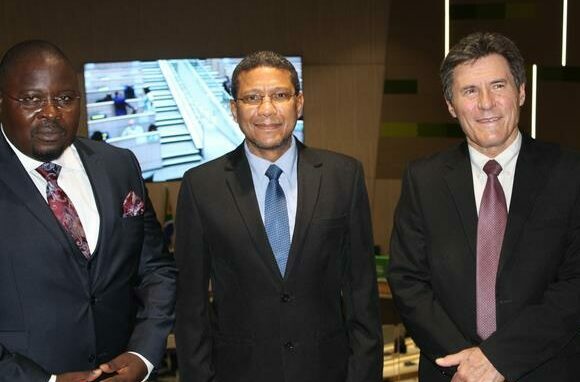
Cope Tshwane regional chairperson Dr Murunwa Makwarela was elected unopposed as the new speaker taking over from DA’s Katlego Mathebe. This is as the DA gave the position to Cope during coalition talks.
The DA “trading” a key position in the Tshwane metro to Cope was a power-sharing move aimed at establishing a stable coalition government.
This was according to a political analyst, as Cope Tshwane regional chairperson Dr Murunwa Makwarela was elected unopposed as the new speaker on Thursday.
Makwarela takes over from the DA’s Katlego Mathebe, who resigned on Tuesday. The “trade” was agreed to between the parties last year.
University of South Africa (Unisa) political analyst Professor Dirk Kotze said the “trade” came as the DA was under pressure to ensure a stable coalition after the previous 2016 coalition’s collapse. This saw the metro being placed under administration as Tshwane residents did not have any ward councillors for seven months.
“The point of departure for any coalition is that they must share power,” said Kotze.
“Previously, the DA occupied all the senior positions (mayor, speaker, chief whip). When you look at that, it was not in the spirit of a coalition government and the idea of power-sharing.
“They had to make changes to ensure that the coalition will be stable for the next five years.”
Kotze said without sharing power, other parties feel less valued. This leads to a collapse of a coalition.
He said the council’s stability was important in Tshwane as the concept of the coalition was “degraded in the past”.
“Many people believe that coalition governments cannot work. There is a lot of pressure on this coalition government to make it work.”
Kotze said the multi-party government needed to build trust among residents.
He said stability was the key to ensuring service delivery.
While some observers were shocked that the speaker position went to Cope (which had one seat at the Tshwane council), Kotze said in coalition government every single vote mattered.
“The coalition government has exactly 108 seats. That is the minimum requirement to have a majority.
“Each seat counts, even if it is one from Cope. Sometimes these small parties become the targets of the bigger parties and a single move of a party could change things.”
Kotze said the DA stepping down from the speaker position could also be that the party was dodging the controversy of the position.
“The criticism that the DA attracts will be more than that of a Cope or Freedom Front Plus speaker would attract.”
The previous council speaker Mathebe presided over the council from 2016 to 2021. A period political analysts said was characterised by chaos.
In March 2020, the Tshwane metro was placed under administration by the provincial government.
This was after there were disagreements between Mathebe, EFF and ANC councillors who on several occasions put a motion of no confidence against her. The disagreements, due to political tensions between the DA, ANC and EFF, started in late 2019 and continued into 2020.
The election of the new speaker of the council went smoothly on Thursday. Makwarela was the only Cope member at the council. His nomination was raised by the DA’s Jacqui Uys and backed by coalition partner ActionSA.
Makwarela told Rekord that attaining the speaker position was not easy, adding the month-long coalition negotiations were “tough”.
He said initially it was agreed that Cope would take the position of MMC for the Environment and Agriculture Management Department.
Mathebe is now this department’s new MMC.
Makwarela explained: “At the end of the discussions, all the parties finally convened and decided that with all the expertise to lead the council Cope would be best suited in Tshwane to take over the position of the council speaker”.
“The discussions were quite robust and not easy at all.”
Makwarela described his appointment as a “blessing in disguise” for Cope, which has not had such a position in Gauteng municipalities since it was founded in 2008.
“Cope forms a very nice organic glue to bring different parties together and not take sides while in that position. I intend to be accessible to all political parties as the speaker and also treat everybody equally.”
ALSO READ: Tshwane to continue penalising motorists on demerit road system amid legal debacle
In his congratulatory speech, Tshwane mayor Randall Williams said he was pleased with the “trade”.
“We are glad that we had a peaceful election. We look forward to working with Makwarela.”
Williams said the DA stepped down from the position because it had to accommodate six parties in the coalition agreements and it was a matter of “give-and-take”.
“Negotiations were intense putting the coalition together. It was decided by the negotiation team that the position of speaker would go to Cope,” Williams said.
The mayor said he would support the new speaker.
“When there are heated positions, he should remain calm and not be pushed to a certain position because his only role is to take decisions according to the rules of the council.”
ANC regional deputy chairperson Aaron Maluleka said he hoped that Makwarela would lead to “a peaceful council”.
Do you have more information about the story?
Please send us an email to editorial@rekord.co.za or phone us on 083 625 4114.
For free breaking and community news, visit Rekord’s websites: Rekord East
For more news and interesting articles, like Rekord on Facebook, follow us on Twitter or Instagram