Pretoria woman with life-threatening condition fights for more time with family
“I was admitted at the Pretoria east private hospital and one of my friends who was two rooms away from me died during surgery. That was hard on my mental health because more of us were dying.”
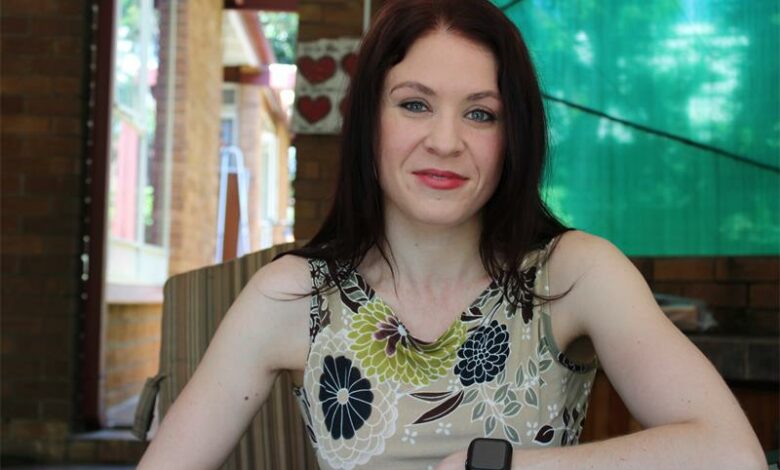
A Pretoria woman with a life-threatening genetic disorder fights for more time with her family after she was told she would die before turning 13.
Elonet Opperman (33) was diagnosed with cystic fibrosis (CF), a genetic disease that attacks the lungs and other organs when she was six months after she had problems with milk.
Her parents were told by doctors that she would likely die before she turns 13 years old because most children with the condition that attacks the lungs and makes breathing difficult as they grow older did not make it to 13 years.
Quite contrary to what her parents were told, Opperman said at 13 she was active, strong, playing sports and enjoying her life.
She said this was because treatment for the disease improved throughout the years and allowed her to live her life.
“I was not sick as a child, my parents had to do physio on me twice a day to keep my lungs healthy.”
She described the disease as one that forces a person to take care of themselves 24/7.
“With every meal, you need to take enzymes to help digest the food, you need to nebulise and do physio twice a day.”
Out of three children birthed by her parents, Opperman said she was the only one with the rare disease while both of her parents were carriers of the cystic fibrosis gene.
“My mom’s brother and his wife lost two children with cystic fibrosis at a very young age.”
Speaking about some of her challenges while growing up, she said: “I remember when I was just five years old I was severely sick and I was hospitalised for a week, when I look back, that was one of the difficult moments I experienced as a child with the disease. I always knew the chances of me dying young were high,” she said.
When she was in high school she hid her condition from people because she feared being treated as a ‘different or awkward child.’
Unlike her peers, she needed to go to Steve Biko academic hospital for treatment at least once a year for treatment.
She said living with a disease that has a low life expectancy made her want to live her best life.
“It is a progressive disease, as you get older you get worse.”
Opperman said in 2012 five of her friends with CF died a few months apart.
“I was admitted at the Pretoria east private hospital and one of my friends who was two rooms away from me died during surgery. That was hard on my mental health because more of us were dying.”
The mother of five-year-old twins said throughout the years she hoped that the medical fraternity would find a treatment that would make the disease better and people with it would have a chance at life.
She said 10 years ago an improved treatment called Trixacar (the original is Trikafta) was made by an American company Vertex Pharmaceuticals (VRTX) but it was expensive.
Another company in Argentina, Gador, offers the treatment and costs about R70 000 for a month’s supply. Opperman has been raising funds to buy the treatment and in August she bought a box for more than R50 000.
Opperman said her lung performance improved to 68% from 48% after being on the medication for a month. It is not a cure but those with CF say it gives them a fighting chance and more time with their families.
Opperman said South Africans have to travel to Argentina to purchase the medication because there was a legal debacle that prohibits the company from shipping the medication. The medication is not available in the country. She said this was stressful for her as she had to pay large amounts of money just to live.
Her husband Darius recounted one of the heartbreaking moments with his wife was when she coughed out a large amount of blood after falling sick.
“Imagine breathing through a straw while going about your day, Elonet and other CF patients are suffocating 24/7/365.
“Last year Elonet’s lung function dropped to 39% and she was struggling to get it back up to 55%.”
Darius appealed to the public to give a helping hand to his wife to get the medication.
“There is no cure for Cystic Fibrosis, but now something miraculously has happened recently; a CF life-saving medicine has been developed to treat the underlying genetic cause of Cystic Fibrosis. This medicine has shown the most remarkable results in improving life expectancy, lung function, and ability to thrive for Cystic Fibrosis patients.”
To read more about how you can help the family in their attempt to raise funds, visit the GivenGain website: https://www.givengain.com/ap/elonet_cf#timeline
Health spokesperson Foster Mohale said despite the treatment in Argentina proving to be more effective the state would not purchase it.
“We do not work like that, the company if it wants to supply in the country it has to apply to SAHPRA and go through the tests and get approval. For us, we do have that treatment that has proven to keep patients with CF stable and we will continue using that.”
Steve Biko academic hospital CEO Dr Mathabo Mathebula said the hospital admits on average three new patients a year.
“Two new patients were diagnosed this year of which one was a sibling of another person,” she said.
Mathebula said no CF patient died this year at the hospital.
“The most frequent complication that we have to deal with is problematic lung infections.
“Most CF patients will develop different degrees of organ failure over the years. It depends on their specific genetic mutations. CF involves many organs, not just the lungs and many patients will later develop sinus, middle-ear, gut, liver, pancreas, heart and lung complications.
“We work hard to delay and pre-empt these complications.”
Mathebula said the most common complication in people with CF was that they were prone to develop diabetes.
“The patients are monitored, treated and managed per the South African CF guidelines.
“They have access to the full range of medications, multidisciplinary specialist consultations and allied health support like psychology, dietetic and physiotherapy services.”
Dr Mathabo Mathebula shared some symptoms of CF;
– Long-standing cough with lots of sputum.
– Long-standing blocked nose, sinus infection and middle ear infections.
– Loose stools that are often smelly and oily.
– Failure to grow well.
– The mother may notice a salty taste when kissing her child.
ALSO READ: Two suspects arrested for possession of stolen vehicles
Do you have more information about the story?
Please send us an email to editorial@rekord.co.za or phone us on 083 625 4114.
For free breaking and community news, visit Rekord’s websites: Rekord East
For more news and interesting articles, like Rekord on Facebook, follow us on Twitter or Instagram