Unisa Sunnyside to reopen gates as water quality gets the ‘thumbs-up’
“The quality of the water was assessed by three independent water quality laboratories.”
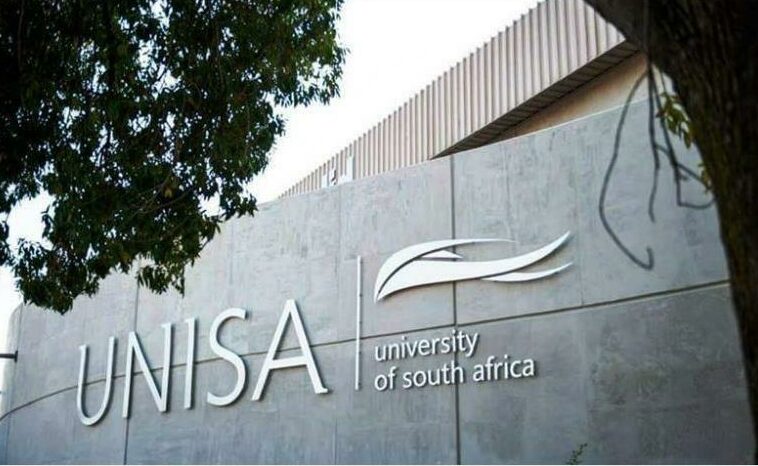
Unisa students and staff have been given the green light to return to the Unisa Sunnyside campus following its closure due to poor water quality.
The campus had shut its gates since June 7 as a result of dark brown water which had been pouring out of the taps.
The complaints started streaming into Unisa management on June 5.
Unisa spokesperson Tommy Huma said the Unisa Department of Facilities Management (DFM) received complaints of water being brownish and suspected deterioration of the water quality at its Sunnyside and Muckleneuk campuses.
The water quality at the Pretoria campus was of great concern at the time and students were informed of the campus closure via the university student portal.
UNIVERSITY TO OPEN WALK IN’S REGISTRATION
On Friday, July 21, Huma said the Unisa Sunnyside campus would reopen and resume face-to-face student support services.
“This is following the positive outcome of results of water tests conducted on campus.”
Huma said the outcome was a result of an investigation undertaken to ensure that the quality of drinking water complied with pertinent legislation and meets the minimum requirement of South African National Standards (SANS).
“The university conducted an urgent investigation to establish whether water quality is compliant with statutory requirements as specified in SANS 241 and the Water Act 108 of 1997.
“The quality of the water was assessed by three independent water quality laboratories.”
The university said in late June that an external service provider had been appointed to test water for various bacteria.
Water facilities to be checked for cholera
The tests were reported to check for cholera at the municipal inlet point, the reservoir and the water supply line to the buildings and taps.
He said the first service provider was the Institute for Nanotechnology and Water Sustainability (iNanoWS), which conducted independent tests complemented by a team of senior academics.
The second service provider, CSE consultants, was appointed to sample the quality of water against various parameters at various strategic points.
Meanwhile, the third water testing was conducted by Tshwane scientific services, the relevant authority that supplies water to Unisa.
“The Tshwane scientific services dispatched its team to perform quality water sampling and testing.
After receiving the water quality tests reports, a meeting was scheduled at the Sunnyside campus whereby the independent experts communicated and presented the outcome of the results.”
He said all three independent water quality test reports indicated that the quality of the water on all Pretoria campuses is safe for drinking and other usages.
“Considering the positive outcome of the water quality results and the operational need of effective service delivery, the Unisa Sunnyside campus will open, and resume its academic project.”
According to reports, the discolouration of water in parts of central Pretoria was the result of sediment.
The metro said the sediment gathered at the bottom of reservoirs during low-pressure times.
It said it was aware of discoloured water in Pretoria West and the CBD and called on residents to consider safety when consuming the city-supplied water.
Municipality urged community to boil water before consumption
It pleaded with residents to filter and boil the water before drinking it.
“We are aware that water is discoloured and our water and sanitation team is out investigating.”
It said upon preliminary investigations officials discovered that the Klapperkop reservoir’s level was low due to a faulty pressure-reducing valve.
“Sediments going into the system due to the low level might be a factor of the discoloured water.”
Tshwane said the affected areas were Sunnyside, Clydesdale, Arcadia, Trevena, parts of Pretoria central, Muckleneuk and a small part of Hatfield.
“Once the water levels in the Klapperkop reservoir improve, the sediment will settle and the water colour will return to normality.”
ALSO READ: Fears of contamination of Mamelodi reservoir continues
Do you have more information about the story?
Please send us an email to editorial@rekord.co.za or phone us on 083 625 4114.
For free breaking and community news, visit Rekord’s websites: Rekord East
For more news and interesting articles, like Rekord on Facebook, follow us on Twitter or Instagram