VIDEO: No injuries reported after homes burn at Wolwespruit informal settlement
Three families were affected and the fire was only extinguished at 12:05.
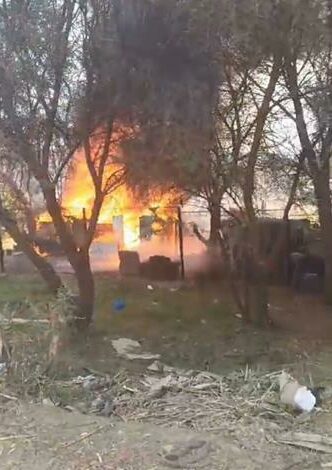
Two fire engines were sent to Wolwespruit informal settlement on Monday morning to attend to five burning shacks.
Tshwane Emergency Medical Service interim spokesperson Refiloe Phantshang said the fire was reported at 10:40.
“The fire occurred at the veld near to the Erasmuskloof Fire Station.”
Phantshang said upon arrival, the crew found five informal houses on fire, three of which were completely destroyed.
He said three families were affected and the blaze was only extinguished at 12:05.
The disaster relief team from Tshwane was activated to assist the destitute.
Phantshang said no injuries were reported.
It is unclear how the fire began.
Residents from Wingate Park, Elarduspark, Moreletapark and Erasmusrand have been calling for the removal of the informal settlement for years now.
Ward 83 councillor Francois Bekker said numerous residents had been frustrated by the water pollution around the wetland emanating from the settlement.
“There is water pollution, and smoke lingering in the air due to fires and crime.”
Bekker said crime had escalated in the area.
The informal settlement has for years been at the centre of a lengthy legal process in a bid to have its residents removed from the land.
Land invaders had set up an informal settlement in Erasmuskloof, Pretoria east before 2018 and since then, the metro has gated the area on Delmas Road and Solomon Mahlangu Drive.
The occupants received their last eviction notice last year, which was recently disapproved of by non-profit and non-governmental human rights organisations.
The inhabitants faced a battle with Tshwane to determine the next course of action for them to reside in the area.
Human rights lawyers however sought to have the Tshwane metro provide alternative accommodation, possibly with serviced stands for all inhabitants and not just South African citizens.
This was as Tshwane’s housing and human settlements department officials had earmarked a suitable property for only South Africans to be relocated, which led to consultations and voluntary relocations earlier this year.
According to Tshwane metro mayoral spokesperson Sipho Stuurman, out of the 200 inhabitants, only 69 have voluntarily relocated.
Tshwane mayor Cilliers Brink said it was challenging for the metro police to patrol the land.
He said police and private security companies had to come on board to help with land grabs in the metro.
“Land grabs happen across the metro. There is often this perception that these land grabs are just suburban challenges.
“We have similar challenges in Mamelodi, Atteridgeville and Soshanguve, which make the owners of bonded homes just as angry as homeowners in the east of Pretoria.”
He said the metro faced the biggest brunt of costs and risk when dealing with landgrabs and illegal immigration.
Brink said there had been engagements and agreements to move the dwellers of Wolwespruit to land in the north of Pretoria since before 2021.
“Due to [a certain] political party and other organisations, this has been prevented.”
According to Brink, the Lawyers for Human Rights also opposed an eviction order and filed an application to slow the process.
Brink said while litigation around the eviction order was ongoing, the metro was ensuring that the settlement’s population didn’t grow by monitoring the area and providing fencing.
“The metro and housing department will ensure the site does not grow and will keep monitoring the area to contain the issue.”
Lawyers for Human Rights land and housing programme attorney Deborah Raduba told Rekord they have submitted a notice of intention to oppose the metro’s eviction application on April 28 on the wetland dwellers’ behalf.
Raduba said they intervened around the eviction to help the land dwellers who were not familiar with their rights.
“They were not aware of the correct steps to take to challenge this application from the metro.
“They eventually came to us to obtain legal assistance after being unable to obtain it from other organisations.
“We are concerned that the metro made submissions that it will only provide alternative accommodation to South African citizens and yet they want all the occupiers to be evicted from the property,” said Raduba.
“An eviction that will render people homeless is not just and equitable.”
Raduba said it was the metro’s responsibility to uphold and defend the inhabitants’ socio-economic rights.
WATCH:
Laerskool Raslouw treats residents to its annual Spring Market Day
Do you have more information about the story?
Please send us an email to editorial@rekord.co.za or phone us on 083 625 4114.
For free breaking and community news, visit Rekord’s websites: Rekord East
For more news and interesting articles, like Rekord on Facebook, follow us on Twitter or Instagram