North troubled by 106 cable theft incidents in five months
Cable theft is not just a financial burden for the metro, but a major problem for the community, particularly in the north of Pretoria.
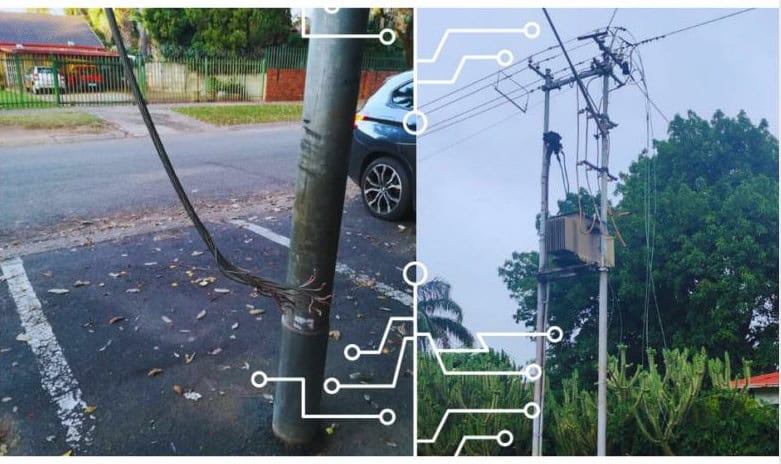
The Region 1 energy and electricity teams servicing Pretoria north suburbs and industrial areas have recorded 106 cable theft incidents in a period of five months.
The cases were reported between July and November last year.
Spokesperson Lindela Mashigo said the incidents were concentrated in the industrial area of Rosslyn.
The thefts disrupted the power supply and left both residents and businesses struggling with the repercussions of regular outages.
Cable theft is not just a financial burden for the metro, but a major problem for the community, particularly in the northern parts of Pretoria.
Mashigo said these thefts caused sudden power outages, resulting in delays to electrical services for homes and businesses.
“Out of 1.1 million outages recorded across Tshwane last year, a substantial portion of up to 30% is attributed directly to theft and vandalism of power infrastructure.”
Residents who rely on a stable power supply for their daily personal and business operations have been severely affected.
Mashigo said municipal teams attended to each of the 106 reported cable theft incidents in the north of Pretoria, working to restore power after the outages.
“This comes at a significant cost to the municipality, which spends more than R400-million annually on repairs and maintenance for power network citywide.”
Beyond the inconvenience and frustration expressed by residents, cable theft comes with serious financial consequences.
The metro has incurred more than R120-million in staff costs due to increased overtime as teams are dispatched urgently to restore power following incidents of theft.
These additional overtime costs reflect the high expectations of residents and businesses for rapid repairs, with service restoration usually required within 24 to 48 hours.
“In addition to repair costs, cable theft results in major revenue losses for the city, estimated between R119-million and R171-million over the past four years.
“These losses arise due to interrupted electricity sales, especially during outages that affect large industrial hubs such as Rosslyn in Pretoria North,” he said.
While the metro is actively working to combat cable theft, the problem is complex.
Mashigo said there is currently no specific budget allocation dedicated to addressing the issue, and the costs of cable theft are absorbed into the broader repairs and maintenance budget.
The metro acknowledged that more innovative solutions are needed to tackle the crisis in a sustainable way.
One of the long-term strategies under consideration is the replacement of overhead cables with underground cables, which are more difficult for criminals to access.
However, the feasibility of this solution is limited by physical constraints, such as the availability of servitudes and space to install cables at the required depth of 1 –1.5m.
He said while anti-theft technologies exist, they have not yet been rolled out on a large scale across the city.
This highlights the need for further investment in protective equipment to prevent ongoing theft and vandalism of the power infrastructure in the north.
“We have put measures in place for residents to report instances of cable theft in Pretoria North and other regions.
“Those who witness theft or suspicious activity can call the city’s dedicated hotline at 012 358 1550 or visit the walk-in client service centre located at the South African Narcotics Bureau (SANAB) building on the corner of Frederika Street and Johan Heyns Drive in Gezina.”
He said that once suspects are apprehended, they are handed over to the police, who handle the prosecution process.
“The large number of reported incidents indicates that more proactive enforcement and preventative measures are needed to curb the growing problem.”
The rise in cable theft has not only disrupted residents’s daily lives but has also placed an economic strain on the industrial and commercial sectors in the north.
Businesses operating in Rosslyn, a major manufacturing and industrial hub, have been particularly affected by the frequent power outages caused by theft.
These interruptions have led to production delays, lost revenue, and increased operating costs as companies are forced to rely on alternative power sources like generators to sustain operations during outages.
Residents continue to bear the brunt of the issue, as frequent power cuts disrupt household activities and create uncertainty.
Communities are growing increasingly frustrated with the recurring outages and the slow pace of repairs.
Without a more comprehensive approach to prevention, cable theft is likely to remain a persistent problem in the region.
Do you have more information about the story?
Please send us an email to bennittb@rekord.co.za or phone us on 083 625 4114.
For free breaking and community news, visit Rekord’s websites: Rekord East
For more news and interesting articles, like Rekord on Facebook, follow us on Twitter or Instagram or TikTok.