Residents face Level 2 tariffs if water consumption levels remain high
Tshwane Mayor Dr Nasiphi Moya warns residents if they don’t take collective responsibility to conserve water, the stability of the system is at risk.

Should water consumption not be brought down soon by Tshwane Metro clients, it will start charging them according to Level 2 water restrictions tariffs.
The announcement comes as water consumption has reached extreme levels that require the likely implementation of Level 2 restrictions.
Tshwane is however at this stage still guided by Level 1 restrictions.
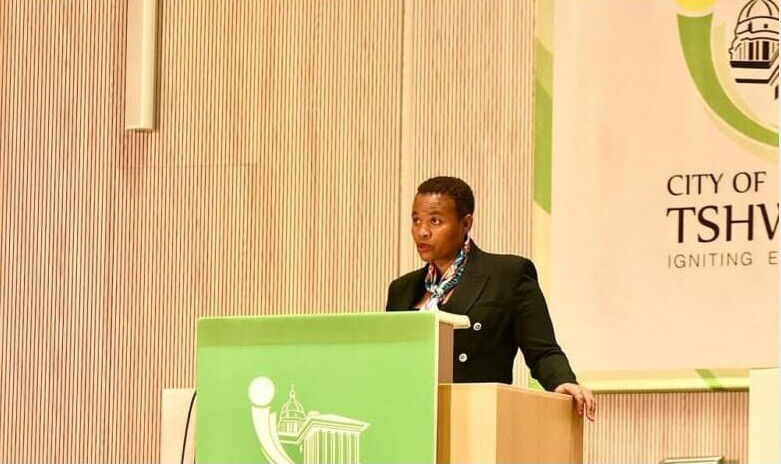
Mayor Dr Nasiphi Moya said Gauteng was currently in the midst of a water crisis that they have continuously warned residents about since last year.
She said Rand Water has stated that its reservoir levels have decreased considerably, and Gauteng’s three metropolitan municipalities are the biggest contributors to declining reserve levels.
The water utility said it continues to supply at maximum capacity, but availability is dropping fast and the cities of Tshwane and Johannesburg use the most water.
Moya warned that if residents do not take collective responsibility to conserve water, the stability of the water system will be jeopardised.
“Rand Water has tracked the water consumption levels in Tshwane and warned that for January 2025, we have continuously consumed more water than the recommended threshold,” she said.
“We have consumed more than 752megalitres (Ml) per day for January and February 2025.”
She said Tshwane’s consumption recorded on February 3 alone was 853Ml for the day.
The following are the highest-consuming reservoirs:
– Akasia Park
– Koedoesnek
– The Reeds
– Wonderboom
Moya warned that if water consumption was not controlled, the metro would have to implement Level 2 water restrictions, which means that water will be rationed for several hours across Tshwane to force reasonable levels of water use.
She said the change in restriction levels will also be accompanied by financial implications for consumers due to the associated changes in water tariffs.
The financial implications of each level are as follows:
Level 1 Restrictions per litre:
– 0-9 kiloLitre (kL) per 30 days: R0
– 10-18 kL per 30 days: R28.97
– 19-30 kL per 30 days: R39.20
– 31-42 kL per 30 days: R45.13
– 43-60 kL per 30 days: R48.28
– More than 60 kL per 30 days: R51.70
Level 2 Restrictions per litre:
– 0-9 kL per 30 days: R0
-10-18 kL per 30 days: R34.75
-19-30 kL per 30 days: R58.45
-31-42 kL per 30 days: R72.18
– 43-60 kL per 30 days: R86.89
– More than 60 kL per 30 days: R103.38
Moya pleaded with residents to continue to preserve water, as Tshwane and Gauteng are experiencing water shortages.
LISTEN:
Residents are urged to follow the following level water restrictions:
– Do not use water or irrigate gardens with a hosepipe or sprinkler system between 05:00 and 18:00.
– Do not use a hosepipe to clean cars.
– Do not fill or top up swimming pools or water features.
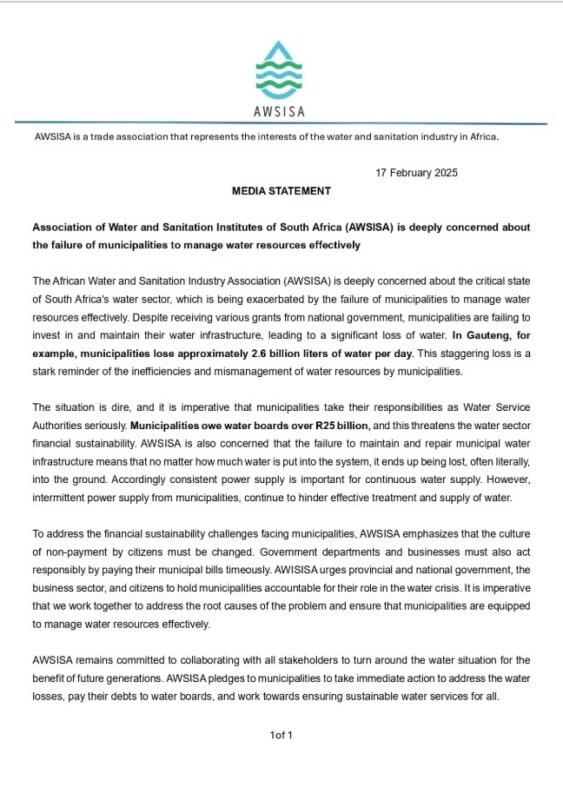
In a media release, the Association of Water and Sanitation Institutes of South Africa (AWSISA) said it was deeply concerned about the failure of municipalities to manage water resources effectively.
AWSISA said despite receiving various grants from the national government, municipalities are failing to invest in and maintain their water infrastructure, leading to a significant loss of water.
They said that in Gauteng, for example, municipalities lose approximately 2.6 billion litres of water per day.
“This staggering loss is a stark reminder of the inefficiencies and mismanagement of water resources by municipalities.
“The situation is dire, and it is imperative that municipalities take their responsibilities as water service authorities seriously.”
According to AWSISA, municipalities owe water boards over R25-billion, and this threatens the water sector’s financial sustainability.
The association was also concerned that the failure to maintain and repair municipal water infrastructure meant that no matter how much water is put into the system, it ended up being lost, often literally, into the ground.
“Accordingly, consistent power supply is important for continuous water supply,” it said.
However, intermittent power supply from municipalities continued to hinder effective treatment and supply of water.
To address the financial sustainability challenges facing municipalities, AWSISA emphasised that the culture of non-payment by citizens must be changed.
“Government departments and businesses are urged to act responsibly by paying their municipal bills timeously.
“AWISISA urges provincial and national government, the business sector, and citizens to hold municipalities accountable for their role in the water crisis.
“It is imperative that we work together to address the root causes of the problem and ensure that municipalities are equipped to manage water resources effectively.”
AWSISA said it remains committed to collaborating with all stakeholders to turn around the water situation for the benefit of future generations.
It urged municipalities to take immediate action to address water losses, pay their debts to water boards, and work towards ensuring sustainable water services for all.
Last week, Rand Water said its systems were dropping fast because of extremely high water consumption.
Graphs provided by the utility in a statement indicate that the level of stored water has dropped from nearly 70% to below 40% since January 19, amid increased demand owing to high temperatures, electricity outages and the utility’s planned maintenance work.
Do you have more information about the story?
Please send us an email to bennittb@rekord.co.za or phone us on 083 625 4114.
For free breaking and community news, visit Rekord’s websites: Rekord East
For more news and interesting articles, like Rekord on Facebook, follow us on Twitter or Instagram or TikTok.