From addiction to recovery: A story of second chances
After years of relapse and substance abuse, a Pretoria resident is celebrating a new chapter in recovery. With support from a care centre and rehabilitation programme, he hopes to help others avoid the dangers of drugs.
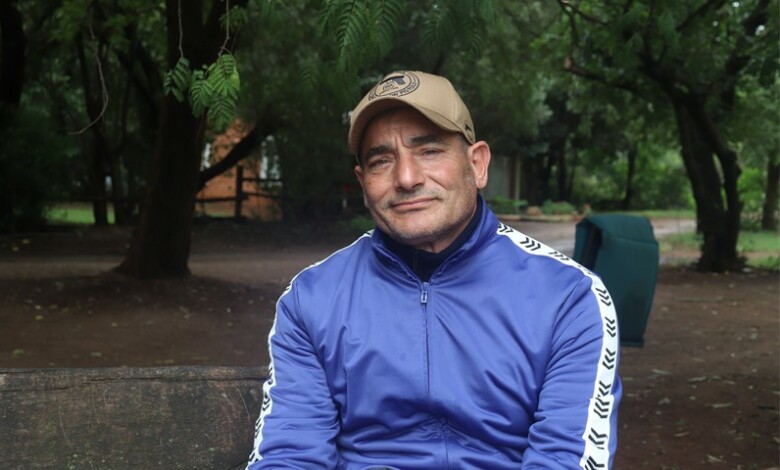
For nearly 20 years, the Filadelfia Ark care centre in Kameeldrift West has been helping thousands of beneficiaries get back on their feet after falling on hard times, and the story of John Henry Griessel (52) is no different.
Griessel has battled substance abuse for 34 years. Even after meeting with Filadelfia Ark’s centre management, his recovery was not immediate, which he describes as a rollercoaster journey.
“We arrived in Pretoria about three years ago, and my life was a rollercoaster. I come from a good background, but I started using contraband at about age 15,” Griessel said.
“It started with a joint, but I didn’t like how it made me feel, so I moved to LSD, and you don’t get tired of it. Depending on the dose, you can stay up for nine, 12, and even 24 hours. It was great at first, but every time you need more and more. [When I was] 18 and 19, ecstasy came about, then it was cocaine, and later crystal meth,” he said.
When he was in his 30s, he was in a state of using and relapsing, mixing various kinds of narcotics, in and out of facilities and undergoing the personal loss of his parents at different intervals.
Losing his mother several years ago led to an overdose, for which he went to rehab, where he met his current spouse.
The two relapsed together and began using crystal meth following three months of sobriety post-rehab.
“We came to Pretoria, ended up at this facility, but we continued using. I went into Hercules one day when a young constable arrested me for possession. He said something that punched through my numbness.”
He said the constable told him to visit him when he got out and if he was serious about getting help.
“I sat that weekend in a holding cell thinking about it. That Monday, when I got out of court at 12:00, I went straight back to the same dealer where I was arrested and bought more.
“At this time, my wife and I were at death’s door with health issues.”
He said the manager approached them and said, “Listen, I care for you guys so much that I can’t watch you kill yourselves. We can’t watch you 24/7; you’re adults. If you want to carry on using, go somewhere else or go get help”.
After nine months at rehab, Griessel and his wife found themselves recovering. He attributes this turn-around as different to the previous seven other attempts due to his faith.
“This time I’ve got God on my side. I’ve given myself over to God, myself and my wife. We’re going on one year and one week, and that’s over 34 years of a battle with drugs.
“I’ve done things I’m not proud of. Stealing money from my parents, writing false checks and stealing stuff out of my dad’s garage, tools and a lawnmower.”
His advice to others: Just do not take the stuff; there is hope out there. Our police stations are not just there to lock you up.”
“People look at the police and automatically think the worst, especially if they’re up to illicit things. Local police are here to help addicts,” he said.
He said that “addiction becomes a lifestyle, and you start to believe that that’s all you’re here for”.
His message to someone who doesn’t know how to stop: “Whether you have a habit or not, always acknowledge that there is help out there, even if you believe there isn’t, and that you’re a human being at the end of the day.”
“The quality of the stuff today is mixed with all sorts of other stuff, like detergents, and it’s not like what it used to be. That’s not to say doing drugs back then was a good thing, but today it’s a lot more dangerous; half this stuff was not available back then.
“The damages are quicker and more severe,” he added.
He said it took him three months of rehab to get out of the initial psychosis.
“At our worst, my wife and I were using about two kilos a month. You don’t even get high anymore, you just do it to not feel sick because your body is used to it.”
He said he wants to use his story to give back to his community and his kids. If he could just save one person from the dangers of drug abuse and the damage it causes to that person and their environment, it would be a mission well served.
“We don’t look at tomorrow, that’s not guaranteed, so we just look at today. I’ve made all sorts of promises, like ‘I’ll never do it again’, and ‘this time is for real, I promise’. I’ve broken a lot of promises, and that does a lot of damage. So, I would say concentrate on today, do your best tomorrow and keep God first,” he said.
He gives special thanks to Constable Reiniker, Filadelfia Ark Manager and Management Team, Amelda, and the BRC rehab team, which consists of Hardis, Claire, Doctor Wimdani, JP, and the rest of the crew, and Dirk van Vuuren, the owner of Filadelfia.
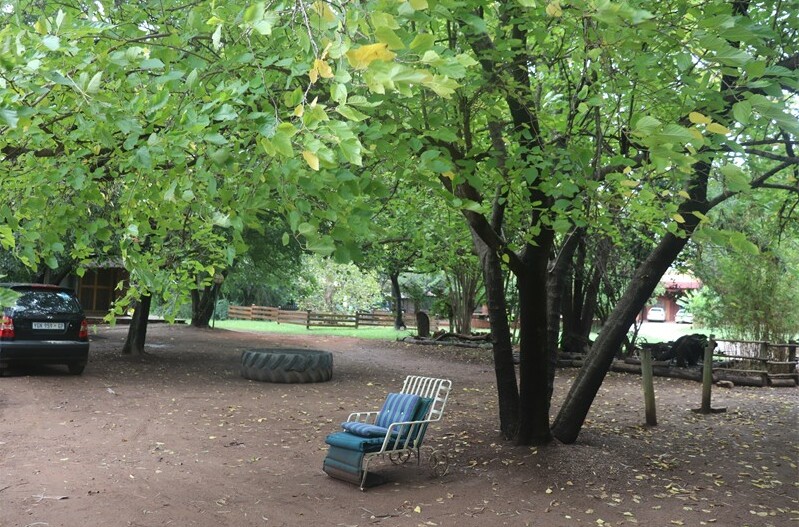
Facility manager of Filadelphia Ark, Amelda Hermann, said they work with all sorts of people who have fallen down in life and need help building themselves up and heading back into society.
“There are few places in Pretoria like us, but we’re a care centre. We take you in, send you to the doctors, make sure you’re alright, help you write a CV, help you get work, so that’s the difference with us. Instead of a place where you go and sit and wait for your food, here you work for your food, you work for something in life. We’re giving back what you’ve lost,” she said.
“Work is getting scarce, food is getting scarce, and communities aren’t helping like they used to; it doesn’t matter where you are, no one is standing together and helping.
Hermann said they take in families. “We can give them a Wendy house to stay in, and the kids can go to school nearby; we don’t leave the people stranded; we help where we can.
“You can get healed, you can get help, you can get off drugs, it doesn’t matter where you are in life, it doesn’t matter what colour you are, we all fall down. Everyone’s got the wrong friends. They (John and his wife) were worse, using all sorts.
“Now, they cry that they wasted all that money on drugs before, which I’m grateful for. He wants to go do school talks and help the community, which I’m proud of,” Hermann added.
To be accepted into the centre, you have to apply to the community WhatsApp group and fill out the information required in a form provided.
Families generally receive preference over single applicants, as do older applicants (30 and up).
The centre currently houses just under 600 people without government assistance, and donates food parcels in cases where they can’t accommodate someone. Hermann said most people find themselves choosing between food and rent.
The centre survives on donations, and community assistance is always welcome.
“Mattresses are always a problem. Single beds. When winter comes, blankets. When people move, they have nothing, so we give them beds and their mattresses, so they can move with dignity,” she said.
“We’re always looking for mattresses, mealie meal and sugar.” She said in the mornings, they make porridge and school sandwiches for the kids.
“When people come in, we give them a starter pack with soap, toothpaste and everything. You can’t go ask for toilet paper from someone else; whatever we can give, we give, but it’s things we must buy,” Hermann said.
For more info, contact 010 443 3390, 073 534 1352, or 076 708 9821. Their email address is admin@filadelfiaark.org.za.
Do you have more information about the story?
Please send us an email to bennittb@rekord.co.za or phone us on 083 625 4114.
For free breaking and community news, visit Rekord’s websites: Rekord East
For more news and interesting articles, like Rekord on Facebook, follow us on Twitter or Instagram or TikTok or WhatsApp Channel