Metro draft budget sparks tariff hike concerns
The draft 2026/27 budget proposes higher tariffs, expanded infrastructure investment and a shift away from outsourced services. But the projected 14% rise in overall spending and continued reliance on ratepayers are likely to intensify scrutiny during the public participation process before the budget is finalised later this year.
The Freedom Front Plus (FF+) has strongly criticised the metro’s proposed 2026/27 draft budget that amounts to more than R57-billion, warning that the planned tariff increases will place further financial strain on already pressured households.
According to the party, residents’ monthly municipal bills are likely to rise by between R300 and R450 if the current proposals are approved.
The draft budget, tabled in council on March 26 as part of the metro’s medium-term revenue and expenditure framework, includes the following proposed increases: water 10%, electricity 8.8%, sanitation 5%, property rates 5%, and waste collection 4.1%.
The FF+ argued that it is unacceptable for residents to absorb tariff increases that in some cases are double or even triple the inflation rate, while municipal employees receive salary adjustments.
The party maintains that households are effectively being forced to finance the metro’s growing wage bill, despite the fact that many residents’ incomes are not rising at a similar pace.
Caucus leader of the party, Grandi Theunissen, has also questioned the metro’s claim that the budget reflects a surplus of R1.4-billion.
According to him, this surplus is based on an unrealistic revenue collection rate of 90%, while the Auditor-General has repeatedly indicated that the metro’s actual collection rate remains below 85%.
The party warns that this optimistic assumption could result in the projected surplus turning into a real deficit of between R700-million and R1-billion.
The draft budget itself outlines an ambitious plan to stabilise municipal finances while gradually reducing reliance on outsourced services.
The more than 500-page document was, however, only provided to opposition councillors the evening before the Council meeting on March 26.
The FF+, together with the DA and councillor Lex Middelburg, voted against its adoption, citing insufficient time to properly scrutinise its contents as two separate draft budgets with differing amounts were sent.
The metro has defended the tariff increases as necessary to maintain service delivery standards and to fund critical infrastructure upgrades.
The capital budget for the 2026/27 financial year is set at R2.8-billion, representing a 14.2% increase from the previous year.
The administration plans to increase this further to R3.5-billion in the following financial year as part of a multi-year effort to address ageing infrastructure.
Tshwane Mayor, Dr Nasiphi Moya, said the city intends to expand infrastructure investment without increasing borrowing.
The focus will be on pipe replacement, upgrades to water systems, wastewater treatment improvements, and the acquisition of new road maintenance equipment.
A key feature of the budget is the planned reduction in spending on contracted services.
Overall expenditure on outsourced services is expected to decrease by 4.4%. Spending on water tanks, for example, has been reduced to R126.7-million, while security-related contracted services have been cut by 17% to R475-million.
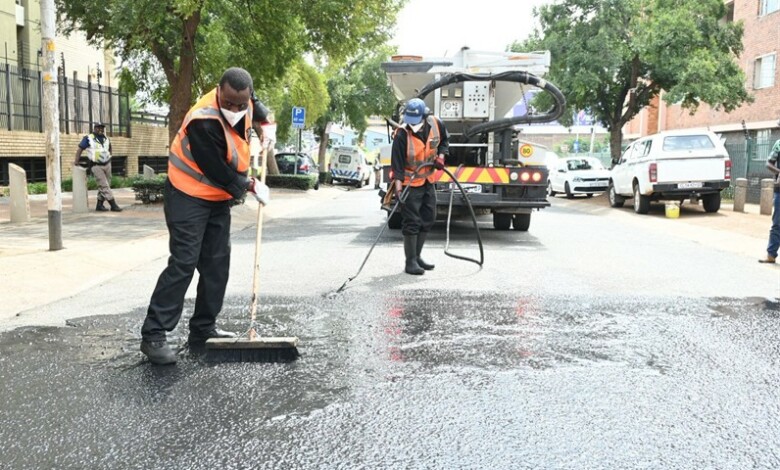
The metro plans to redirect these funds towards building internal capacity and acquiring municipally owned equipment, including water tankers, trucks, and road resurfacing machinery.
“We need to insource more so that we are not reliant on private services,” said Moya.
The budget also allocates R104-million to structured asset protection, including strengthening the Real Time Crime Control Centre and expanding specialised units such as the K9, cable theft, and drug units.
The deputy mayor, Eugene Modise, said on March 29 that operating expenditure amounts to R55.6-billion.
“The draft budget seeks to protect the most vulnerable, limit the burden on residents and maintain the financial viability of the metro,” said Modise.
Economist Theuns du Buisson of Solidarity said the current administration has outlined a number of plans aimed at improving the metro’s financial position, but warned that the real test will lie in implementation.
Du Buisson said the mayor has placed considerable blame on her predecessors during her media briefing for financial and other misfortunes, but has also outlined several plans aimed at improving the metro’s financial and service delivery position.
According to him, only time will tell whether these plans will be implemented effectively and deliver the promised results.
“While none of the new expenditure items proposed by the metro appear inherently wasteful, the current administration will still have to work hard to regain the trust of residents,” said Du Buisson.
He pointed out the ongoing controversy around water tank spending as an example.
The mayor has offered a detailed explanation of why figures circulating in the media are incorrect, yet, he said, it remains difficult to accept that transporting water could cost as much as R621-million in a single year.
A further R15-million has been set aside in the draft budget for the purchase of new tanks, and Du Buisson cautioned that residents will need to scrutinise future budgets closely to determine whether these investments actually lead to meaningful savings.
From within the governing coalition, ActionSA councillor Japhta Modiba, defended the draft budget, saying it is based on realistic assumptions and reflects a shift away from previous governance practices. He argued that the administration is attempting to place the city’s finances on a more sustainable path.
The EFF also welcomed aspects of the draft, particularly the reduction in contracted services.
Councillor Oliver Mabogwana said scaling back water tankers and other outsourced functions could help curb wasteful expenditure and speed up service delivery.
DA Caucus leader Cilliers Brink said this budget is a “clear product of an administration scrambling among themselves”.
“What is clear is that the administration is desperately trying to show that they are moving away from the contracted services that has been in the news for payment of backdated invoices, possibly fraudulently or for services not even rendered.
“The reduction of allocated funds to these line items is not a show that there is a real intent to reduce the expenditure, as this government has proved that they have no qualms paying these invoices as unauthorised expenditure,” said Brink.
The draft budget will now be released for public participation.
Residents, businesses and civil society organisations will have the opportunity to submit comments before the budget is finalised later in the year, with opposition parties urging the public to use the process to voice concerns about the proposed tariff increases and spending priorities.
Do you have more information about the story?
Please send us an email to bennittb@rekord.co.za or phone us on 083 625 4114.
For free breaking and community news, visit Rekord’s websites: Rekord East
For more news and interesting articles, like Rekord on Facebook, follow us on Twitter or Instagram or TikTok or WhatsApp Channel