NPO funding delays spark dispute
A dispute has emerged over delays in non-profit organisations funding in Gauteng, with the DA warning vulnerable residents are at risk, while the Department of Social Development insists processes remain on track and payments will be completed in April.
Delays in the payment of subsidies to non-profit organisations in Gauteng have sparked a political and administrative dispute.
The DA warns that vulnerable residents are being placed at risk, while the provincial Department of Social Development (DSD) insists the process remains on track.
The issue centres on the adjudication and contracting process for NPO funding at the start of the new financial year, which began on April 1.
Although many organisations are expected to continue delivering essential services from that date, concerns have emerged about the timing of payments and the finalisation of service level agreements (SLAs).
Refiloe Nt’sekhe, MPL and DA Gauteng Shadow MEC for Social Development, criticised what she described as a lack of transparency and communication from the provincial government.
“The lack of transparency by Premier Panyaza Lesufi’s government regarding non-profit organisations’ adjudication processes is delaying funding and putting the lives of the most vulnerable residents of Gauteng at risk.”
Nt’sekhe said uncertainty around funding outcomes has created widespread anxiety in the sector, with many organisations unsure whether they will receive the financial support needed to continue operating.
“The DA calls on the Gauteng Department of Social Development to provide clear and consistent communication to all NPOs regarding the status of their funding applications,” she said.
According to Nt’sekhe, the DA Gauteng has received numerous complaints from organisations across the province about inconsistencies in communication and a lack of clarity during the adjudication and contracting process.
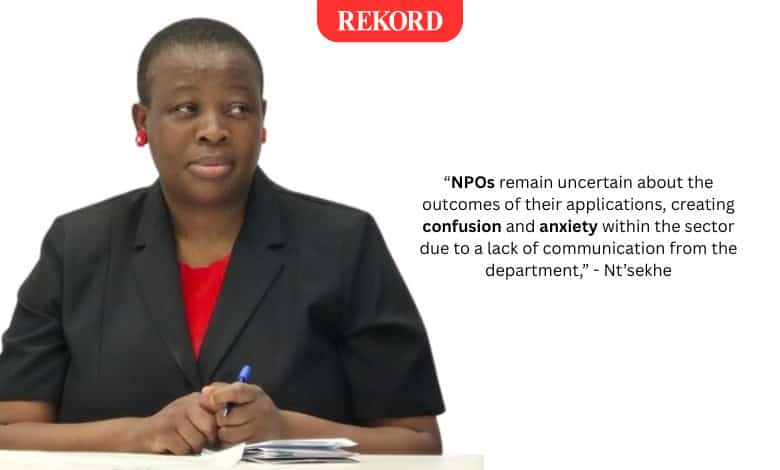
“NPOs remain uncertain about the outcomes of their applications, creating confusion and anxiety within the sector due to a lack of communication from the department,” she said.
She pointed out that delays in finalising and signing SLAs have further compounded the situation. “A lot of NPOs have not yet signed the SLAs, and they are concerned that they will not receive funding on time.”
Nt’sekhe argued that the situation reflects a recurring problem that has not been adequately addressed despite previous years’ challenges.
“Clearly, this department has not learned from previous years on how delays in processing NPO funding have affected lives, with many NPOs shutting down and the vulnerable being left to fend for themselves,” she said.
The DA has indicated it will engage with both the Head of Department and the Member of the Executive Council for Social Development to determine the root causes of the delays and to push for corrective action.
She also outlined the party’s position on how the system should function, arguing that a more proactive approach is needed to prevent disruptions.
“A DA-led Gauteng provincial government would ensure that the NPO funding process is concluded before the start of the new financial year. We will ensure transparency and constant communication with the applicant organisation on the outcomes,” she said.
Nt’sekhe warned that the consequences of funding delays extend beyond administrative inconvenience and directly impact service delivery.
In response, the Gauteng DSD has rejected claims of systemic delays, stating that processes are proceeding within expected timeframes.
Department spokesperson Motsamai Motlhaolwa said the timing of payments is linked to the financial administration processes that occur at the start of each financial year.
“Treasury only allocates funds in April; therefore, from a government perspective, it is not possible to pay NPOs on the first of April,” Motlhaolwa said.
He explained that once funds are allocated, additional administrative steps must be completed before payments can be processed.
“After funds are allocated to departments, they must still be captured and balanced on the BAS system before any payments can be processed. All this work happens in April of each financial year,” he said.
Motlhaolwa also dismissed suggestions that administrative failures had caused delays in the signing of SLAs.
“No delays. The department is well underway with the signing of SLAs, and we urge NPOs to ensure that they come and sign the SLAs and return them to the department for speedy payments,” he said.
According to the department, the signing process is ongoing and is expected to be completed in April.
Addressing concerns about communication, he maintained that the department has been engaging with organisations.
“The department has been continuously communicating with NPOs, including issuing approval letters in March,” he said.
On the issue of funding conditions, including requirements related to unfilled posts, the department said it has not been informed of any inability by organisations to comply due to funding timelines.
“The department has to account for every rand given to NPOs, which means NPOs must also account for funds received by them,” he said.
Motlhaolwa said systems are already in place to deal with unspent funds and circumstances beyond organisations’ control.
“The department is working hard to ensure that all NPOs are paid in April to avoid a negative impact on beneficiaries,” he said.
He also pointed to changes in the application timeline as evidence of improvement.
“Applications open at the beginning of August to ensure that we avoid delays. That is why, in 2026/27, for the first time in many years, the department will be signing and paying NPOs in April. This is a major milestone from the delays previously experienced by NPOs in the first quarter of every financial year,” he said.
ALSO READ: Mamelodi foster parents empowered at workshop
Do you have more information about the story?
Please send us an email to bennittb@rekord.co.za or phone us on 083 625 4114.
For free breaking and community news, visit Rekord’s websites: Rekord East
For more news and interesting articles, like Rekord on Facebook, follow us on Twitter or Instagram or TikTok or WhatsApp Channel