Court battle over zoo elephants sparks debate
Government on all levels are facing growing scrutiny over the future of three Johannesburg Zoo elephants as a major court case on animal welfare, captivity and constitutional obligations heads to the High Court in Pretoria on May 23.
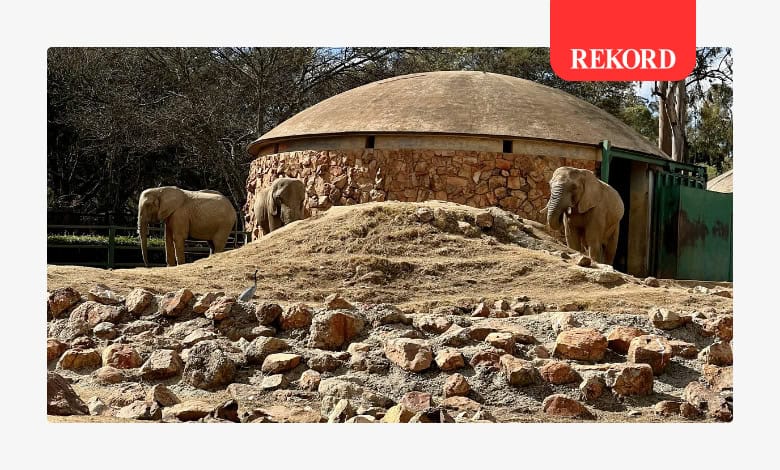
The future of three elephants at the Johannesburg Zoo is expected to come under intense legal and public scrutiny as a constitutional challenge is proceeding in the Gauteng High Court, Pretoria this week.
The matter, brought by the EMS Foundation, centres on whether elephants can ethically and lawfully be kept in captivity in zoo environments that critics argue cannot meet their complex behavioural, social, and psychological needs.
At the heart of the case are Lammie, Ramadiba, and Mopane, who are currently housed at the Johannesburg Zoo.
The application seeks their relocation to an environment that would offer greater freedom and more natural living conditions.
The case is also expected to test broader questions around animal welfare, constitutional obligations and whether South African law should evolve toward recognising stronger protections for highly intelligent wild animals.
The challenge comes amid growing international debate about the ethics of keeping elephants in captivity.
Animal welfare organisations and elephant behavioural experts have increasingly argued that elephants experience profound psychological distress in confined environments due to their intelligence, social complexity and need for extensive movement across natural landscapes.
According to the EMS Foundation’s legal representatives, the case is not merely about relocation but about establishing a new legal and ethical framework for how captive elephants are treated in South Africa.
Sarah Kvalsvig, specialist environmental attorney at Cullinan & Associates in Cape Town, said the constitutional challenge was fundamentally about the rights and well-being of the elephants themselves.
“Our clients, EMS Foundation, are bringing this constitutional challenge to the idea that elephants should not be kept in captivity in the Johannesburg Zoo, on the basis that it is unlawful and irrational when their complex physical, social and psychological needs cannot be met,” said Kvalsvig.
She explained further: “Although South African law does not yet recognise elephants as holders of rights, or allow them to be a party to the case, we are really bringing this case on behalf of the elephants.”
She said the organisation believed the elephants should have the opportunity to live in conditions where they can express natural behaviours.
“Our clients believe these elephants have the right to live freely and express their natural behaviours in the ecosystems of which they are part. These rights have been recognised in other countries of the world and we hope that this case will set important precedents for elephant well-being and animal rights in South Africa.”
The case has also received support from animal welfare organisations, including the National Council of Societies for the Prevention of Cruelty to Animals.
In a statement issued on behalf of NSPCA, spokesperson communications unit manager Jacques Peacock, expressed support for the application and said the organisation hoped the elephants would eventually be moved to more suitable conditions.
“We extend our support to the EMS Foundation for this fight,” Peacock said. “We remain hopeful that the application will be successful and that Lammie, Ramadiba, and Mopane may ultimately be afforded the opportunity to live in an environment that allows for greater freedom and a life beyond captivity.”
He also wished the EMS Foundation strength and success for the proceedings ahead and trust that the matter will be considered with the seriousness and compassion it deserves.
The matter also raises important questions about the role of national and provincial governments in regulating captive wildlife and elephant welfare.
In response to Rekord’s questions, the Minister of Forestry, Fisheries and the Environment, Willie Aucamp, explained that the authority to approve or reject a relocation permit does not lie directly with the national minister but with the relevant provincial authority in Gauteng.
“The Department of Forestry, Fisheries and the Environment (DFFE) is not in possession of this particular permit application and is not familiar with the circumstances of the relocation, and is therefore not able to formulate a formal position on the permit application,” said Aucamp.
The department nevertheless acknowledged that the government has constitutional obligations relating to the welfare of wild animals.
“The DFFE has a constitutional duty to, at the very least, consider the welfare of wild animals in its decision-making processes, in the case where a particular decision lies within the mandate of the minister,” Aucamp said.
He noted that South African legislation regarding wild animal welfare is evolving.
Amendments to NEMBA (National Environmental Management: Biodiversity Act) in 2022 empowered the minister to prohibit activities negatively affecting the well-being of wild animals and to introduce regulations specifically addressing welfare concerns.
Importantly, the department indicated that the current elephant management policy does not support expanding captive elephant populations indefinitely.
The upcoming court case is expected to draw national attention from legal experts, conservationists, animal welfare groups and zoo authorities alike.
Supporters of the application argue that elephants require vast natural spaces, social bonds and environmental stimulation that captive facilities cannot realistically provide. Opponents, however, have previously argued that zoos play an important role in education, conservation awareness and species management.
Alan Beesley, ActionSA Member of Parliament, said that three African elephants being kept at the Johannesburg Zoo is a deeply tragic one.
“The environment does not speak for itself, and if we as human beings fail to act as its custodians, we risk accelerating the destruction of species, ecosystems, rivers, forests and oceans that future generations will depend on. As renowned activist Jay Naidoo has noted, elephants carry deep cultural and spiritual significance across many traditions, including among South Africa’s diverse peoples,” said Beesley.
He said his party “would support any lawful and appropriate legislative or legal intervention that advances the dignity, humane treatment and long-term preservation of South Africa’s invaluable wildlife heritage. We remain concerned that sections of government are increasingly failing in their duty to protect South Africa’s rich environmental and wildlife heritage, too often allowing commercial interests and institutional convenience to take precedence over ethical conservation and animal welfare”.
The Johannesburg City Council and the Gauteng MEC for the Environment were approached for comment, but none has been received by the time of publication.
Do you have more information about the story?
Please send us an email to bennittb@rekord.co.za or phone us on 083 625 4114.
For free breaking and community news, visit Rekord’s websites: Rekord East
For more news and interesting articles, like Rekord on Facebook, follow us on Twitter or Instagramor TikTok or WhatsApp Channel