Sophiatown revival brings Kofifi-fashion roaring back
The revived production of Sophiatown at Pretoria’s Opera Theatre proves why the iconic South African classic still resonates today. Featuring powerful performances, vibrant music and emotional storytelling, the State Theatre revival captures the humour, heartbreak and cultural defiance of 1950s with remarkable energy and contemporary relevance.
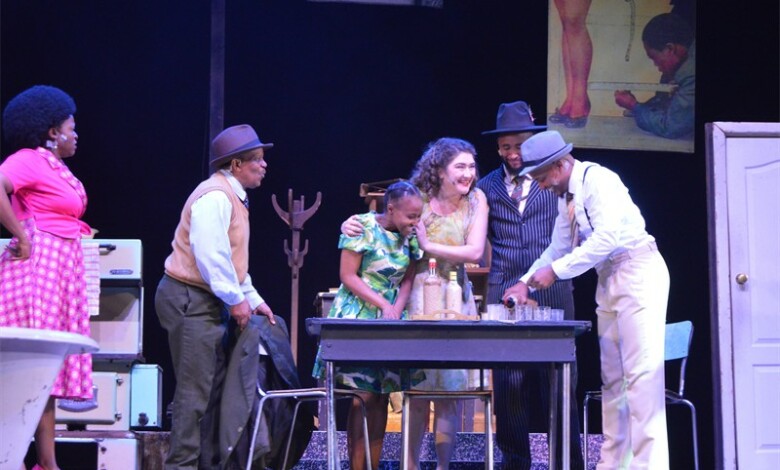
The iconic South African drama with music, Sophiatown, has returned to the Opera Theatre in Pretoria, where it has largely played to school audiences since May 11 as a prescribed literature work for Grade 11.
The drama has been revived by the South African State Theatre under the direction of Aubrey Sekhabi and produced by Diamond Mokoape.
On May 31, however, the production opens to the wider public and it definitely deserves a full house.
Despite its age, the play feels astonishingly fresh, driven by an energetic cast, vibrant music and themes that remain painfully relevant in modern South Africa.
Set in the legendary Johannesburg township during the 1940s and 1950s, Sophiatown recreates the multicultural world of Kofifi fashion, a place of jazz, shebeens, gangsters, writers and dreamers before bulldozers destroyed it through the forced removals to Meadowlands.
The script balances humour and heartbreak with remarkable dexterity. The audience laughed at the lively banter, tsotsi slang and comic misunderstandings before being confronted with the devastating human cost of legislation such as the Native Resettlement Act.
The set immediately evokes the period: a typewriter on a desk, bookshelves lining the background and warm blue lighting that creates the intimacy of a lived-in family home at 65 Gerty Street.
From the outset, the character, Jakes, introduces audiences to the intellectual heartbeat of the era by invoking the names of Drum magazine legends such as Can Themba, Lewis Nkosi, Bloke Modisane and Todd Matshikiza.
In doing so, the play reminds audiences that Sophiatown was not merely a place, but a cultural revolution.
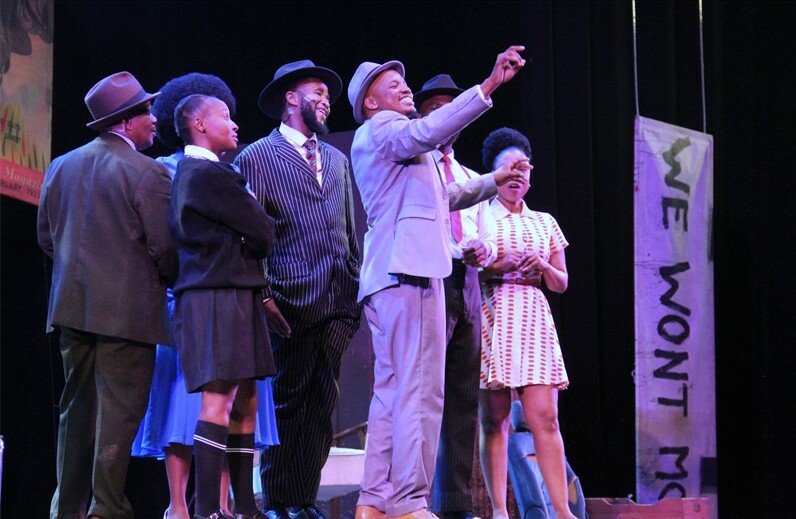
At the centre of this Pretoria revival of the musical is the music. The harmonising of the cast consistently stands out, often lifting scenes from simple dialogue into deeply emotional moments.
The production understands that music in Sophiatown was never merely decorative entertainment. Marabi and tsaba-tsaba rhythms became coded protest language against oppression.
Nowhere is this more powerfully realised than in the song Meadowlands, written by Strike Vilakazi. The song becomes the emotional heartbeat of the production. Its upbeat kwela rhythm masks sorrow, resistance and sarcasm beneath the surface, reflecting how residents used music and style as weapons of survival. Each rendition transports the audience directly into the buzzing streets of 1950s Johannesburg. The audience may tap along to the melody, but the pain beneath the tune is unmistakable.
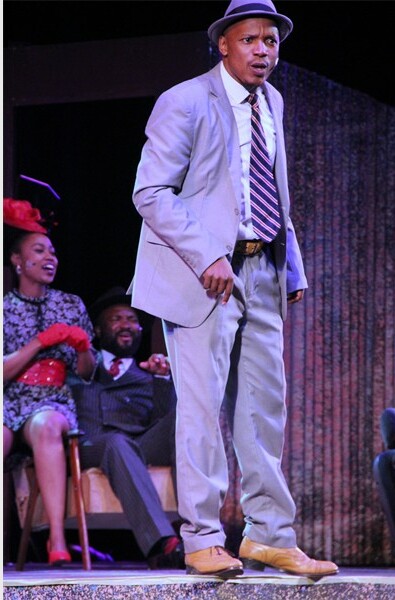
Ntsika Ngxanga delivers a memorable performance as Jakes. Best known to many as a member of the platinum-selling South African music group The Soil, Ngxanga brings calm authority and intelligence to the role. His singing voice is clear and resonant, carrying beautifully across the theatre, while his physical presence anchors many ensemble scenes. His portrayal subtly reveals a man searching not only for identity and purpose, but also for love in a deeply fractured society.
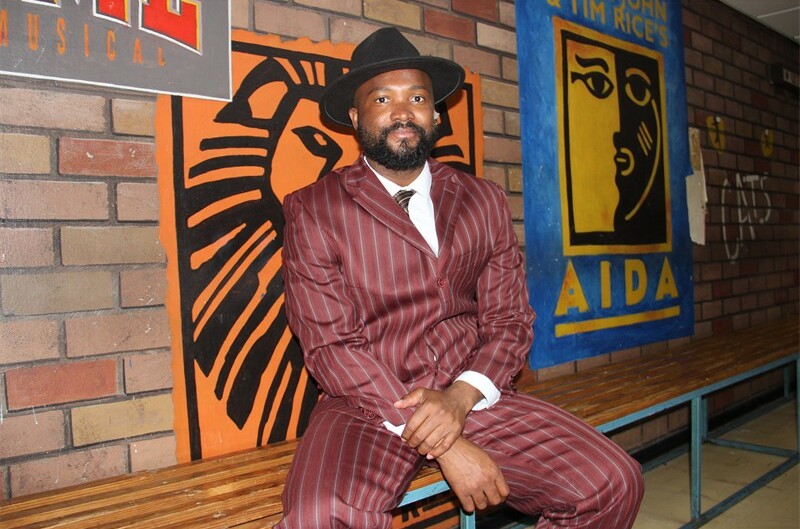
As Mingus, Terrence Ngwila commands the stage with swagger and charisma. His delivery of the famous line, “I am an honest gangster,” comes with sparkling confidence and more than a hint of mischief. Ngwila’s physicality impresses throughout; whether dancing across the stage or sharply dressed in classic Kofifi fashion, he captures both the glamour and vulnerability of the character. His gradual loss of sartorial polish mirrors the disintegration of Sophiatown itself.
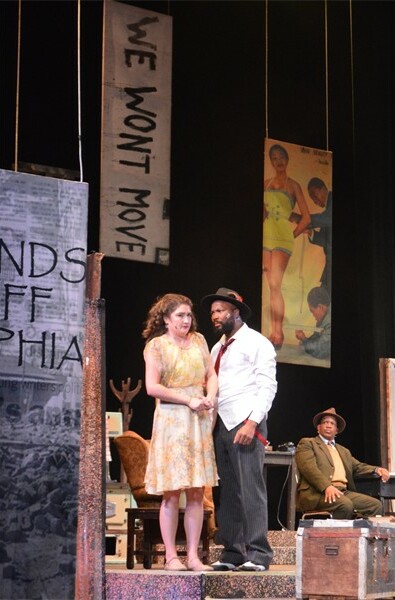
Perhaps the play’s biggest scene-stealer is Tshallo Chokwe as Fahfee. Chokwe electrifies the audience with energetic dancing, slick comic timing and excellent musical delivery, particularly during the famous ‘numbers song’. His hat-tipping routines become a recurring delight, drawing audible reactions from the audience.
Gaby Georgeson brings touching innocence to the role of Ruth Golden, the girl who moves into the household after seeing a Drum magazine advertisement. Georgeson carefully charts Ruth’s transformation from naïve outsider to someone deeply affected by the realities of life in Sophiatown. Particularly effective is her gradual use of Afrikaans phrases, delivered with natural rhythm and subtle humour.
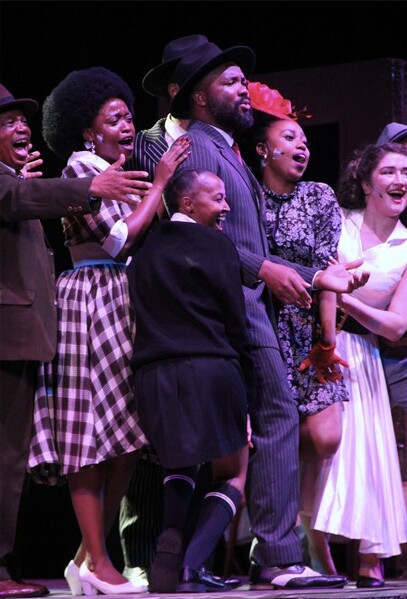
Philisiwe Ntintili shines as Princess, fully embodying the glamour of 1950s Sophiatown fashion. Her wardrobe becomes an extension of the character itself: elegant, jazz-inspired and proudly defiant. The production’s costumes beautifully recreate the iconic Kofifi-look, heavily influenced by Harlem style and American jazz culture.
As Mamariti, Sindi Nkuna delivers warmth, authority and emotional depth. Her soulful voice may well be the finest on stage, making it almost disappointing that audiences do not hear more from her musically. Still, every scene she inhabits gains emotional gravity through her commanding maternal presence.
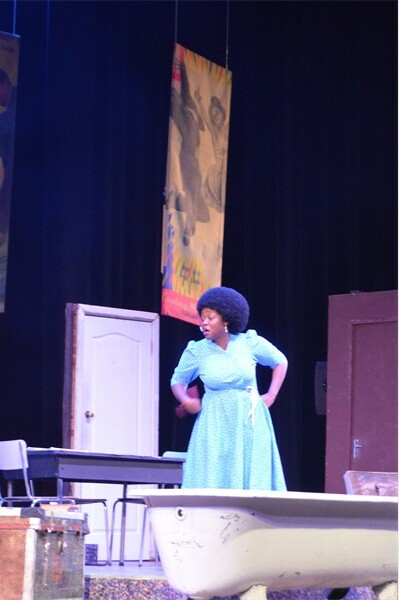
Description: Woman in blue dress
Nompumelelo Mahlangu brings delightful comic relief as Lulu. Her light-hearted energy provides some of the evening’s funniest moments, particularly during scenes involving attempts to climb in and out of a bath. The humour never feels forced.
The production’s sound design also deserves recognition. Boitshoko Rebang expertly balances dialogue, a cappella harmonies and live musical textures. In a production so heavily dependent on musical transitions and layered vocal work, sound becomes as important as acting itself. Rebang ensures the energy of Sophiatown pulses through the theatre without overwhelming quieter emotional scenes.
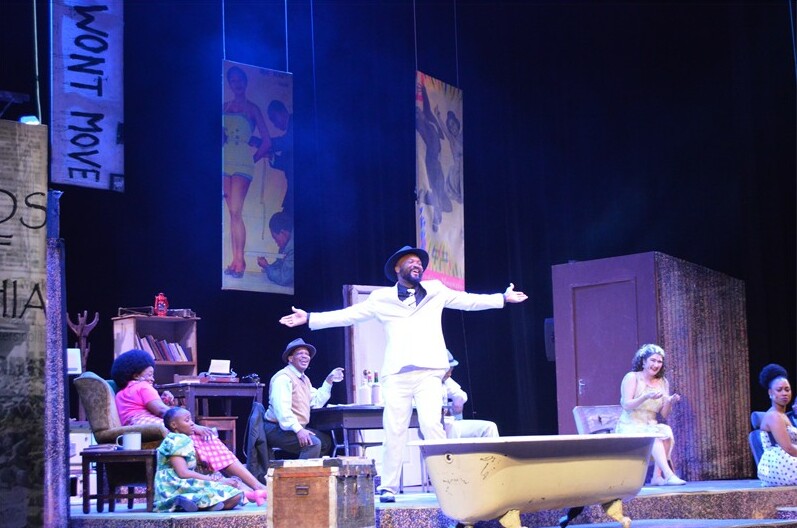
Much credit must also go to producer Diamond Mokoape, whose growing influence in South African theatre is evident in the polish and accessibility of this revival. Known for her work with the Education, Youth and Children’s Theatre division at the South African State Theatre, Mokoape has consistently championed emerging talent, mentorship and socially conscious storytelling. That ethos is visible throughout this production.
What ultimately makes Sophiatown endure is its balance between joy and devastation. The play celebrates language, music, dance and human resilience even as the shadow of forced removals steadily closes in. One moment, audiences laugh at a langarmdans lesson that unexpectedly turns into a waltz; the next, they are confronted with the emotional violence of forced relocation.
The play’s survival after 40 years testifies to its importance and relevance. Watching this revival in Pretoria, surrounded by deeply engaged school audiences, one realises why. Sophiatown is not simply a history lesson. It is a living reminder of how communities resist oppression through culture, humour and song.
The production will now be open to the public for a special closing performance on May 31, where there will also be exciting prizes to be won. On the day, the theatre will additionally be celebrating 40 years of Sophiatown. Audiences are encouraged to come dressed in their finest Kofifi-inspired outfits to celebrate the spirit and style of Sophiatown. There are also discounted ticket options available for audiences.
Click here to see a video of the cast singing along:
Do you have more information about the story?
Please send us an email to bennittb@rekord.co.za or phone us on 083 625 4114.
For free breaking and community news, visit Rekord’s websites: Rekord East
For more news and interesting articles, like Rekord on Facebook, follow us on Twitter or Instagram or TikTok or WhatsApp Channel