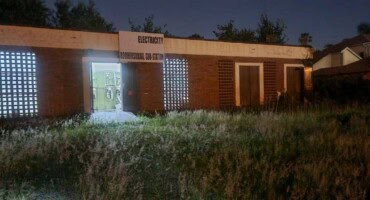
Metro plans major wastewater infrastructure maintenance programme
The metro has allocated R120-million to improve wastewater treatment works during the 2026/27 financial year, with planned upgrades targeting ageing infrastructure, vandalism, electricity disruptions and declining Green Drop performance.
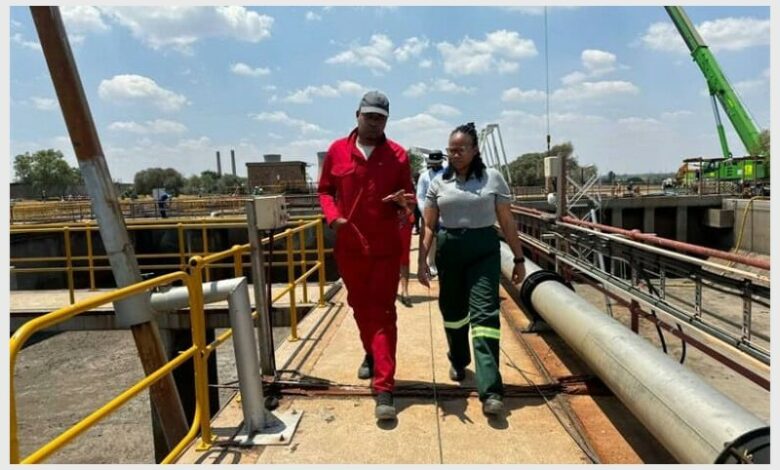
The Tshwane Metro revealed that it has budgeted around R120-million to repair and maintain all 16 Waste Water Treatment Plants (WWTW) for the 2026/27 Financial Year, which started on July 1.
This follows after opposition raised concerns about the deteriorating state of the Tshwane Metro’s wastewater treatment works, alleging that the municipality is failing to disclose the full extent of the infrastructure crisis.
Recently, the Department of Water and Sanitation (DWS) 2025 Green Drop Report revealed that six of the city’s 16 sewage plants scored 30% or below, indicating a decline in the quality of sanitation system processes.
Scores of 90% are considered excellent, while scores below 31% are rated critical and trigger regulatory intervention.
Once a strong performer with a score of 82% in 2013, Tshwane’s score has plunged to below 34%, placing the metro firmly in the ‘poor performance’ category.
FF+ councillor Nick Pascoe said that according to a quarterly oversight report by the Department of Utilities recently tabled before council, several wastewater treatment works are operating well below acceptable compliance levels.
He said the report indicates that three wastewater treatment works are operating at below 30%.
Pascoe claims the report does not include the remaining 12 wastewater treatment works in the metro, alleging that the omission conceals the true extent of the deterioration.
He said that, due to the collapse, untreated sewage is being dumped into rivers in and around Pretoria, such as the Apies, Hennops and many others.
Pascoe said that consequently, the quality of tap water in Temba and Bronkhorstspruit is well below the national legal safety standard.
“This contaminated tap water poses a direct health risk to families. Furthermore, farmers in the area can no longer use river water, and the underground water table has become so severely polluted that boreholes are rendered unusable.”
According to him, the FF+ has repeatedly urged the council to earmark sufficient funds for restoring its wastewater treatment works to full capacity.
He strongly condemned the coalition’s attempts to manipulate the data or obscure it behind quarterly intervals so as to hide the truth before the upcoming elections.
“While other parties turn a blind eye, the FF+ stands as the final line of defence for fiscal discipline and residents’ constitutional right to a safe environment.”
Tshwane Metro spokesperson Lindela Mashigo said the metro has a budget to maintain the 16 water treatment plants.
Mashigo said the effluent quality compliance of WWTWs is negatively affected if the laboratories could not analyse the sample, as no analysis means a zero compliance.
Mashigo said several of the metro’s WWTWs continue to battle ageing infrastructure, vandalism, power supply challenges, and capacity constraints, all of which are affecting effluent quality and environmental compliance.
At the Baviaanspoort WWTW, Mashigo said vandalism and theft at the rural on-site sludge disposal area have prevented sludge disposal operations.
Mashigo said several interventions have been identified for the plant, including upgrading the redundant Module 1.
“Stabilising the power supply is required before Module 2 can be brought back into operation.”
He said the plant scored 34.9% in the latest Green Drop Report, while its effluent quality compliance stands at 30.6%.
Turning to the Daspoort WWTW, Mashigo said there are no plans to expand the facility because future growth in the drainage basin will be accommodated by the Rooiwal WWTW.
He said only refurbishment work has been planned at Daspoort due to ageing infrastructure.
Mashigo added that the facility currently has no operational chemical dosing system to remove phosphates, which has negatively affected effluent quality.
At the Godrich (Bronkhorstspruit) WWTW, Mashigo said the existing infrastructure requires upgrades to improve treatment efficiency.
He said the plant also requires additional treatment capacity to cater for future development.
Mashigo said ageing infrastructure at that facility remains another major concern.
The facility received a Green Drop score of 30%, while its effluent quality compliance in May 2026 was 46.4%.
Mashigo said the plant only recently resumed operations after Eskom restored electricity following years of disruption caused by vandalism.
Although operational, the plant is discharging poor-quality effluent as its biological treatment processes have not yet been fully reactivated.
At the Sandspruit WWTW Mashigo said wastewater entering the plant contains significantly higher nitrogen and phosphate concentrations than the facility was originally designed to handle. He warned that the overloaded system has serious environmental consequences.
The Sunderland Ridge WWTW achieved a Green Drop score of 35.2%, while its effluent quality compliance stood at 28.2%.
Mashigo said the facility faces numerous operational challenges, including repeated electricity supply interruptions, vandalism and theft. He added that parts of the workshop and laboratory buildings have also subsided.
Mashigo said several maintenance and refurbishment projects are planned for the current financial year as the city works to improve compliance, restore ageing infrastructure and enhance the performance of its wastewater treatment plants.
Do you have more information about the story?
Please send us an email to bennittb@rekord.co.za or phone us on 083 625 4114.
For free breaking and community news, visit Rekord’s websites: Rekord East
For more news and interesting articles, like Rekord on Facebook, follow us on Twitter or Instagram or TikTok or WhatsApp Channel