Campaign targets toxic Apies River
The water in the Apies River is said to be highly toxic, containing sewage, bacteria, bloodworms, leeches, and fly infestations.
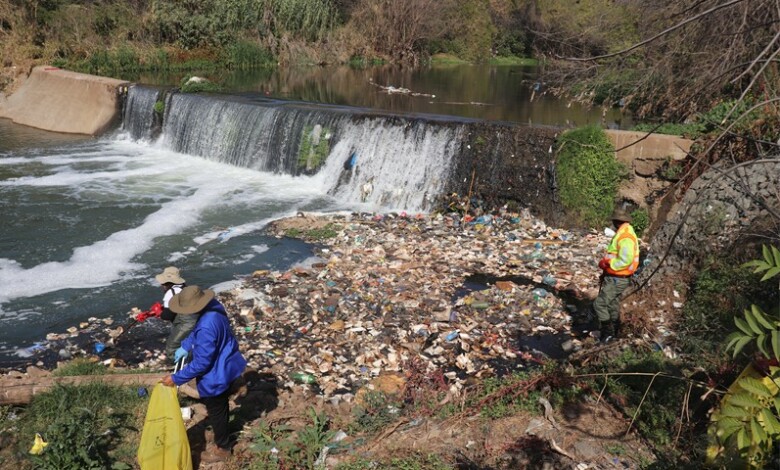
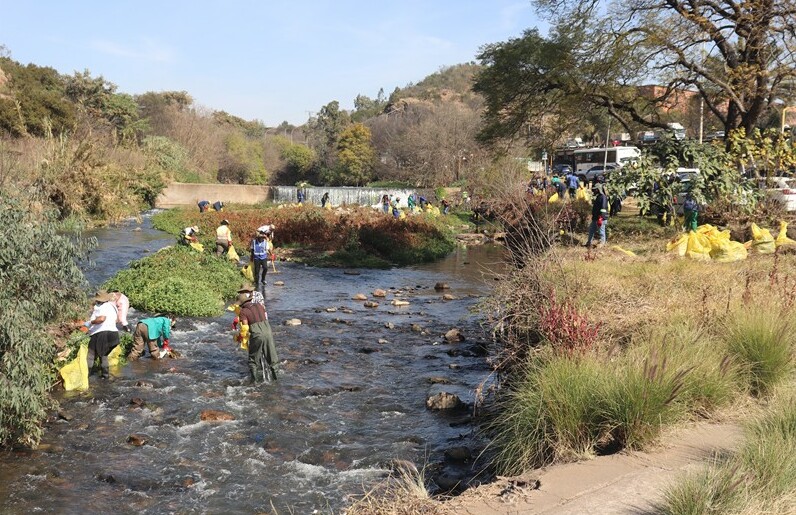
Under the leadership of the newly appointed Deputy Minister of Water and Sanitation (DWS), Jack Bloom, the department and several stakeholders recently held a large-scale clean-up of the Apies River.
This forms part of a new campaign aimed at cleaning up South African rivers.
Volunteers tackled the area around De Waal Interchange near the Apies River’s low-water bridge and the off-ramp on Es’kia Mphahlele Drive into Capital Park on July 20.
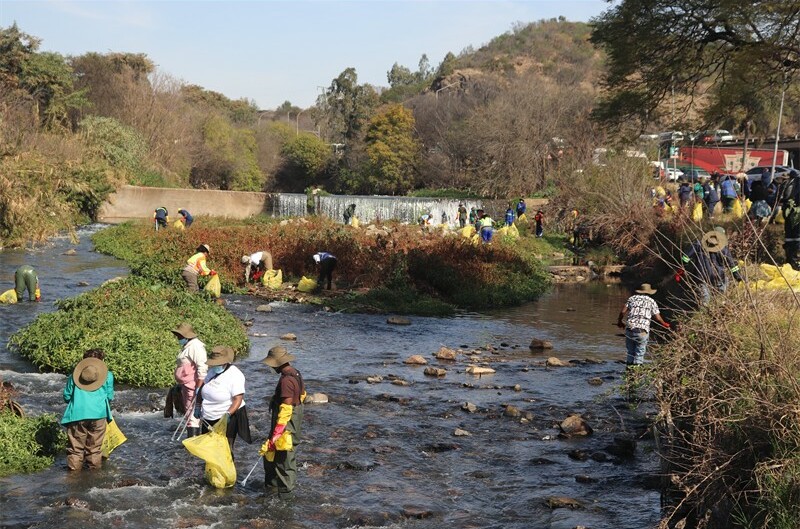
According to the DWS, the Clean Rivers Campaign theme is ‘South Africa is a water-scarce country: Clean up and protect our water resources’.
The initiative encourages citizens to dedicate their time towards cleaning and preserving rivers, streams, wetlands and other freshwater ecosystems.
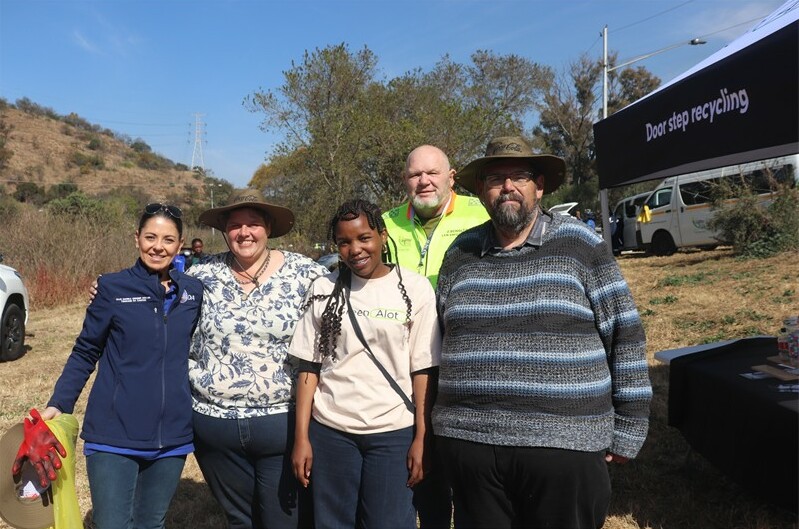
Other partnering organisations involved included Ward 1 councillor Leon Kruyshaar, the Environmental Warriors, Plastic SA, Rand Water, Coca-Cola Beverages South Africa (CCBSA), WESSA (Wildlife and Environment Society of South Africa), Trans-Caledon Tunnel Authority (TCTA), and the Limpopo-Olifants Catchment Management Agency (LOCMA).
“We should be looking at the causes of the toxicity in the water. It’s really bad. The fish can’t even swim in it anymore; that’s how bad it is. We have got a lot of debris coming down the river, because of people living on the river banks; that’s another big problem,” Kruyshaar said.
He added that municipalities are spilling waste into the river, particularly sewage.
Kruyshaar said other municipalities and the metro need to be held accountable for their contributions to the poor state of the Apies River’s water quality and upkeep.
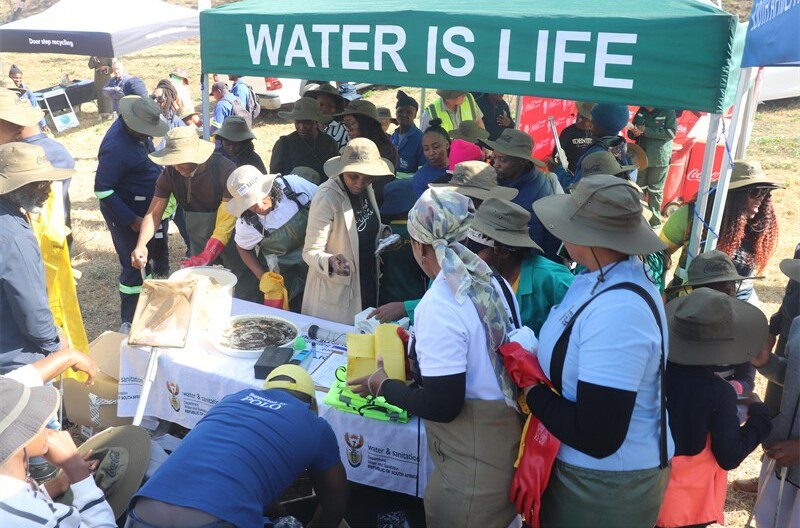
“Don’t pollute the water; please don’t dump in the rivers. There are other forms or organisations to not dump. Please get rid of your waste responsibly; don’t dump anything into the water,” he pleaded.
“We have human faeces in the water; we’ve had instances of bodies being recovered after floods, so living around the river edge is very dangerous.”
During his address, Bloom reminded people that polluted rivers are not only a detriment to the environment, but also a violation of the Section 24 Constitutional right: “Everyone has the right to an environment that does not harm their health”.
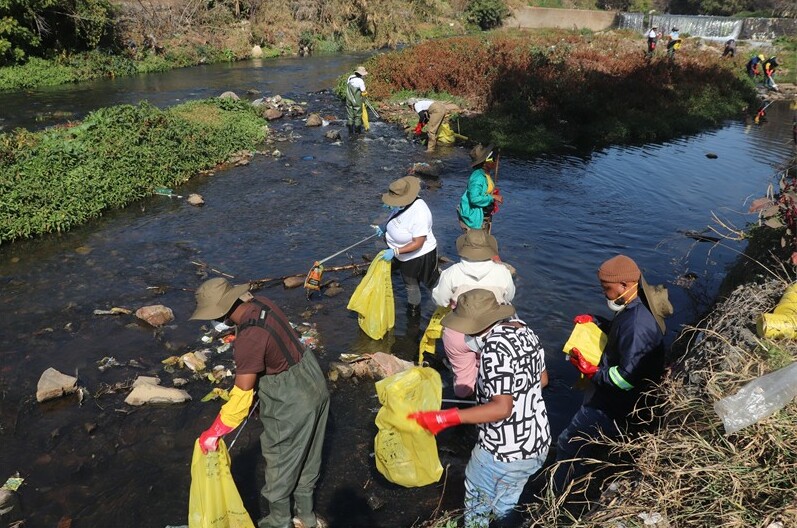
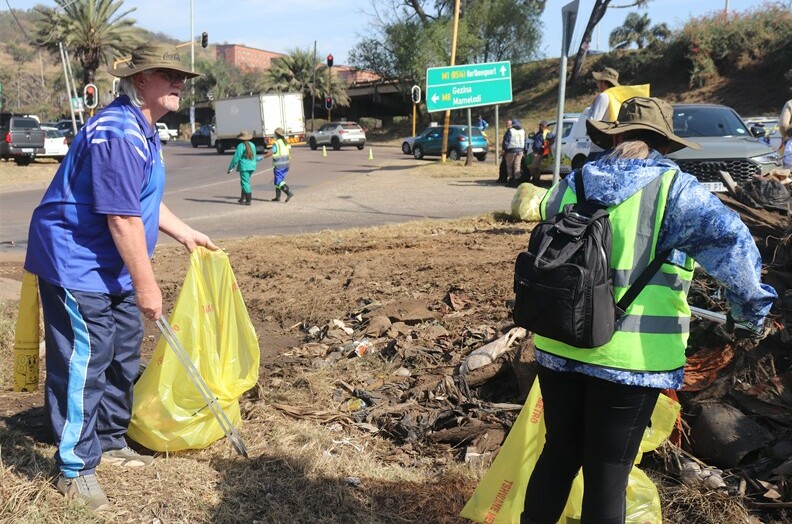
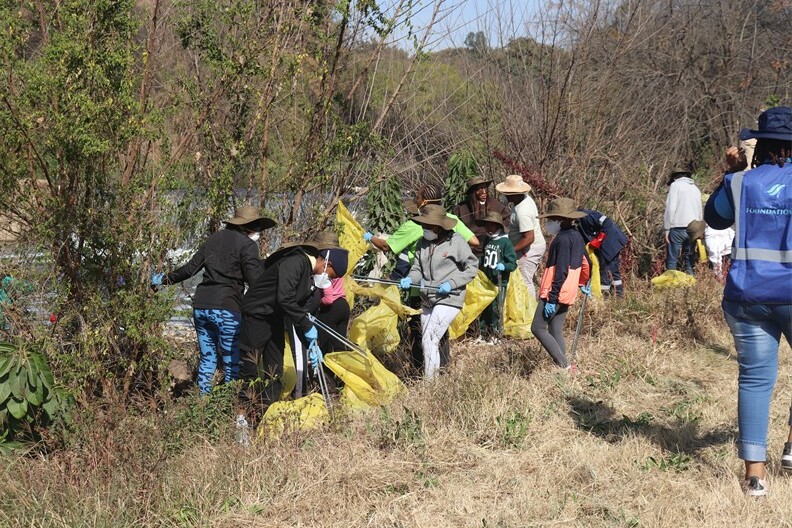
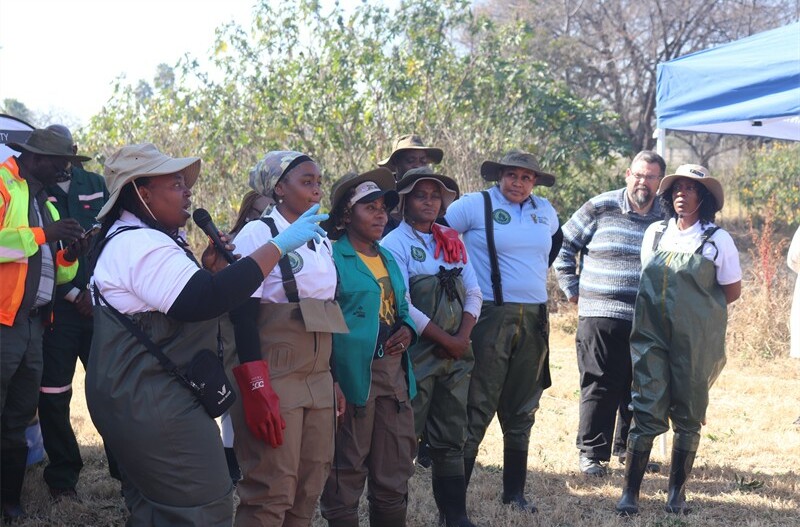
Bloom commended the Environmental Warriors, especially for their continuous clean-up efforts at the river, as well as the Eco-Warriors from Laerskool Akasia, learners from Laerskool Hermanstaad, and the Tshwane University of Technology (TUT).
“I’m told that a clean-up is done every few months or every few weeks, but I think we need to be honest and recognise that these clean-ups are tackling the symptom and not the cause,” the deputy minister said.
“People should not be dumping into rivers, and we should have working litter traps,” he added.
“We’ve had all of these safety precautions and measures today because the Apies River is not a safe river. According to the tests, it’s highly toxic. You cannot drink the water, and it is dangerous to swim in. If you have an open wound in that water, it will become infected. There are no fish, and it has deteriorated massively over the past 20 years,” he said.
Bloom said his department declared the river a disaster area back in 2011, due to the raw sewage flowing from the Rooiwal Wastewater Treatment.
“There’s no good bacteria; only bad. Leeches, fly infestations, blood worms, terrible smells, polluted chemically and microbiologically.”
Bloom said the pollution was coming from the Pretoria CBD, including the Pretoria Zoo, as well as many industrial companies in Pretoria West.
He said the fact that Apies flows through the nation’s capital makes its state especially heinous as it sustains communities, supports livelihoods, and has cultural and spiritual significance for people.
According to the 2025 Green Drop Report, 396 out of 848 of the country’s municipal wastewater treatment systems are classified as being in a critical state. That is 47%, an increase from the 39% in 2022. Only 8% of the systems registered have a good or excellent performance, and that’s down from 14% in the previous assessment.
In an effort to bring these corporations and municipalities to book for their violations against the environment, Bloom looks to introduce a registry containing perpetrators of crimes against the environment.
“There are 96 active criminal cases for sewage involving 53 water service authorities across all nine provinces; 53 of those cases are still under investigation, and 42 are being handled by the National Prosecuting Authority (NPA),” Bloom said.
“We need to get tougher on those who pollute our water.”
Bloom said the minister ordered him to establish a National Polluters Register.
“This will be a significant name-and-shame tool for accountability and sanctions. I intend to be relentless in pursuing those who pollute our precious water. The government must play its part, but citizens must as well,” Bloom said.
He also announced the new Pollution of Water and Fresh Ecosystems Hotline – 0800 200 200.
Rand Water chairperson, Ramateu Monyokolo, said the water utility produces 5 billion litres of water daily, with a total daily capacity of 5.8 billion litres.
“The demand is high, as half of that gets lost in municipalities.
Monyokolo added that municipalities have sewage challenges and that Rand Water decided instead of blaming the municipalities to partner with Emfuleni and establish the Vaal Corporation Water Utility to assist them.
“We’ve also escalated that with the Association of Water and Sanitation Institutions of South Africa (AWSISA). It shouldn’t be a one-off but continuous. But we also need to deal with the source of the problem,” Monyokolo concluded.
Do you have more information about the story?
Please send us an email to bennittb@rekord.co.za or phone us on 083 625 4114.
For free breaking and community news, visit Rekord’s websites: Rekord East
For more news and interesting articles, like Rekord on Facebook, follow us on Twitter or Instagram or TikTok or WhatsApp Channel