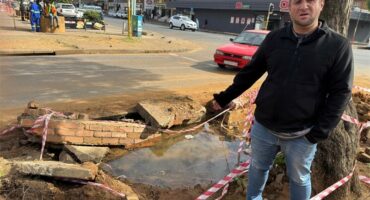
Centurion likely to experience more sinkholes – expert
Irene, Valhalla and Laudium are prone to sinkholes.
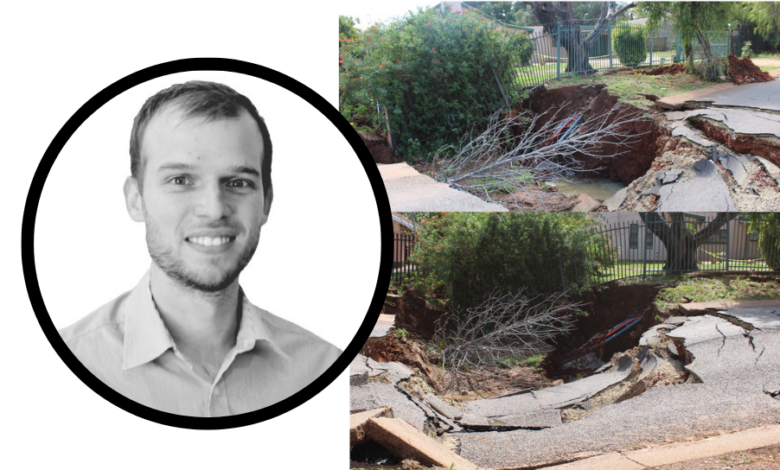
The Wierda Road over the N14 has been closed off due to a sinkhole developing on it.
The Tshwane metro police (TMPD) urged motorists to use alternative routes.
“The bridge over the N14 is sagging due to a suspected sinkhole. Gauteng road officials are on the site as the road belongs to them. Further updates will be communicated once the Gauteng chief engineer has visited the site,” TMPD said.
According to Geoscience development council manager Willem Meintjes, Centurion will likely suffer from more sinkholes, particularly Irene, Valhalla and Laudium as those suburbs are more prone to it.
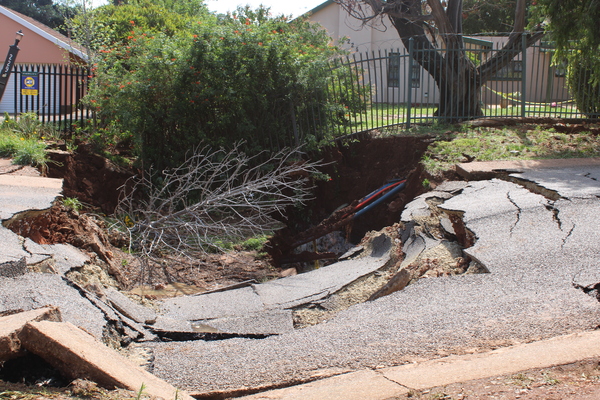
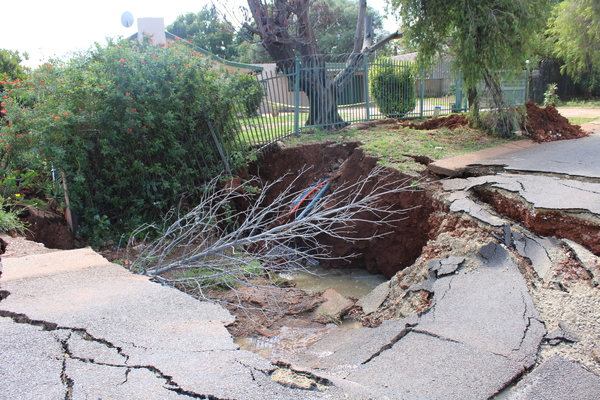
Centurion has been struck by an avalanche of sinkholes lately. In the past month, a sinkhole occurred on the corner of Snake Valley and Paul Kruger roads near Zwartkop air force base during heavy rainfall.
So far the municipality only managed to complete fixing two sinkholes in Alexander Road and on the corner of Potgieter and Clifton roads.
In an interview with Rekord, Meintjes said areas underlain by dolomitic rock were susceptible to sinkholes.

“This typically comprises the greater Centurion-Irene areas and most areas westward towards Valhalla and Laudium. These areas have a predisposition to be susceptible to the formation of sinkholes and subsidence when an appropriate sinkhole triggering mechanism is introduced,” Meintjies said.
“Sinkhole triggers typically include the concentrated ingress of water in dolomitic areas or large-scale groundwater abstraction. Prior information indicates that the majority of sinkhole occurrences in the greater Tshwane region are mainly attributed to the concentrated ingress of water – either from leaking water-bearing infrastructure or storm water.”
He said for the municipality to deal with these sinkholes, it needed to monitor any new development on dolomitic land and maintain sinkhole formation within tolerable limits.
“This is typically done by following an approved and appropriate dolomite risk management strategy and plan, to highlight key risk areas that must be managed, having adequate monitoring systems in place, formulation of appropriate response actions, and long-term maintenance and infrastructure upgrade plans.
In the event that sinkholes occur – something that cannot be precluded with absolute certainty – appropriate rehabilitation must be undertaken to repair all damage and reinstate infrastructure in line with future land use requirements,” Meintjes added.
On whether residents should be relocated or not, he said resettlement in these areas was only considered as an absolute last resort when the occurrences of sinkholes became intolerable and unmanageable.
“Since 2011, new development on dolomitic land is undertaken in line with the requirements of the promulgated national standards, which should be compliant with the minimum requirements aimed at mitigating development risks. Where development on dolomitic areas was undertaken prior to the prevailing national standards, dolomite risk management principles must be applied to minimise the occurrences of sinkholes to within tolerable limits,” Meintjes said.
Furthermore he said that the residential areas will remain safe as the metro makes sure that the dolomite risk management measures were implemented, adding that it would minimise the occurrences of sinkholes.
Meintjes said these occurrences can also be averted by ensuring that water pipes were not leaking and storm water was draining adequately between residential units and into the municipal storm water systems.
ALSO READ: Clifton Road sinkhole to be assessed
Do you have more information about the story?
Please send us an email to editorial@rekord.co.za or phone us on 083 625 4114.
For free breaking and community news, visit Rekord’s websites: Rekord East
For more news and interesting articles, like Rekord on Facebook, follow us on Twitter or Instagram