Mixed reactions to the metro’s R33m water project with Denmark
“Informal settlements won’t benefit from the project as they are not developed like the inner cities and suburbs. They don’t even have a plan on developing the area for residents to clean running water so this is just nothing but a futile political exercise.”
Councillors from different wards have expressed divided opinions over the metro’s R33-million Rand water project with the Danish city of Aarhus.
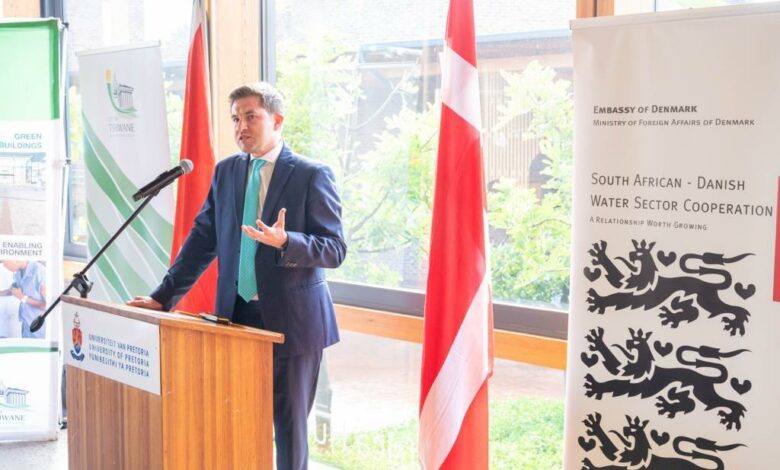
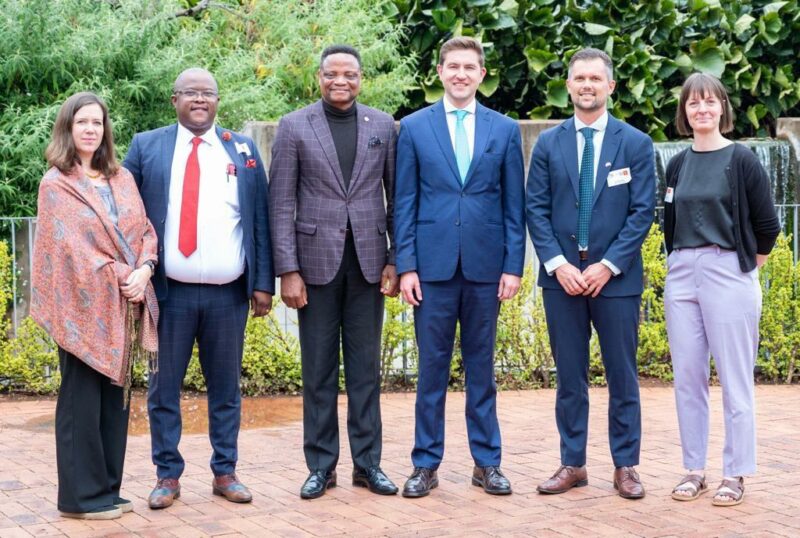
On May 8, mayor Cilliers Brink officially launched phase 2 of the initiative at the Future Africa Campus at the University of Pretoria.
While the announcement has evoked some excitement, others, particularly in the informal settlements and townships believe this effort will have no benefit for residents in underdeveloped areas.
“We have a big challenge regarding water issues. Seventy-eight per cent of the ward is an informal settlement and 40% of the community depends on water from water tankers because they don’t have formal water connections.
“Right now as we speak the truck delivers water only three times a week because of the lack of resources from the municipality. Also, the water tankers are not enough to cover the area in our ward,” said ward 107 councillor Jeff Mashego.
“These things will not benefit townships and informal settlements, it’s only happening because that’s how multi-party coalition governments work,” Mashego continued.
Sharing a similar view to Mashego is councillor Phasha Phasha of ward 71 Atteridgeville region 3, in an informal settlement called Jeffsville and Phomolong. Phasha believed that informal settlements won’t benefit from the project as they are not developed like the inner cities and suburbs.
“They don’t even have a plan on developing the area for residents to clean running water so this is just nothing but a futile political exercise,” Phasha stated.
Much like Mashego’s ward, residents in Jeffsville and Phomolong have also been relying on water tankers to receive water. Phasha claimed tankers are rarely cleaned by the municipality.
“Having these collaborations with other countries does nothing. We’ve been having our own issues, Hammanskraal has been going on for years. This is all just a play for the mayor’s political purposes as the 2024 national elections are coming up,” Phasha continued.
Chairperson of the non-political Lotus Atteridgeville Saulsville civic association (Lasca), Tshepo Mahlangu said that the people need services and not experiments.
“I see this as an experiment that will never benefit any community members. Overseas countries like using South Africa as their testing ground, hence load-shedding and the NHI health system they also want to introduce,” Mahlangu stated.
“Denmark supports green initiatives and runs a programme with UP. It won’t benefit residents directly. It’s just a modelling exercise to determine where the City loses water without revenue. It doesn’t clean dirty water. It’s trying to save and that’s it,” Mahlangu continued.
The mayor said that phase 1 has been a success and that phase 2 would tackle further water-related issues such as conversation, accurate water meter readings, and enlisting the proper expertise to help solve crises like the issues Temba and Hammanskraal are going through.
“Essentially, this partnership is a window of opportunity for the City to learn best practices in water security and management from the Danish government,” said Brink.
“The two cities have agreed to collaborate on water-management projects, such as reducing non-revenue water losses, conducting active leak detection, prioritising pipe replacement, focusing on own water generation and managing wastewater effectively,” Brink continued.
The Danish Ministry of Foreign Affairs has allocated R33-million to the project, and it is believed that it will run from April 1, 2023, until March 31, 2026.
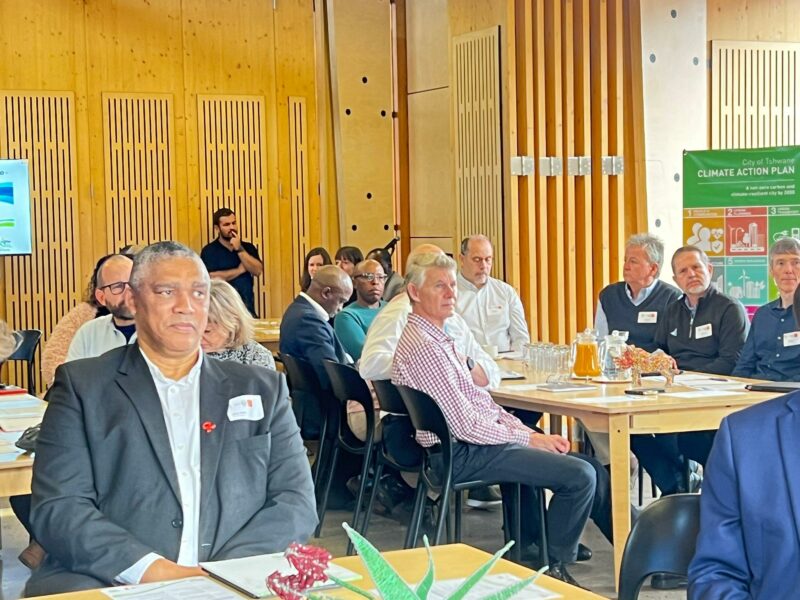
The announcement has seemed to divide opinions with some believing the effort is just what the metro needs while others believe that this is nothing but a mere political stunt.
Ward 92 councillor Leanne de Jager said that the areas affected by the project “is immaterial, all that matters is that it will be a positive effect experienced by the whole metro”.
“It is a very positive step to have countries who are water-wise and have the expertise to invest in the City in such a way and should be promoted and encouraged,” said De Jager.
Sharing the councillors’ thoughts on the project was fellow ward councillor of wards 4 and 30, Anru Meyer who stated that the Danish city of Aarhus is recognised as having one of the best water reticulation systems in the world.
“I believe that this is a very good initiative which will bear fruit for the residents of the areas, water is a scarce resource and we sometimes find ourselves in dry spells,” Meyer said.
“The City finds itself in a very difficult financial position and with the constant water bursts, leaks and losses we need to ensure that there’s a plan for our water security led by experts,” Meyer continued.
The metro said that it aims to tackle all Demand Management Areas (DMA) in the metro with the first phase of the project targeting the Pretoria West DMA.
“The non-revenue water project targeted the Pretoria West DMA in Phase 1 and will target the Hercules West DMA in Phase 2. There are 240 DMAs in the Tshwane metro and the methods of detecting and reducing water losses have been tested in the Pretoria West DMA and will be further refined in the Hercules DMA to allow for replication in the other DMAs,” said Tshwane mayoral spokesperson, Sipho Stuurman.
The metro stated that the completion of the Hercules West intervention will immediately result in the reduction of water losses in the area and improve water security for the City. For the time being, the metro wants to pilot the water loss reduction interventions in the selected areas and then roll them out across the rest of the city.
“The City wants to tackle revenue loss through high water losses as a result of ageing infrastructure by a) promoting active leak detection and b) identifying only those pipes that need to be replaced when compromised instead of replacing an entire pipe network in a DMA,” Stuurman continued.
By the end of phase 2, the metro hopes to:
– Optimal functioning of wastewater treatment works through an improvement of standard operating procedures
– A way of diversifying our water mix to augment our water supply from the external bulk water suppliers
– Future-proof the city against water shortages through a water security strategy
The City is also currently undertaking IDP consultative sessions where plans to address the water issues for the rest of 2023 are in the making.
So far, there’s no indication of when phase 3 is expected to start.
Do you have more information about the story?
Please send us an email to editorial@rekord.co.za or phone us on 083 625 4114.
For free breaking and community news, visit Rekord’s websites: Rekord East
For more news and interesting articles, like Rekord on Facebook, follow us on Twitter or Instagram