Gyro community shares their passion
A gyroplane or gyrocopter is a class of rotorcraft that uses an unpowered rotor in free autorotation to develop lift.
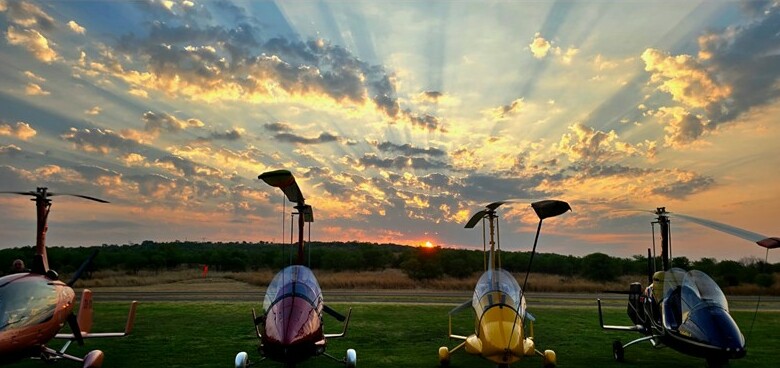
Aircraft enthusiasts and novices gathered at the Kitty Hawk Aerodome this weekend as the South African Gyroplane Association (SAGPA) premiered its six-part series aimed at promoting gyroplanes.
Gyrocopter – Freedom of Flight, presented by Wouter Botes, details all the aspects one needs to know about one of the safest aircraft created.
The series chats with SAGPA members, gyro pilots, trainers, and other aviation industry experts to give viewers an in-depth insight into the niche sport.
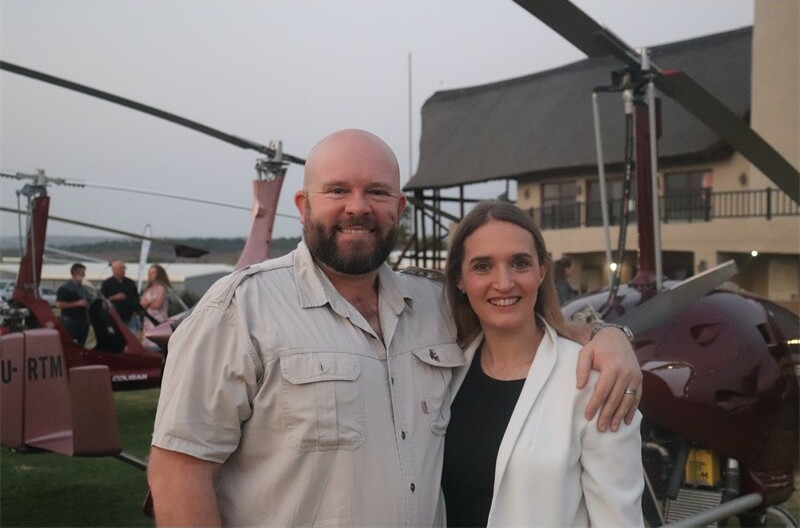
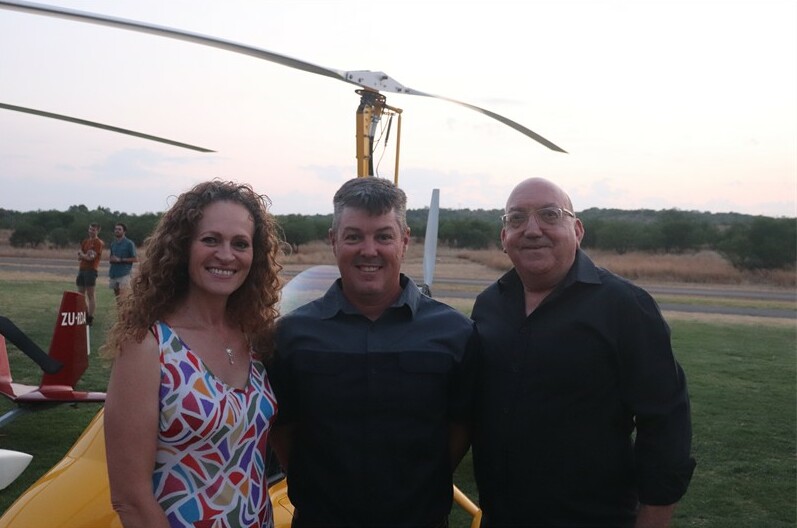
A gyroplane or gyrocopter is a class of rotorcraft that uses an unpowered rotor in free autorotation to develop lift.
They are generally easy to fly, safe and an affordable introduction into the world of flying. Unlike a helicopter, the rotor isn’t connected to the engine; it rotates by wind passing through it from the bottom up. This is a process called autorotation. Even if the engine were to cut out, you’d still land safely.
Gyros can take off and land in short distances, operate at lower altitudes and speeds, and be less complex and expensive to maintain.
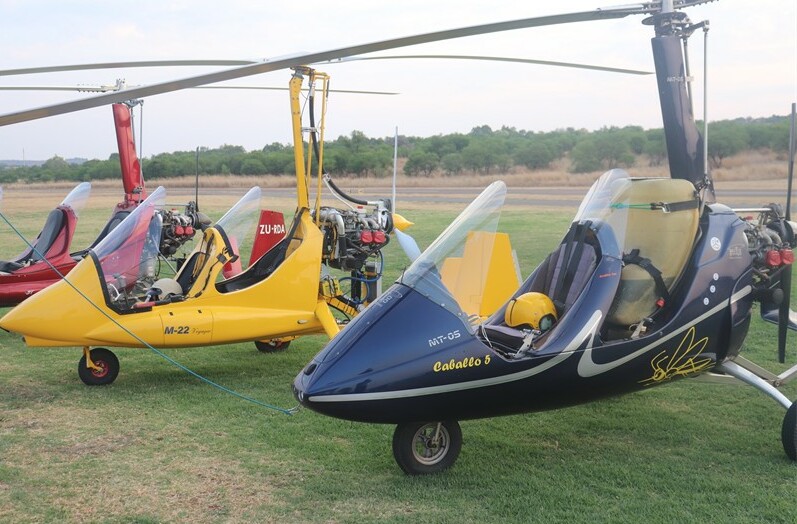
SAGPA chairman Jacques Swiegers says they created the series to bring more attention to the sport, as well as give those interested in a career or hobby in flying the guidance they need to start.
“Aviation across all the divisions has seen a decline. Firstly, we want to promote our sport and put a lot more gyroplanes out there.
“South Africa is a beautiful country, and there’s no better platform to see what South Africa is all about than in a gyroplane. You can fly low, slow, and legal, and you can see places in this country that no one else has seen before,” Swiegers says.
He says the exact date the series will premiere will be communicated in due course, though he promises a worthwhile experience for viewers.
SAGPA member Charles du Toit has been flying gyros for over 20 years. He says it’s the enjoyment of flying that keeps him coming back.
“Being a part of the film was a great experience. It came from the association, and it was to promote gyroflying.
“If you go to a dinner or braai, a lot of people don’t know what a gyroplane even is. The second thing is education. There are a lot of misconceptions about them.
“People see a gyro and hear how it works, and immediately think that it is going to crash; they don’t understand the principles, mechanics and how it flies. That’s one of the things the series explains very well, and it differs from a helicopter,” Du Toit said.
Du Toit adds that the series goes into the applications of gyroflying and explains what they are used for, beyond being a social club.
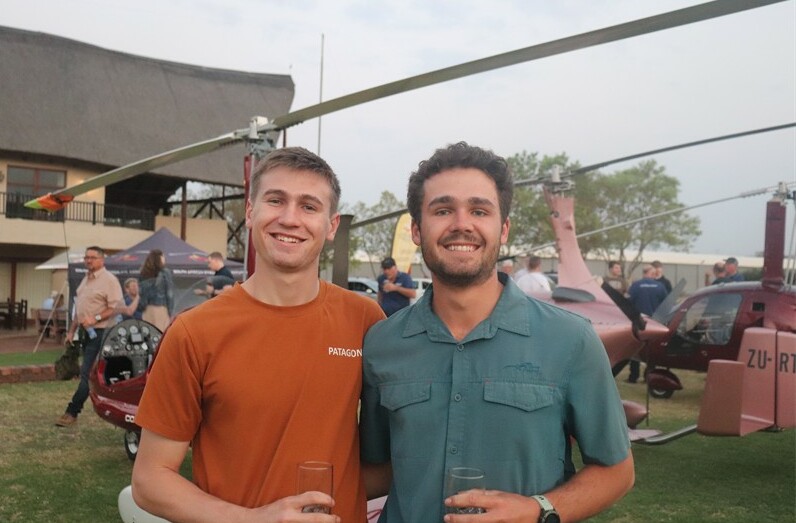
Gyroplanes can be used by farmers for commercial purposes, dropping fertilisers on crops, checking fencing and locating lost cattle.
Vice-President Graham Richardson shared similar sentiments regarding the aviation industry currently, saying that general flying has become a lot more expensive and people don’t realise that there is an alternative.
“Most young people leave school and do their Private Pilot License (PPL), which costs a fortune. You can do your Multi-Crew Pilot Licence (MPL), which doesn’t cost as much, and it gets you into the sky.
“It does a couple of things for you: it gives you experience, and maybe you think you want to fly, but discover it’s not for you.
“Maybe you realise that you want to fly, but not commercially. Then you come do your gyro licence or light-sport aircraft licence or your windows trike licence, it’s just a way to get you in the sky. It’s inexpensive in comparison, not to say it’s cheap, and it gives you the ability to decide,” Richardson says.
Richardson says that a lot of people doing their PPL’s do not necessarily want to fly jumbo crafts, they just want to get into the air, and gyros help achieve that.
Those interested in joining should pursue their MPL at a school near you before pursuing a professional licence.
Gyroplane instructor Roeloff Palm, who was one of the first instructors back in the nineties at SAGPA, says that training is 30 hours minimum, 15 hours dual, and 15 hours solo.
Applicants would also have to complete seven subjects, obtain their radio licence and pass their flight medical before they enrol.
Palm instructs at the Skyriders and Freedom Flight School at Bapsfontein and has trained just over 100 pilots in his career.
“Look, it’s not a cheap machine. The new ones coming into South Africa can be R2.8-million for one because they’re more advanced.
“So, first of all, do your theory because the seven subjects can be a problem; there’s meteorological services and information, principles of flight, human performance, navigation. So, there are a couple of things that can be stumbling blocks.
“Once you come to me, you have a good idea of how gyros work. I once had a 75-year-old from Namibia who I trained from Monday to Friday, and he was ready for solo in one weeks’ time.
“The age is usually 40+, why, because the wallet is thicker, so the young ones are still building. Second-hand gyros can go for R500, R600 or R700 000,” Palm said.
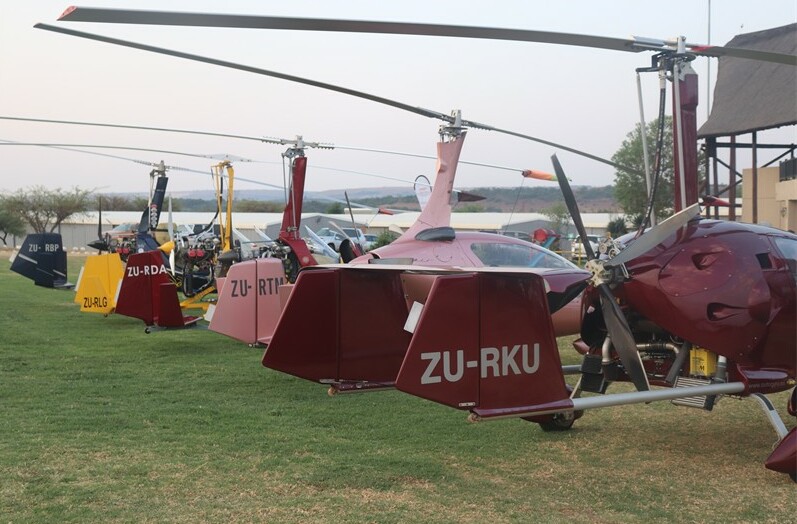
Every year, SAGPA takes 10–12 gyros on a trip to Namibia called the Namibia Gyro Boogie without any ground crew.
They fly to Upington, then into Namibia, fly throughout the whole of Namibia and return without any ground crew or trailers.
Do you have more information about the story?
Please send us an email to bennittb@rekord.co.za or phone us on 083 625 4114.
For free breaking and community news, visit Rekord’s websites: Rekord East
For more news and interesting articles, like Rekord on Facebook, follow us on Twitter or Instagram or TikTok.