New regional framework sets direction for Tshwane’s future urban planning
Adopted on September 25, the Regionalised Spatial Development Framework 2025 aims to strengthen land use management and infrastructure alignment, despite lingering objections from local civic groups.
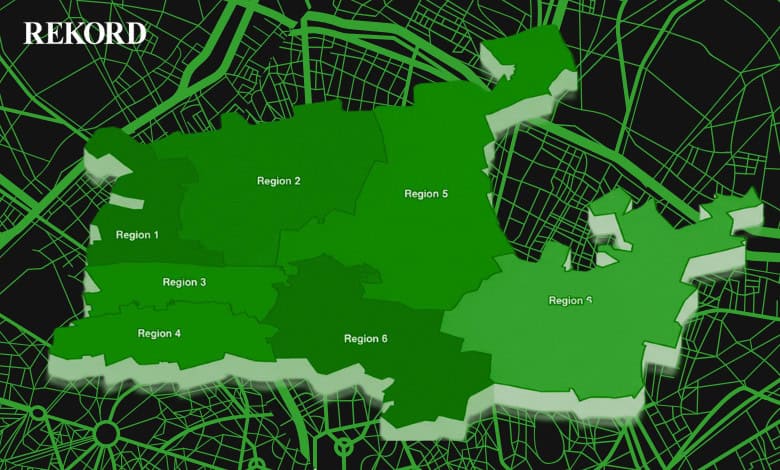
The Tshwane metro has officially adopted its Regionalised Spatial Development Framework (RSDF) 2025, marking what it describes as a ‘major milestone’ in guiding the capital’s sustainable growth and future development.
The framework was adopted by the council on September 25 and aims to direct infrastructure investment, land use management, and service delivery across the metro’s seven regions.
According to MMC for Economic Development and Spatial Planning Sarah Mabotsa, this significant achievement marks a major milestone in guiding the city’s sustainable growth and development.
Mabotsa said the RSDF 2025 will help Tshwane manage its rapid urban growth responsibly.
“Tshwane, with a 38% increase in population between 2011 and 2022, is South Africa’s fastest-growing metro and, by area, the biggest city in Africa and third largest in the world,” she said.
“We must ensure that our planning promotes spatial justice, inclusive economic development, and environmental sustainability.”
Mabotsa said the RSDF provides a comprehensive plan that identifies key development nodes, transport corridors, and public amenities to better align growth and infrastructure.
The framework also integrates environmental management and seeks to co-ordinate service delivery across municipal departments.
Mabotsa stated that the metro conducted an extensive public participation process, hosting 19 physical and one virtual meeting to gather input from residents, businesses, and civil society.
“We thank all stakeholders for their invaluable contributions,” she said.
“Although many comments related to expanding the urban edge, the metro has an economic, social, and environmental obligation to prevent urban sprawl, which is expensive and environmentally damaging.”
She said the RSDF promotes a more compact, integrated city by encouraging mixed-use developments where people can live closer to where they work, reducing congestion and costs.
However, some councillors and resident associations remain unconvinced that their concerns were adequately addressed before the document’s approval.
Ward 82 councillor Siobhan Muller said while the RSDF is an important planning tool, the process left many unanswered questions.
“When the draft RSDF is finished with public participation, they are supposed to include in the report to the council who said what, whether it’s supported or not, and why.
“However, they did not include the 500 residents from Lynnwood who objected,” said Muller.
She noted that some technical corrections were made, such as clarifying that the written document supersedes the maps, but said other key issues remain unresolved.
“One of the big concerns is the categorisation of roads, which now differs from the National Roads Act,” she said.
“For example, Kings Highway has been classified as a mobility road, which is incorrect according to national standards.”
Muller added that despite assurances that updated maps would be released following the council meeting, this has not yet been done.
According to her, the maps on the metro’s website are still the old ones.
“Residents and associations like the Lynnwood Residents Association are asking when and why some inputs were excluded and why others were rejected without explanation,” she said.
Local civic groups, including the Lynnwood and Menlo Park residents’ associations, have also questioned the transparency of the process, saying they still have not received feedback on their detailed submissions.
“The metro says the RSDF is done and dusted, but residents feel their concerns have been brushed aside,” Muller said.
The Old Pretoria East Ratepayers and Residents Alliance, which represents several suburbs including Menlo Park, Hazelwood, Lynnwood, and Brooklyn, echoed these frustrations.
Spokesperson Erik Buiten said residents feel their input during public participation was largely ignored.
He said that while the metro held one briefing session and allowed 45 days for comment, there was no real consultation or feedback afterwards.
“Unresolved issues such as reduced parking standards and inaccurate maps suggest the metro is pursuing a ‘pro-development approach’ that overlooks the interests of residents.”
Despite the objections, the metro insists that the RSDF 2025 will strengthen co-ordination, guide future investment, and ensure balanced development across the city.
Do you have more information about the story?
Please send us an email to bennittb@rekord.co.za or phone us on 083 625 4114.
For free breaking and community news, visit Rekord’s websites: Rekord East
For more news and interesting articles, like Rekord on Facebook, follow us on Twitter or Instagram or TikTok.