Toll anger in north fuels election debate
As local elections approach, unresolved tariff uncertainty and a year of stalled negotiations between community leaders, Sanral, and Bakwena have reignited political anger in northern Tshwane. These include suburbs in Pretoria North and the Moot, with residents threatening to withhold their votes over toll gates they call unfair and discriminatory.
Recent tariff uncertainty and stalled negotiations for a year between community leaders, Sanral, and the Bakwena Platinum Corridor Concessionaire have reignited anger in northern Pretoria, where residents say they are being unfairly burdened by a tolling system.
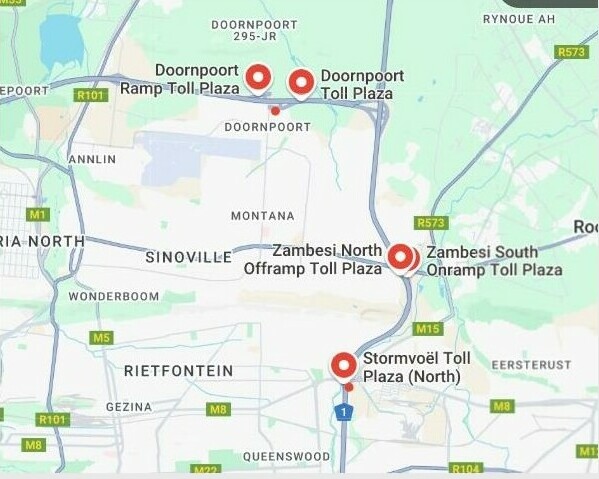
Compounding frustrations is the fact that, as of February 12, the official 2026/27 toll tariff increases for plazas such as Stormvoël, Zambezi and Doornpoort have not yet been announced.
The current approved tariffs, which came into effect on March 1, 2025, after a 4.84% increase, remain valid until February 28.
As is standard practice, new tariffs are typically announced in February and implemented from March 1 with adjustments generally linked to the Consumer Price Index (CPI).
Motorists are therefore awaiting publication of the updated figures in the Government Gazette in the coming weeks.
For many residents, however, the issue runs deeper than annual increases.
“Sanral and Bakwena refuse to make any information on the contract available. This, even after almost 20 years,” said Chris Nel, a resident in the area. “With upcoming local elections, we should refuse to vote for any party that does not support the removal of the tollgates.”
His comments reflect a growing sense that the dispute has shifted from a transport funding question to a political flashpoint.
A new report titled The Toll of Inequity: Report on the Unjust Tolling Regime of Northern Tshwane, authored by researcher Renier Wolfswinkel, describes the Stormvoël, Zambezi and Doornpoort toll plazas as a ‘discriminatory commuter tax’ imposed on Pretoria North and the Moot.
The report was released nearly two years after the Gauteng Freeway Improvement Project (GFIP) e-tolls were scrapped in April 2024, freeing most of Gauteng’s urban freeway network from direct user charges.

According to Wolfswinkel, that decision fundamentally altered the fairness equation in the province. He is an electronics engineer and small business owner in Annlin.
He argued that a two-tier system has emerged. On the one hand are motorists in Johannesburg, Ekurhuleni and southern Tshwane who now use formerly tolled highways funded through general taxation.
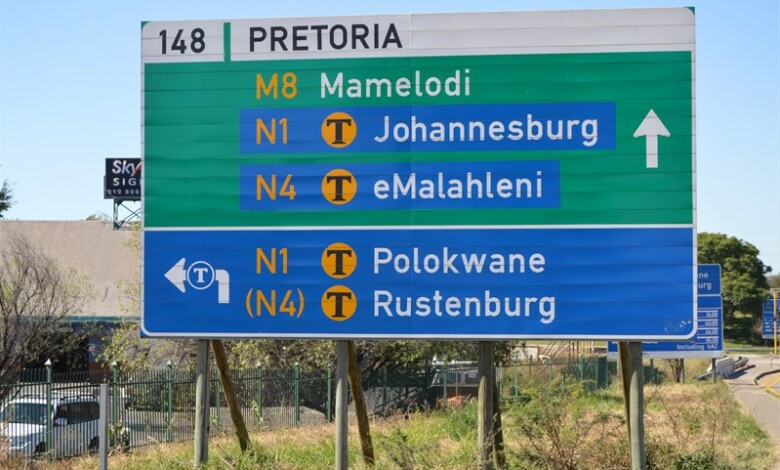
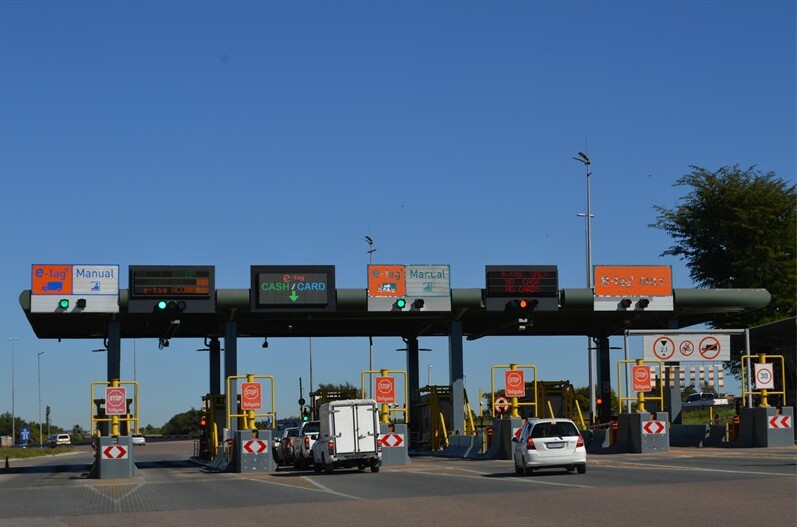
On the other side are residents of Pretoria North and Moot who still pass through boom-down toll gates on the N1 and N4 simply to reach workplaces, schools and hospitals within the same metropolitan area.
“The resultant disparity creates a two-tiered system of citizenship within the Tshwane city-region,” Wolfswinkel stated.
At the centre of the dispute is the 30-year concession agreement signed in 2000 between Sanral and the Bakwena Platinum Corridor Concessionaire, which runs until 2031.
While originally intended to upgrade and maintain long-distance trade corridors towards Polokwane and Botswana, rapid residential growth in areas such as Montana, Sinoville, and Doornpoort has effectively transformed sections of the N1 and N4 into urban commuter routes.
Wolfswinkel argued that infrastructure designed as bypass highways has become embedded in the city’s daily traffic patterns, yet continues to be priced as if it primarily serves long-haul freight and intercity travel.
“The contract, drafted in 2000, did not adequately account for the explosion of residential development,” he said.
The report challenges the legitimacy of the user-pay principle in this context.
In theory, those who use a road should fund it.
In practice, Wolfswinkel contended, residents of Pretoria North and the Moot have limited viable alternatives. Congested arterials such as Lavender Road and Sefako Makgatho Drive add significant travel time and fuel consumption, undermining the notion of real choice.
For most households, the cumulative cost is substantial.
A dual-income family commuting daily through Doornpoort and a ramp plaza could spend well over R1 000 per month on toll fees alone, amounting to more than R16 000 annually. He described this as a material reduction in disposable income in communities already under financial strain.
If a family has both parents driving to work every day, and maybe once or twice at the weekend, the costs can easily amount to R1 800 per month. This excludes small businesses that may have three or more vehicles that generally do most of their work on the south side of Pretoria; the costs can easily be between R3 000 and R5 000 per month just at toll gates.
Based on the 2025/26 Bakwena N1/N4 toll tariff documentation, the current rates for Class 1 (light vehicles) are: R12.00 for Stormvoël Ramp, R14.50 for Zambesi Ramp and R19.50 on Doornpoort Mainline/Ramp.
He further raises what he terms a ‘double taxation’ concern.
Motorists already contribute through the general fuel levy and other taxes. Since the GFIP debt is now serviced through national and provincial funds, Pretoria North and Moot residents contribute to those repayments while also paying specific Bakwena tolls.
On the legal front, Wolfswinkel pointed to constitutional provisions on equality and freedom of movement.
He questioned whether continuing to differentiate between urban commuters in Gauteng based solely on geography remains rational after the scrapping of e-tolls.
Rather than calling for wholesale contract repudiation, the report outlines targeted remedies.
For Stormvoël Plaza, it proposes full decommissioning of the ramp plazas.
For Zambezi Toll Plaza, it suggests a 100% discount or a nominal flat-rate pass for registered locals.
At Doornpoort Plaza, it recommends constructing dedicated bypass lanes for local traffic using licence plate recognition technology to separate community traffic from long-distance corridor users.
As residents await confirmation of the 2026/27 tariffs, the broader debate is intensifying.
With local elections looming, the toll issue appears set to become a campaign talking point in northern Pretoria.
Residents are not just frustrated about costs. They are questioning why toll relief and policy flexibility seen in other parts of South Africa cannot be replicated in Pretoria.
Many residents in Pretoria North, like Lydia Raath, pointed to examples elsewhere. Responses to toll burdens in KwaZulu-Natal, authorities have at times waived or suspended toll fees on major routes in response to community hardship and infrastructure failures. For instance, after flood damage made alternative roads unusable, and the Minister of Transport, Barbara Creecy, temporarily removed tolls to ease costs on affected commuters.
Residents say their frustration is deepening as Bakwena Platinum Corridor Concessionaire pushes ahead with a R276-million rehabilitation project on the N1 between the Proefplaas Interchange and the Pumulani Main Line Toll Plaza.
The works include rehabilitation of the slow lanes in both directions, upgrades to the Stormvoël and Zambezi interchanges and parts of the Proefplaas interchange, a full asphalt overlay, new road signage and repairs to drainage systems.
While acknowledging the importance of maintenance and safety, many Pretoria North and Moot residents argue that the project underscores the core dispute: commuters continue paying tolls daily, yet have little say over the concession contract.
They question why major upgrades and long-term economic benefits for freight and trade are highlighted, while local motorists remain locked into paying for infrastructure they regard as an unavoidable urban necessity rather than a premium corridor.
One resident’s comment shows this frustration: “If the authorities are not interested in what residents have to say. Perhaps a court order must be obtained to open the booms on the tollgates until an agreement was made with residents for relief.”
Comment has been requested from Bakwena as well as Sanral, but have not been received at the time of publication.
Also read: Akasia CPF commits to patrol crime hotspots
Do you have more information about the story?
Please send us an email to bennittb@rekord.co.za or phone us on 083 625 4114.
For free breaking and community news, visit Rekord’s websites: Rekord East
For more news and interesting articles, like Rekord on Facebook, follow us on Twitter or Instagram or TikTok or WhatsApp Channel