Sport physiotherapists – the unsung heroes of many successful sports teams
Without a good physiotherapist, most sports teams these days will struggle to perform consistently well.
Every so often, the media would go big on a story about a well-known athlete or player who is in a race against time to be fit for a vital encounter.
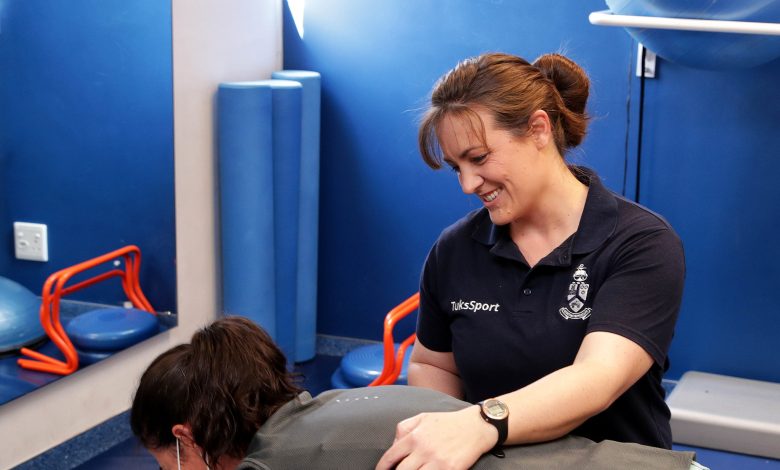
Fans love such “drama”. To them, their idols must be fighting fit. When it happens, it is the athlete who is hailed as the hero. But there is more to the story. Behind every great team and athlete is a dedicated physiotherapist tasked to keep them in peak physical condition. Sanet van Zyl from the Sport, Exercise Medicine and Lifestyle Institute (SEMLI), which is affiliated with the University of Pretoria, is one.
Over the last ten years, she was on the side-lines when Tuks’s rugby team won the Varsity Cup in 2012 and 2013; she was in Dubai when the Assupol Tuks Cricket Team won the International Red Bull Campus Tournament. There are countless more stories to be told of how her “healing hands” helped save the day.
It is often claimed that physiotherapists have the brains of a scientist, the heart of a humanist and the hands of an artist.
And with good reason. An athlete always wants the quickest way to return to play and to be at their best again. Therefore, it is required of a sports physiotherapist to have advanced problem solving and excellent clinical skills to meet these strict time-frames.
For Van Zyl, it is about making a difference. She believes that a sports physiotherapist, like the athletes, must always strive for excellence.
“You can never be happy to settle for second best. Sports physiotherapy is also a constant process of learning. Our job never becomes stale. You are always trialling new techniques, new exercises and new rehabilitation options,” she explained.
In the history of sport, there are countless stories of how top athletes only trusted specific physiotherapists to work on them. There is a good reason for this.
At times the rehabilitation process can take hours and hours. It leads to a special bond developing between athlete and therapist. When it happens, it is not uncommon for athletes to start opening up. Talking about their inner fears of failure. Expectations. Relationships, and whatever else is on their minds.
According to Van Zyl, apart from everything else, a physiotherapist needs to be a good listener.
“Over the years, I have become quite adept in listening to what athletes are telling me. It has helped me to ‘read between the lines’ and to get a better understanding of what might bother an athlete. There are days when I know something is wrong without a word being said. Then it is vital to get an athlete to open up. Talking often leads to healing and a better understanding of the challenges an athlete needs to face,” she remarked.
One of Van Zyl’s most special memories was last year when she got to work with the South African Paralympic Archery Team during the World Championships in the Netherlands.
“It was totally inspiring. The way the athletes always find a way to make things work for them has changed my perception about many things. It seems that for Paralympian athletes, there are never any obstacles. There are only solutions. They made me believe nothing is impossible,” Van Zyl concluded.
Do you have more information about the story? Please send us an email to editorial@rekord.co.za or phone us on 083 625 4114.
For free breaking and community news, visit Rekord’s website:
For more news and interesting articles, like Rekord on Facebook, follow us on Twitter or Instagram