Top swimmers fear impact of load shedding on Commonwealth Games preparation
South Africa's top swimming coach and mentor of several Olympic Swimmers is concerned about the impact that load shedding could have on their preparation, as they have to train in heated water during the winter season.
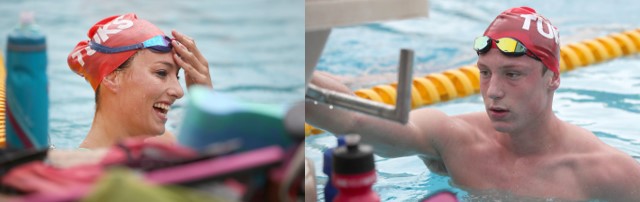
Load-shedding could impact the results of the South African swimmers during the Birmingham Commonwealth Games.
According to Eskom’s scenario planning, South Africans should brace themselves for 50 plus days of rolling blackouts during the coming winter months.
“I won’t lie. To me, load-shedding is a big worry. It is unfair to expect swimmers to win medals at the Commonwealth Games when they train in unheated pools during the winter,” said Tuks head coach Rocco Meiring.
Meiring coaches several of South Africa’s top swimmers and medal candidates at the Commonwealth Games.
He still has to decide whether his swimmers will compete internationally before the Games.
“My frustration is who will fund us if we want to compete in a few warmup events. There is no money. It is sort of ironic that when athletes and coaches need support, not the administrators nor the government is seemingly able to help. To me, it is a scenario of expecting South African athletes to go to war proverbially with their one hand tied behind their back. Still, we get the results,” he commented.
Meiring can’t help but be excited that six of the nine swimmers who had qualified to compete at the Commonwealth Games and World Championships are based in South Africa.
Tatjana Schoenmaker (50m, 100m and 200m breaststroke), Kaylene Corbett (200m breaststroke) and Pieter Coetzé (50m, 100m 200m backstroke, 50m freestyle) are the Tuks swimmers who qualified.
Schoenmaker only won the 200m-breaststroke at the national championships. To Meiring, it is still a job done.
“The last few months had been difficult for Tatjana, but she buckled down when it mattered. It is the sign of a true champion. I have no doubt that she will regain the form that led to her winning two medals at the Tokyo Olympic Games,” he explained.
Meiring also has great respect for the way Corbett has managed to handle a full program since the Olympics.
“Kaylene was brilliant. Since coming back from the Tokyo Olympic Games, she was with her back against the wall. She had to catch up with her studies. That did not stop her from giving a 100% during each training session. Somehow, she still had energy left to study. It is incredible, considering that I changed her training program after the 200m-breaststroke Olympic final,” he remarked.
The 17-year-old Coetzé is, without a doubt, a star in the making. He won the 50m-backstroke, 100m-backstroke and 50m-freestyle and was second in the 50m-butterfly.
Do you have more information about the story?
Please send us an email to editorial@rekord.co.za or phone us on 083 625 4114.
For free breaking and community news, visit Rekord’s websites: Rekord East
For more news and interesting articles, like Rekord on Facebook, follow us on Twitter or Instagram