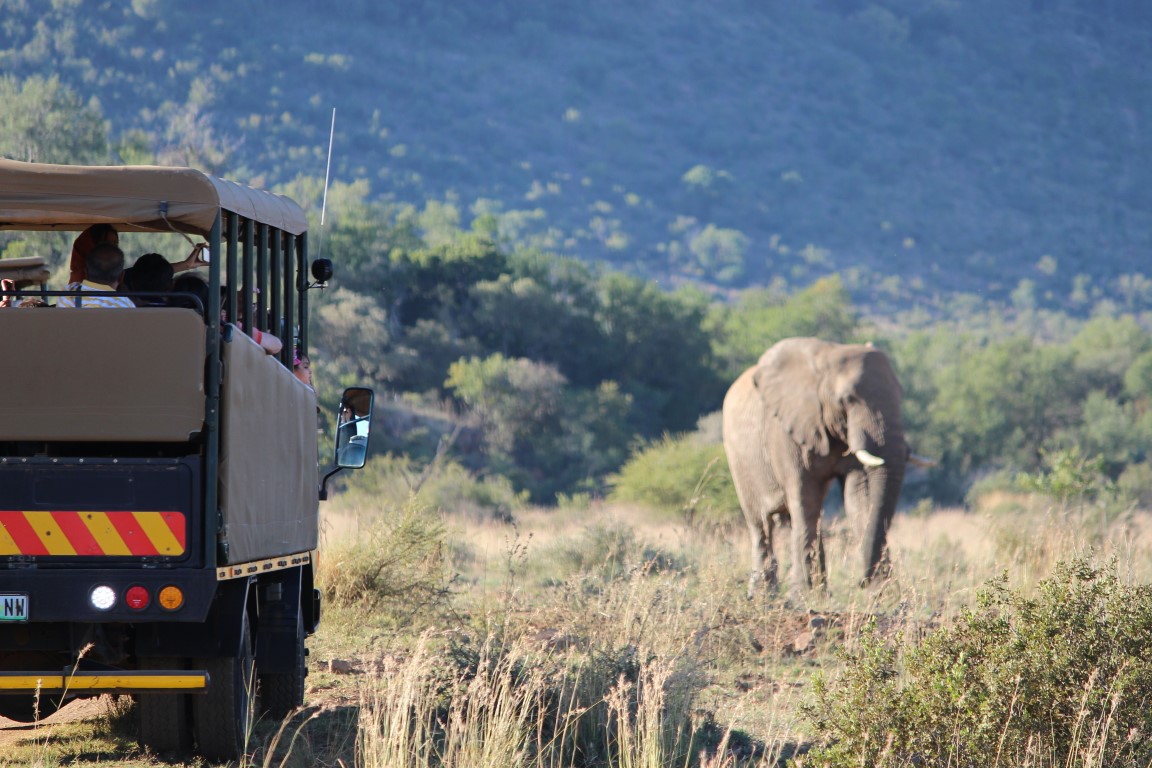
Pilanesberg is located only two hours drive from Johannesburg and is an incredible bird watching destination, with over 350 species recorded in the park. The park spans across 57 200 hectares of pristine wilderness and is also home to the Big Five and other incredible wildlife.
Generally, Pilanesberg is great for bird watching all year-round. November to April is the ideal time to visit because the migrant bird species are present and you can see as many as 100 species in one day. But if you are interested in viewing other wildlife then the best time to visit the park is during the drier winter months of June to September.
The park is open to the public so you can either spend the day self-driving around the park or make the best of it and spend a weekend at one of the gorgeous lodges in the park. You will be treated to incredible cuisine and guided safari activities. Throughout the park there are various viewing spots, picnic sites and bird hides where one can just sit and enjoy the birds and other wildlife. The guides at the lodges are incredibly knowledgeable of the park and will share information with you about the various species of birds and animals, as well as take you to the best wildlife viewing spots.
The hill slopes of the park are well-known for sighting Southern Pied Babblers, Sabota Larks, Little Bee-eaters and White-fronted Bee-eaters, as well as the Rufous-naped Larks.
The grasslands and savanna areas are prime residence for Lilac-breasted Rollers, Purple Rollers, Common Ostriches, Kori Bustards, Northern Black and Red-crested Korhaan, Secretary birds, Southern Pale Chanting Goshawks and Magpie Shrikes.
The woodland areas of the park offer regular sightings of Red-billed Hornbills, Southern Yellow-billed Hornbills, African Grey Hornbills, Emerald-spotted Wood-Doves, Marico Flycatchers, Golden-breasted Buntings, Violet-eared and Blue Waxbills.
In the park’s rocky areas, one could possibly seeVerreauxs’ Eagles, Rock Kestrels, Jackal Buzzards, Speckled Pigeons, African Olive-Pigeons, Mocking Cliff-Chats, Rock Martins, Cinnamon-breasted Buntings, Pearl-spotted Owlets and Spotted Eagle-Owls.
There is one large central dam are many small dams that attract African Fish-Eagles, Hamerkops, Greater Flamingos, Lesser Flamingos, African Spoonbills and terns.
Close to the Manyane Gate, one is also likely to see Cape Vultures and occasionally some White-backed and Lappet-faced Vultures.