
Domestic worker to cost you more
Wages increase from 1 December and is valid until November next year.
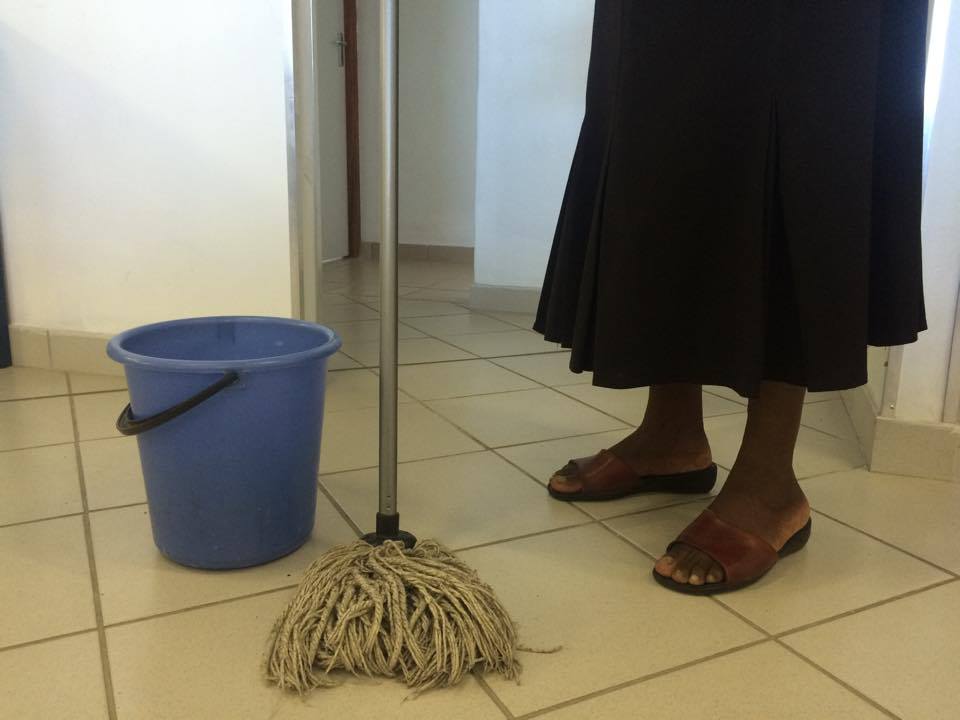
HIGHVELD – The Minister of Labour, Mildred Oliphant, said wages for the vulnerable workers in the domestic worker sector will be adjusted with effect from 1 December 2015.
In terms of Sectoral Determination 7: the minimum wages will be adjusted upwards to employees.
The domestic worker sector includes among others:
- Housekeepers
- Gardeners
- Chauffeurs
- Nannies
- Home health aides
This means that an employee who works more than 27 hours in Area B (Govan Mbeki Municipality) should be paid not less than an hourly rate of R 10-23.
An employee who works less than 27 hours in Area B (Govan Mbeki Municipality) should be paid not less than an hourly rate of R 12-07.
The new determination will be effective until the end of November 2016.
Sectoral determination covers the protection of workers in vulnerable sectors/areas of work.
The determination sets minimum working hours, minimum wages, number of leave days and termination rules.
Hours of work:
Employees are allowed to work:
- A maximum of 45 ordinary hours per week;
- Nine ordinary hours on any day if the domestic worker works for 5 days or less perweek
- Eight ordinary hours on any day if the domestic worker works for more than 5 days perweek
Overtime:
- Can only be worked by agreement concluded between the employer and thedomestic worker
- Not more than 15 hours overtime per week may be worked
- Not more than 12 hours, including overtime may be worked on any day.
Payment of overtime:
- Overtime should be paid at one and a half times the domestic worker’s wage forovertime worked
- An agreement may provide for an employer to pay a domestic worker not less thanthe ordinary wage for overtime worked and give the domestic worker at least 30minutes time off on full pay for each hour of overtime worked
- Give a domestic worker at least 90 minutes paid time off for each hour of overtime worked
- Paid time-off should be given within one month of a domestic worker becomingentitled to it, however an agreement in writing may increase this period to 12months.
Night Work:
- Night work means work performed after 6pm and before 6am the next day.
- It should be by agreement and the domestic worker should be compensated by the payment of an allowance at a rate as agreed upon.
- Transport should be available between the domestic worker’s place of residenceand the workplace at the beginning and end of the domestic worker’s shift.
A domestic worker who regularly works for more than one hour after 10pm and before 6am at least five times per month or 50 times per year must be:
- Informed about health and safety hazards
- Informed about his/her rights to undergo medical examinations.
Stand-by:
- Starts at 8pm until 6am at R30 per standby shift. Any time worked during standby to be paid in terms of the overtime provision or the granting of paid time-off.
- An employee is not allowed to be on standby more than five times per month or 50 times per year.
Rest period:
An employer must give a domestic worker:
- A daily rest period of at least 12 consecutive hours between ending work and starting work the next day.
- A written agreement could reduce it to 10 hours if the domestic worker lives on thepremises at which the workplace is situated.
- A weekly rest period of at least 36 consecutive hours which, unless otherwiseagreed, must include a Sunday.
- A written agreement may also provide for a rest period of at least 60 consecutivehours every second week.
Ways of compensation for overtime, Sunday work and public holidays:
There are three ways to compensate a worker for overtime, Sunday work and public holidays:
- The wage can be paid in cash
- Part of the wage can be paid in cash and time off can be given
- Paid time-off instead of payment can be given.
Work on Sundays:
- When a domestic worker works on a Sunday, he/she must be paid double time. However if a domestic worker works on a Sunday on a regular basis, he/she should at least be paid at least one and a half times the hourly rate.
Public Holidays:
- Only worked if there is an agreement
If a public holiday falls on a day on which a domestic worker would usually work, an employer must pay:
- A domestic worker who stays absent on that day, at least the domestic worker’s normal wage
- A domestic worker who works on that day, at least double the domestic worker’s wage for work on that day.
- If a domestic worker works on a public holiday on which the domestic worker would not normally work, the employer must pay that domestic worker an amount equal to the domestic worker’s ordinary daily wage, plus the domestic worker’s hourly rate for each hour worked on the public holiday
- An employer must pay a domestic worker for a public holiday on the domestic worker’s normal pay day.
Payment of wages:
Wages must be paid:
- In South African currency
- In cash or cheque or direct payment into banking account;
- Daily, weekly, fortnightly or monthly;
- On a normal pay day agreed to by the domestic worker;
- On termination of employment.
Information concerning wages (payslip):
Every domestic worker must receive, on payday, a payslip showing:
- The employer’s name and address
- Domestic worker’s occupation
- Period of payment
- Domestic worker’s rate and overtime rate
- Hours worked
- Overtime worked
- Hours worked and pay for Sundays and Public holidays
- Wage
- Any other pay
- Details of deductions
- Net payment.
The payslip is the property of the domestic worker.
Permissible and prohibited acts concerning pay:
Deductions that are allowed include:
- Medical insurance
- Savings
- Pension or Provident fund
- Trade union subscription
- Order of account payment to a registered financial institution
- Rentals
- Loan or advance (not more than 10% of total wage).
- Deductions that are not allowed include:
- Amount greater than the actual remuneration received
- Breakages (crockery, electrical appliances etc.)
- Damages (Ironing)
- Meals provided during working time
- Clothing