Babies behind bars: Serving time for their mothers’ crimes
An overwhelming flood of emotion runs through me when I make first make contact with life so pure and innocent. Even more so as a parent.
This is an exclusive story to Caxton’s Ridge Times, of babies behind bars with their mothers.
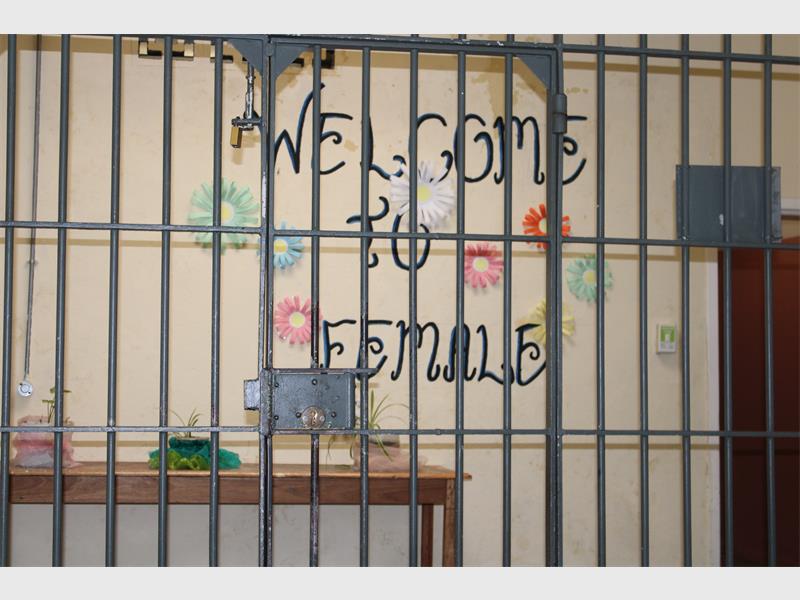
At first glance, it is just a prison building.
What looks big on the outside can soon become smaller once inside, with confined cells and cold corridors.
It is just as one will imagine prison is like, and more.
Smells and sounds come alive and the feeling of being intimidated overwhelms you the moment you walk through each gate.
It is a community entirely on its own.
You are now stepping onto the offenders’ turf.
“Be careful that you don’t slip, they have just put polish,” said a correctional officer as she leads the way to the women’s unit.
The bunch of keys startles me as it makes contact with the lock of the steel gate – an intimidating sound of extreme measures that are put into place to ensure there is no escape.
The hinges creak as the gate is pushed open. There is absolutely no escaping.
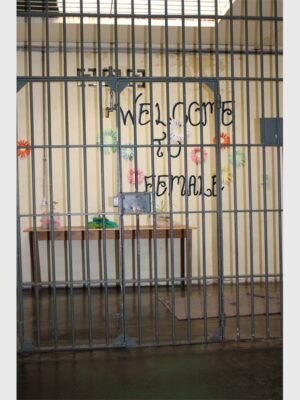
Escorted through a corridor with prison cells on either side, echoes fill the air of loud babbling amongst inmates from one cell to another.
The babbling is about my presence.
As intimidating as this is, I was not there for them. I was there for a special inmate, one who is doing time for a mother’s crime.
The sparkling clean and polished floors lead the way to the courtyard.
Washing on the lines is a telltale sign of normal everyday chores. Through this courtyard, you enter another prison gate.
The unit for mothers with infants
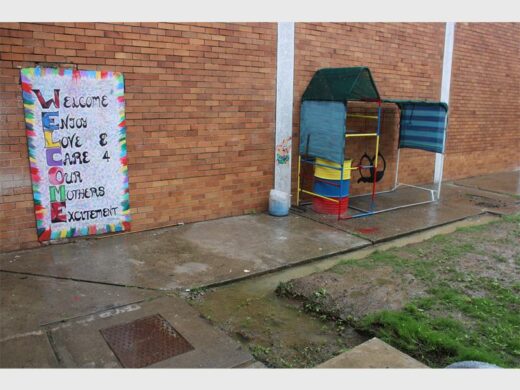
On this side of the gate, it still bears the feel of a prison, but there is a slight touch of colour on a small section of a wall and a tiny single jungle gym in a high-walled enclosed space.
“This can’t be it, this can’t be all? Where are the grass, trees, and sand pit…,” floods my mind.
This is nothing more than a cabbage patch. This is not how a child should be spending its first couple of years.
How will little ones get to know and appreciate nature and all its creations, when these huge, high walls and enclosed prison cells are all they get to see?
You enter the mother and infant unit from the courtyard. Holding cells paint a different story.
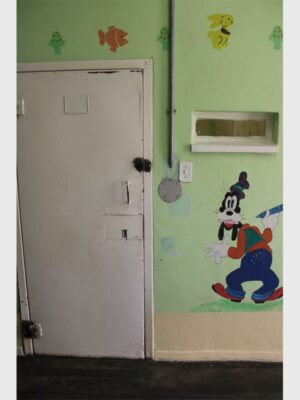
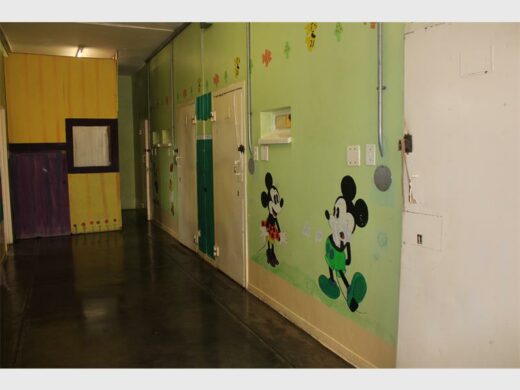
A corridor of green walls with old paint peeling off and images of cartoon characters tries to mirror a child-friendly atmosphere.
You get a feeling that no matter how friendly they try and make it, this is still not a place for an infant.
Solid steel white doors are an indication of cells with a peep-hole window.
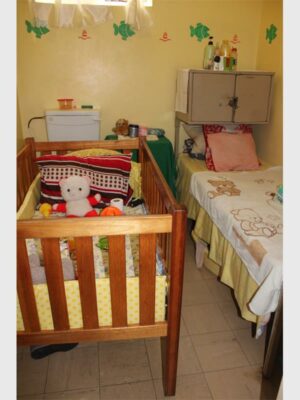
Behind the door is a single bed, a baby cot and a toilet and shelf, all crammed into this tiny space.
The thought of being inside there when doors shut is suffocating.
The mother of the infant is a foreign national and due to the nature of the story both names will not be published and thus an alias will be used.
Making contact with baby *Busiswa
An overwhelming flood of emotion runs through me when I make first make contact with life so pure and innocent. Even more so as a parent.
Perfectly shaped puffed lips, chubby cheeks, dark hair and big brown eyes are glued on me.
I ask if he has never seen a umlungu (white person).
“It is your casual clothes,” says a correctional officer.
“She is only used to the correctional uniforms.”
Instinct wants me to grab the baby and make a run for it.
What are the chances that I can adopt her and give her the life she deserves?
No Kerry, let us keep this professional, you have a story to tell.
“May I hold him?” I ask.
The mother agrees and with arms extended, I grab the baby while tears well up in my eyes.
Is this what life is supposed to be for little Busiswa who knows nothing of what lies beyond these walls?
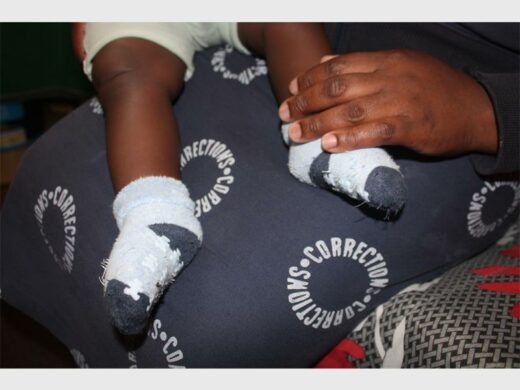
Without a single peep or urge to get out of my grip, Busiswa finds my press card and automatically draws it to her mouth.
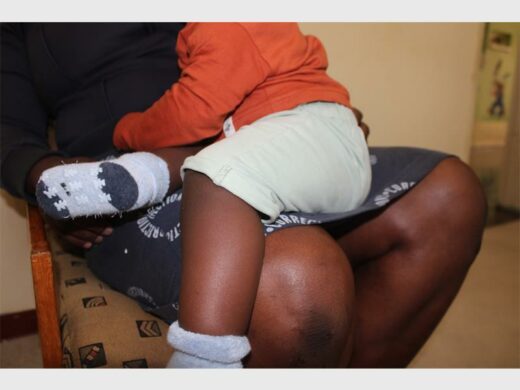
Seated on my lap throughout the whole interview, Busiswa does not move and is content with the press card in hand.
Kisses on the head, cuddles and love are what I can give Busiswa now, while I am here.
“How old is he?” I ask.
“Kerry, it is she, not he,” corrects a correctional officer.
“She is 10 months old and trying to stand up against things,” says the mother.
I thought Busiswa is a boy, she is dressed in boys’ clothes.
Where is her dress or cute pink and purple outfit?
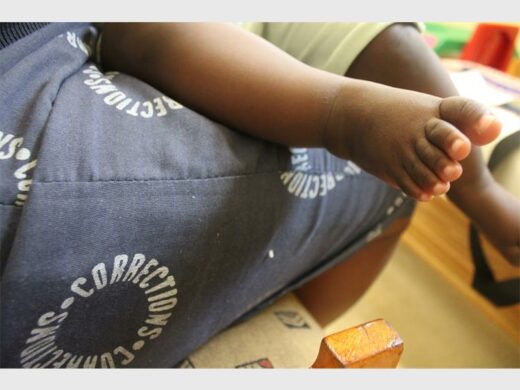
Busiswa is growing by the day. Soon she will be out of these clothes and they will then be used for the next infant.
Who knows how many other infants will need to wear these very same clothes or how many already have?
Busiswa keeps catching my eye, her eyes are fixated on me.
Could it be the sound of my voice? A different sound from the norm of the rattling of keys slamming against steel
doors when opened and shut, and yells echoing in the corridors.
How must her nerves be with every noise made? And trust me it is noisy.
Interview with mother *Simangele
Simangele is also a mother to two daughters and two sons who are in the care of family outside of South Africa.
Neither her family nor her children are aware of Busiswa’s existence.
This is Simangele’s second time in a South African correctional facility and also for the same type of offence – drug trafficking.
After her previous conviction, Simangele was deported to her home town.
A dressmaker by trade, she resorted to drug trafficking and illegally entered South Africa once again when “times got tough”.
She is now serving two years and 10 months sentence with December 28, being her halfway mark.
“I was pregnant at the time of the crime, but I did not know it. I realised something was wrong when I came here (referring to Bethal Correctional Services).
“I felt angry, what should I do? How am I going to cope with this? But she is mine. I want to keep her,” says Simangele.
Why expose Busiswa to such an environment? Why can’t she go to her family?
“I have a family but they do not know about her. I am afraid.”
She fears judgement by her family and that they will not be able to provide for little Busiswa as they are already taking care of her other four children.
Simangele chooses to keep Busiswa to herself for now.
The news will be broken to her family upon her release from prison and arrival home.
Simangele says this is not how she wanted her baby’s life to be.
“Things are difficult inside here. Sometimes I have to argue with other inmates. They want her out of here. I try to protect her the best I can,” explains Simangele.
She does not want Busiswa to ever know where she was born.
“I keep telling myself I will be out soon. I cry a lot.”
I ask Simangele if she had the power to change it, would she have chosen not to have fallen pregnant or not to have committed the crime?
“I don’t want to talk about this anymore,” she says as she cut me off and moves to the next subject.
She has hopes for Busiswa’s future.
“I want her to get an education, attend university and become a doctor,” laughs Simangele.
Her mother says baby Busiswa still gets startled and rattled by the noises of prison life.
“She is only now getting used to the noises when the correctional officers come in the mornings,” says Simangele.
Simangele is not confined to her cell the whole day.
She can roam within the mother and infant unit with Busiswa.
She is helped by an inmate nanny when she needs to go eat and wash.
There are only five cells for mothers with babies and thankfully the Bethal Correctional Services have not encountered an overflow.
Simangele is the only mother currently in the unit.
In total three babies were housed in Bethal Correctional Services this year.
The South African Correctional Services and babies
In the South African correctional system, infants may stay with their mothers until the age of two years.
Busiswa will leave prison at the same time as her mother.
In cases where a mother is incarcerated for longer than what the infant is allowed, the child would go into the care of the family.
If there is no family, social development gets involved and the infant is placed in temporary placement or foster care until the mother’s release.
These are the needs
Budget and funding are limited and a lot is needed.
Baby and toddler clothes up to the age of two years for boys and girls, baby porridge and baby food, nappies, wet wipes, cream, shampoo, soap, early development toys, baby-friendly playing equipment and more in the form of donations are always welcomed.
There is also a need for different colours of waterproof paint for both inside and outside the cells.
A talented inmate in Bethal is willing to paint and brighten up the area for the women with children but requires paint and brushes.
“Our babies grow up fast, clothes are always a challenge.
“When a mother leaves here, we send her off with a few items. Remember, when they leave here they have nothing. It is a challenge.
“In this case, Simangele will be deported back to her country. She has nobody here, no one to bring her clothes.
“It can be days before she gets back home, what is she going to change her baby in, what nappies does she have?
“She has nothing. It is inhuman to take back the clothes when the baby needs them,” says the head of the mother-child care unit, Ngwenyama Duduzile.
Donations
For more information on the procedures of donation contact the Department of Correctional Services on 017 647 6434.