
Industrial chef from Standerton describes a typical day in his life
Stelio de Abreu e Silva has been a chef at Umanadi Catering since 2022, but food and cooking have been part of his life since his late teens.
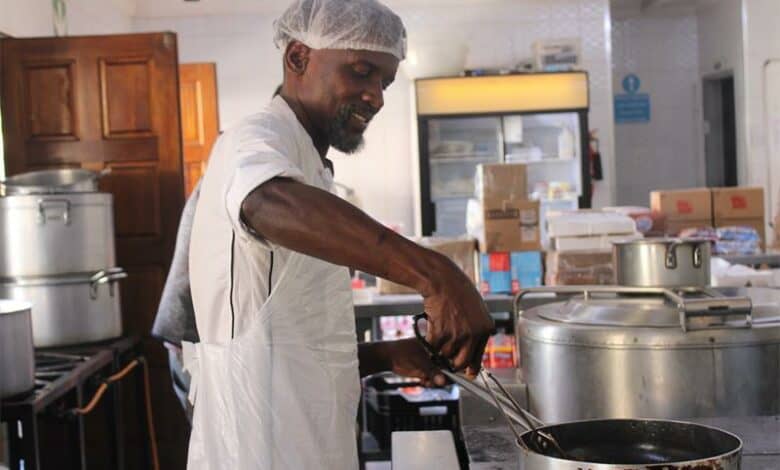
Cooking is the ultimate labour of love, especially in an industrial kitchen preparing about 3 000 meals daily. Stelio de Abreu e Silva has been a chef at Umanadi Catering since 2022, but food and cooking have been part of his life since his late teens.
He moved to SA with his mother and stepfather in 1998 and started his first job in 2000 as a kitchen aid in an industrial kitchen at the Germiston SPAR. Shortly thereafter, SPAR sent for formal training. De Abreu e Silva radiates a love for cooking.
“I believe you should have a deep love for cooking. Only cooking for money affects the quality of your food. People will eat because they are hungry, but will not be able to taste the love,” said De Abreu e Silva.
There are several options when studying to become a chef. Several companies have training programmes for prospective employees, colleges typically have cooking courses, and several culinary schools are found across the nation.
Stand-alone courses such as desserts, spice and pastry courses can enhance your resume in some instances. De Abreu e Silva said the longer your cooking course, the more qualifications you earn.
“Different coloured chef jackets have different levels of qualifications linked to them,” said De Abreu e Silva.
He explained that black jackets are for head chefs, and ordinary chefs wear the common white ones. A day in the life of an industrial chef consists of early mornings and long hours of preparing meals for a wide menu.
Depending on the order’s size, a chef’s day can start at 02:00. On a typical day, the kitchen lights flicker on at about 04:00.
The first thing a chef does is change into a hygienic uniform and wash their hands before working on the daily menu. After completing the food and sending it for delivery, the kitchen prepares for the lunch rush. These preparations can start as early as 06:00.
When the lunch rush is over, De Abreu e Silva admittedly enjoys helping with cleaning. After a day of slicing, spicing and dicing, his day ends at noon, and the next shift steps in to prepare dinner. An industrial chef can expect to work similar shifts, alternating weekly between day and afternoon shifts.
“One of our important responsibilities is catering to dietary needs and preparing allergen-free recipes for those with specific needs,” explained De Abreu e Silva.
ALSO CHECK: Service delivery in VKLM remains a vague hope to residents
The chef is primarily responsible for ensuring that quality meals are delivered to diners. The people who dish up the food in containers, referred to as “dishers”, follow the chef’s vision, and the chef does a final overview to ensure the food’s quality.
Many roles contribute to an industrial kitchen’s success, including the dishers, cleaners, salad chefs, supervisors and drivers. All of them contribute to an efficient workflow in the kitchen. Because the kitchen can be a high-stress environment, misunderstandings can arise, and in some cases, the team cannot function as it should.
“This does not happen often, but arguments in an industrial kitchen can get heated,” said De Abreu e Silva.
However, as he jokingly explained, arguments never arise on pay day. To him, the best part of cooking in an industrial kitchen is that, despite needing to follow a specific menu, he can still cook his way, adding his spin on the existing menu.
“Good food can bring people together, but if you cook without patience or love, people will not enjoy your food as much,” said De Abreu e Silva.
In closing, he said leftovers on plates mean something is wrong.
ALSO CHECK: Freedom Front Plus demands audit from Govan Mbeki Municipality