Vulture rescued near Charl Cilliers is recovering at centre in Dullstroom
The vulture was recently found emaciated, grounded and unable to fly in a field near Charl Cillers.
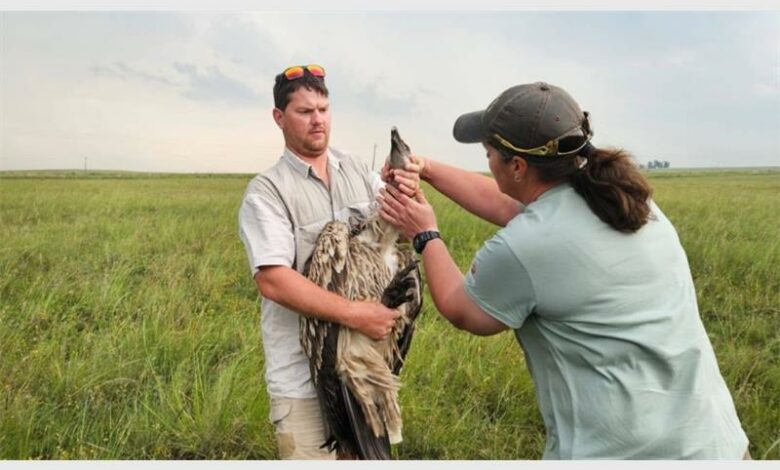
A vulture recently found injured in a field just outside of Charl Cilliers is getting stronger by the day. This is according to Magdali Theron of the Dullstroom Bird of Prey and Rehabilitation Centre.
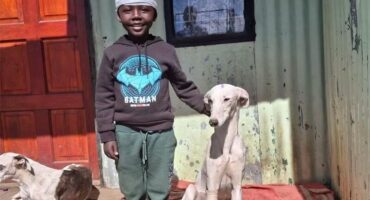
After the injured bird was discovered in the field, a supporter of the Khulula Animal Welfare Society (KHAWS) promptly contacted the non-profit organisation.
It would appear that the bird, unable to fly, had been in the field for a few days.
Following KHAWS’ involvement, they reached out to Marius van Reeuwyk, chief animal welfare inspector for the South African Animal Welfare Inspectorate Association (SAAWIA), who then contacted the Mpumalanga Tourism and Parks Agency for professional assistance.
Dullstroom Bird of Prey and Rehabilitation Centre responded to the call. Upon Theron’s arrival, the vulture was found emaciated, grounded and unable to fly.
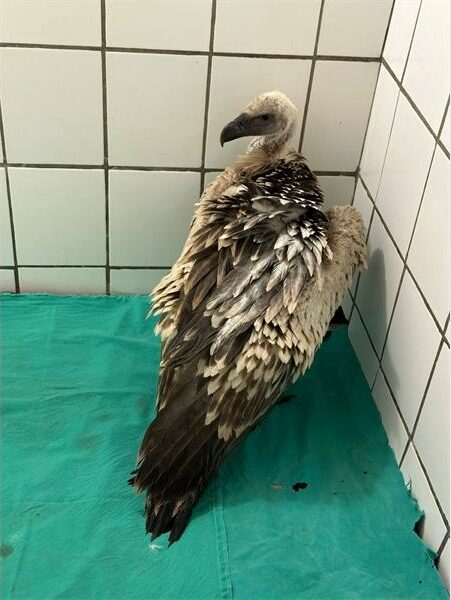
It had suffered soft tissue damage to its left wing.
“The vulture is getting stronger by the day and eating well. It is, however, going take some time to get the wing strong enough for flight assessment,” said Theron.
She said once healed, the vulture will be released back into the wild, and hopefully, with a sponsored tracking device, they can keep an eye on it as it is still a young bird.
According to Theron, a Cape vulture can fly higher than a commercial plane.
“A gathering of vultures can consume 100kg of meat just in under an hour and can travel up to 100km from their roosting site looking for food.”
ALSO READ: Rescued youth graduates from rehab after illegal disciplinary camp ordeal near Evander
She said that vultures are the “cleanup crew of the veld” and without them, the ecosystem will collapse. They are also an endangered species.
The Dullstroom Bird of Prey and Rehabilitation Centre are a non-profit organisation permitted to rescue, rehabilitate and release all species of indigenous wildlife.
They house between 80 and 200 animals a year.
“We have an educational centre offering close-up encounters with raptors that are not able to be released, to teach the public about the importance of conservation for future generations,” said Theron.
The organisation’s income is derived from entrance fees, sponsorships, and donations, and it is able to issue Section 18A certificates to support its mission of conservation through education.