Community demands accountability over brick manufacturing and Industrial Park projects in Secunda
Residents initially viewed the project as a catalyst for economic growth and job creation. However, concerns soon emerged about how the project was managed.
Community members in the Govan Mbeki Municipality are demanding accountability over the reported R4.2m allocated to the Fly Ash Bricks Manufacturing and Industrial Park projects, alleging that the initiatives failed despite significant public investment.
Residents claim that the Fly Ash Bricks Manufacturing project, which was launched with considerable public attention, ceased operations shortly after its official opening.
The project was launched in 2016 by the late former Mpumalanga Premier, David Mabuza, raising hopes among local youth for business ownership and employment opportunities.
Sibusiso Ndlovu from eMbalenhle said he attended the launch and witnessed the optimism surrounding the initiative.
“I was one of the invited guests when the project was officially launched by Mabuza. Government acquired an already operating brick manufacturing company in Esperanza so that young people could learn the business from the previous owners,” said Ndlovu.
He explained that the former owners introduced the new operators to existing customers and that the company continued trading under the name Mr Brick.
According to Ndlovu, residents initially viewed the project as a catalyst for economic growth and job creation. However, concerns soon emerged about how the project was managed.
“As local youth, we had hope that our dreams of owning businesses and creating jobs had finally arrived. Unfortunately, the company was managed by people from outside the municipality and even outside Mpumalanga,” he said.
Ndlovu said community members were informed that the external managers had been appointed to transfer skills and expertise to local youth. However, he claims that local participants were largely excluded from operational and management decisions.
“When we questioned why outsiders were managing the project, we were told that they were there to transfer skills.
“Locals were only attending board meetings and were kept out of operational matters. Some were employed to manufacture bricks, but the day-to-day operations and management were controlled by people from KwaZulu-Natal,” he said.
Ndlovu further alleged that as the project’s finances deteriorated, members of the management team gradually abandoned the initiative.
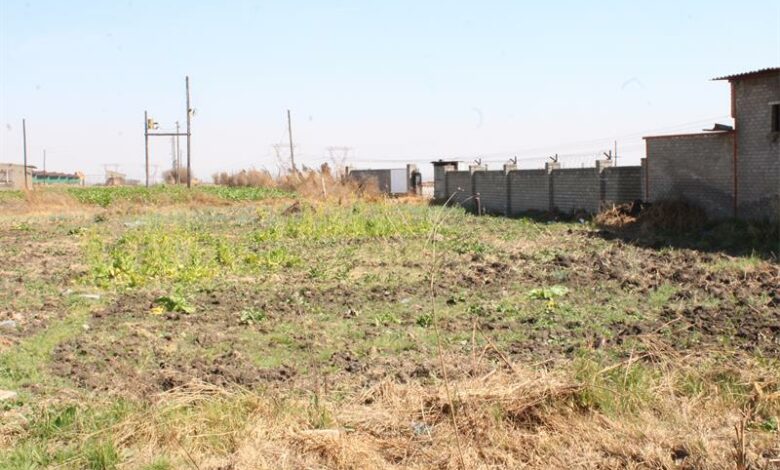
“When the project began to run out of money, they disappeared one by one. Employees suffered because they were not receiving their salaries. Eventually, everyone in management vanished, leaving the infrastructure abandoned and vulnerable to vandalism,” said Ndlovu.
Ndlovu also claimed that some of the project’s machinery was sold before management members left.
He added that community members remain uncertain about the fate of the Industrial Park, which formed part of the broader Fly Ash project plan.
The Govan Mbeki Fly Ash Consortium, trading as Mr Brick, manufactured bricks using fly ash supplied by Sasol.
ALSO READ: Concerns mount over vagrant activity in Secunda CBD
The company reportedly produced about 6 500 maxi bricks per day and 136 000 bricks per month, supplying local hardware stores and maintaining accounts with businesses around Secunda.
Locals are now calling for transparency regarding the money allocated to the project and the circumstances that led to its collapse.
Responding to the concerns, Govan Mbeki Municipality media liaison and content developer, Donald Green, said the Fly Ash brick manufacturing project was discontinued due to infighting among local stakeholders.
Regarding the Industrial Park, Green said clearance under Section 53 of the Mineral and Petroleum Resources Development Act, 2002 (Act 28 of 2002), was only granted by the Department of Mineral Resources in 2025.
“A suitable portion of land has been identified for the park and the land has been secured by the Govan Mbeki Municipality. The business model assumes that the municipality will contribute this land,” Green said.
He added that further investigations are required to assess the capacity of existing transport infrastructure through a Traffic Impact Assessment (TIA).
ALSO READ: R50 000 reward for information to snag Sakhile reservoir fence thieves
“The relevant authorities should be consulted about the Traffic Impact Assessment and access permissions.
“The assessment should be undertaken by a professional traffic engineering practitioner and submitted to the relevant authorities for approval.
“Additional public transport and non-motorised transport facilities should also be provided at the access points to the development and internally, as determined by the traffic and public transport study,” said Green.
Green noted that comprehensive land-use planning is necessary to minimise environmental impacts during the operational phase of the proposed development.
According to Green, the Industrial Park project is underway and is overseen by a technical committee comprising representatives from the municipality, Sasol, the Mpumalanga Economic Growth Agency, and the Gert Sibande District Municipality.
He said the committee is chaired by a representative from the Department of Economic Development and Tourism (DEDET), while project steering committee meetings are held quarterly.
Addressing questions about the use of the R4.8m transferred by the Department of Economic Development and Tourism (DEDET) to the municipality for the Fly Ash and Industrial Park projects, Green said a company was appointed to conduct a feasibility study, which was completed in 2017.
“The cost of the feasibility study came in below the projected budget, resulting in a saving of R300 000.
“DEDET was informed of the saving, and approval was sought and granted to use the remaining money for an SMME support programme,” Green said.