
Secunda SANBS donor centre celebrates three years of apheresis
The Secunda Donor Centre marked three years of apheresis with a celebration highlighting the community’s ongoing commitment to saving lives through blood, plasma and platelet donations.
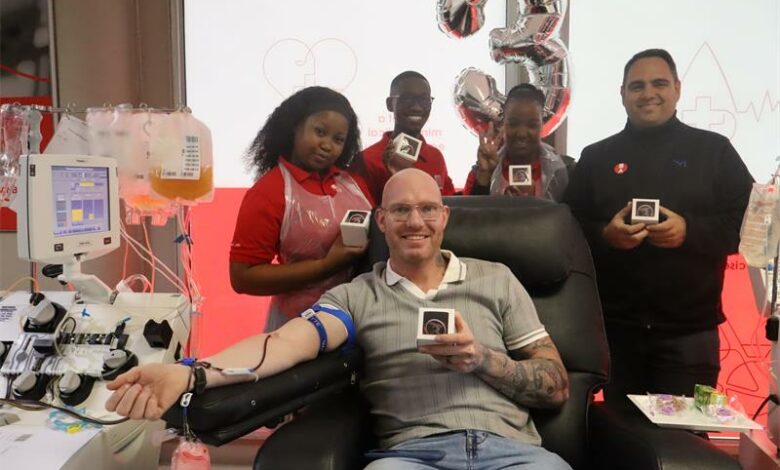
Fun, music and, most importantly, saving lives. The celebration was marked by an impressive contribution from the Secunda community, with donors giving 26 units of whole blood, eight units of source plasma and eight units of platelets.
SANBS expressed its heartfelt appreciation to the Secunda community for its continued support and selfless commitment to saving lives.
The milestone highlighted the vital role donors play in ensuring that hospitals have access to blood products when patients need them.
Every day, hospitals rely on platelet donations to help save the lives of cancer patients, trauma victims and people undergoing major surgery.
Because platelets have a shelf life of only five days, SANBS needs committed donors to ensure a constant supply.
Unlike a traditional blood donation, platelet donation is done through a process called apheresis.
During the procedure, a machine separates and collects only the platelets, while returning the donor’s red blood cells and plasma to the body.
Why are platelets so important?
Platelets are tiny blood cells responsible for helping blood clot. They gather at the site of an injury to form plugs that stop bleeding.
Patients with low platelet counts are at risk of severe or uncontrollable bleeding and often depend on platelet transfusions to survive.
Recipients include patients with:
- Cancer receiving chemotherapy
- Blood disorders
- Liver disease
- Major burns and trauma
- Open-heart surgery and organ transplants
What happens during donation?
The donation takes about 90 minutes from start to finish. A needle is inserted into the donor’s arm and blood flows into an apheresis machine, where platelets are separated and collected.
The remaining blood components are safely returned to the donor in repeated cycles. Donors relax in a comfortable chair while refreshments and entertainment are provided. One platelet donation can help up to three patients.
Who can become a donor?
You may be eligible if you:
- Are between 18 and 65 years old
- Weigh 55kg or more
- Are in generally good health
All blood types, except for type O and type B, are encouraged to try platelet donation. Type O and type B donors can make the most impact for patients in need by continuing to give whole blood.
If you are type AB, you can make the most impact by donating plasma and platelets. Platelets can be donated every 14 days, up to 24 times a year, because the body naturally replaces donated platelets within about two days.
Is it safe?
SANBS says platelet donation is performed in a highly controlled environment by trained professionals using sterile, single-use equipment.
Most donors experience no problems, although some may develop mild bruising, temporary dizziness or tingling caused by a short-term drop in calcium levels.
These symptoms are usually easily managed with fluids, calcium supplements and rest. There are no recorded long-term health effects associated with regular platelet donation.
Where do donated platelets go?
After donation, platelets are tested and prepared for immediate distribution to hospitals. On average, they are transfused within three days, making regular donations essential.
With such a short lifespan, SANBS encourages eligible residents to consider becoming apheresis platelet donors and helping provide a lifeline to patients who need it most.