As societies endlessly evolve, so do the intricate needs and desires of the individual citizen. Each new technology unlocks the exponentially cascading of future possibilities.
With every bout of the rolling blackouts, casually coined ‘load-shedding’, it becomes evident how no technology has propelled the human race forward at such breakneck speed quite like electricity. South Africa has been electrified since 1882 but it was the Electricity Supply Commission (Eskom) that incorporated the various municipalities into an umbrella entity in 1923.
Once the pride of African electricity generation, Eskom have become the butt of too many jokes in recent years, and this has led many homeowners to seeking an alternative energy supply. Eskom is the backbone of energy supply in South Africa and while the desire to ‘get off the grid’ may be growing, fear and uncertainty around how to do so are equally prevalent.
Founder and CEO of Lumos Energy, Anthony Fourie, used his entrepreneurial instincts to fill the growing gap in the market and now helps homeowners gain their energy supply independence. “The average household with two occupants and four bedrooms consumes approximately 25kW a day; however, each household’s consumption is different,” said Anthony. “It is very easy to install a system that can run your house independently from Eskom,” he continued.
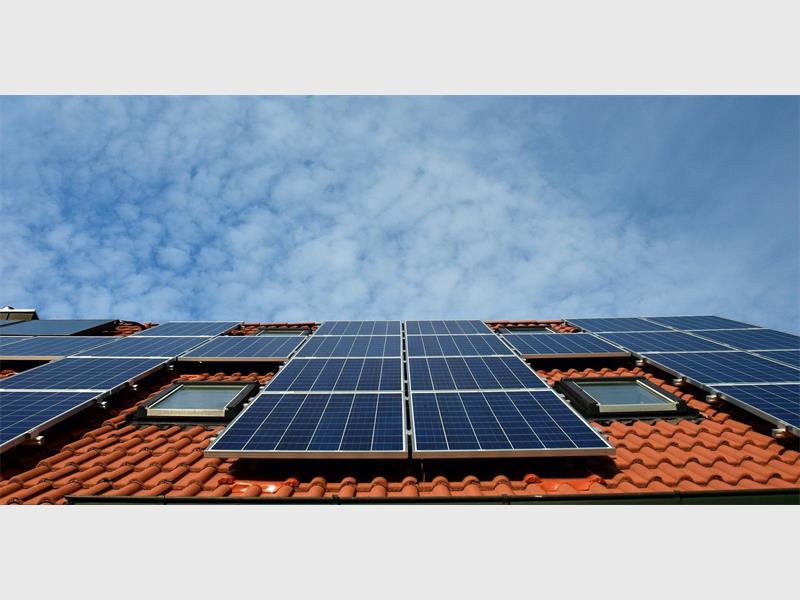
Migrating to a renewable energy source, primarily solar, is a minor challenge with new property developers at the fore of a unique opportunity. “Once installed, you can leave the main breaker switch down indefinitely and power your premises exclusively through your solar power system. It is a quicker, easier and more convenient process to start your property off grid from the outset and never involve Eskom,” advised Anthony.
That said, City Power has big plans for the future of energy in Johannesburg, and the entity’s spokesperson, Isaac Mangena, envisions a symbiotic relationship ahead. “We recommend that our customers do make investments in grid-tied renewable energy systems but it is all about the power of being a community. Is it better to be largely independent and risk some days without enough power, or to remain part of a grid-connected community that has strength in both unity and diversity?” mused Isaac.
Eskom and City Power both have plans in place that will allow for reselling stored energy back to the grid, helping to offset costs of installation. Home renewable energy options can be tailored for each clients needs, and research can be done through reputable local suppliers and experts. “Each system is scalable, which means that panels and batteries can be added at later stages, while cost can range from R70 000 to R250 000, depending on the size of the household,” claimed Anthony.
“The most efficient energy system for the country is one where the grid interconnects all of the country’s renewable energy systems together as part of a working, cooperative community,” encouraged Isaac. Anthony concurs, envisioning a bright future ahead. “Our country is in crisis when it comes to electricity,, but one thing South Africa has in abundance is sunshine. The sun is still free, and we need to use it.”