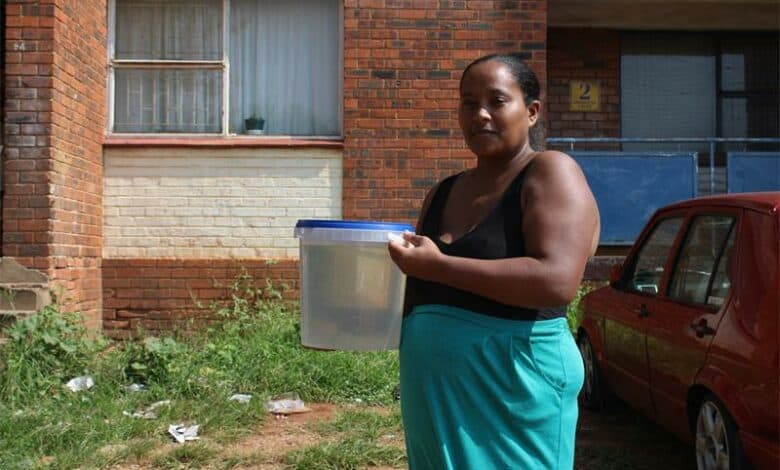
For almost six years, and despite numerous calls logged, emails sent, and public meetings held, residents of Ward 84 (Claremont) are still grappling with an inconsistent and often non-existent water supply.
According to resident Gillian Sing, the community has had to adapt to a new way of living, and there’s no clear answer as to what the problem could be.
Also read: Water woes continue to plague Claremont residents
“We last had a normal water supply in 2020,” she said. “Our taps run dry during the day, and we get low pressure between midnight and 01:00, and not for too long either.”
Sing explains that not all residents are affected; it is middle areas, including Antoinette, Rose, Plateau Drive, Amatola and Lunden Crescent, among other streets.
“In the same street, for example, you sometimes see households that have water and others that do not. We want to understand what controls the water and why it comes at night when people are asleep.
“We are feeling completely neglected and ignored because there are also problems with other services like maintenance,” she says.
“It’s humiliating to have to knock on our neighbours’ doors, asking for water, just to meet our basic needs, and to make matters worse, the water trucks that are supposed to bring us relief only come once a day, leaving us to fend for ourselves for the rest of the day,” Sing says.
Also read: The Johannesburg Care Foundation
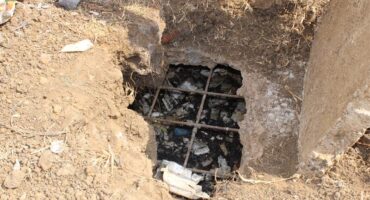
Johannesburg Water spokesperson Nombuso Shabala says the Hursthill 1 reservoir feeding the residents is leaking.
“At this stage, Johannesburg Water is unable to store water in the reservoir since it is leaking to a point where it has been rendered uneconomical and impractical to store water in it. Therefore, the reservoir has been placed on bypass mode since May 2024.”
“Water supply is limited during the day when the demand outstrips the supply; however, at night water capacity increases due to minimum consumption and the system gains capacity [water levels increase]; therefore, water supply becomes available,” she says.
Shabalala adds that the reason some households on the same street have water while others do not is that water naturally gravitates to the lowest point and rises to the highest point when pressure builds up. Hence, lower-lying households receive water, while higher-lying households struggle with supply,
“Although they are connected to the same source,” she says.