JRA's pothole repairs under the spotlight
The JRA is once again under fire due to the alleged poor quality of pothole repairs.
The Johannesburg Roads Agency (JRA) is in the spotlight once again, with residents’ associations upset at what they describe as either poor workmanship or inferior materials used in pothole repairs.
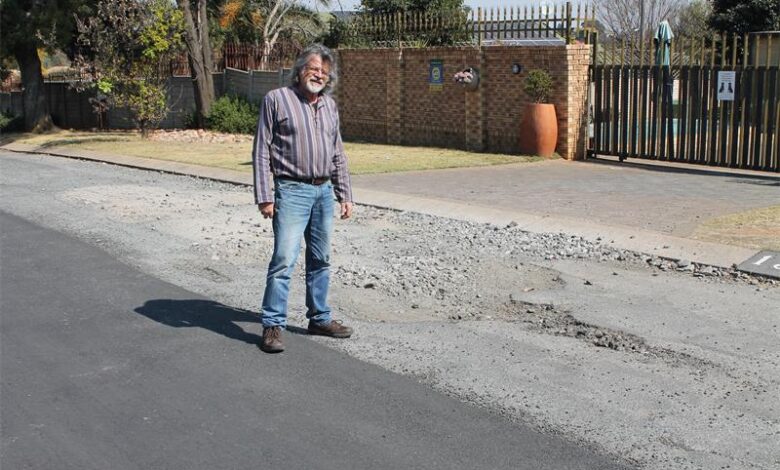
Roodekrans Neighbourhood Watch chairperson Andreas Öberlechner is one of the most vocal critics of JRA over their alleged failure to carry out repairs at several spots in Roodepoort.
“Unfortunately, they simply don’t get to most of the repairs, and the few they do get to end up being poorly done temporary fixes,” he says.
• Also read: Delarey couple challenges R180 000 municipal account
Öberlechner took the Roodepoort Record on a tour of the area on August 6, pointing out some of the problem roads. During the tour, Öberlechner pointed out a number of streets where potholes were poorly patched.
“It’s hard to say whether they use inferior materials or if their level of workmanship is at fault,” he says.
According to JRA’s acting head of regional operations, Mpho Maruping, the JRA acknowledges concerns raised by the residents and associations regarding the quality and durability of certain pothole repairs and reinstatement works.
“JRA is committed to maintaining road infrastructure in accordance with recognised engineering standards, approved specifications, and available budget allocations,” he says.
“The lifespan and quality of pothole repairs depend on several factors, including the extent of pavement deterioration, weather conditions and water ingress, traffic loading, and the age and structural condition of the existing pavement.
Maruping adds that JRA continuously monitors contractor performance through engineering inspections, site supervision, and defect liability provisions contained within its contracts.
• Also read: Safety fears as dangerous roads in Stubens remain unrepaired
He strongly denied that JRA utilises inferior products in road repairs.
“All repair materials are required to comply with South African National Standards, COLTO/COTO specifications [standard documents that regulate the construction, materials, and maintenance of public roads and bridges], and the agency’s technical requirements,” he says.
“Depending on operational requirements and weather conditions, JRA may utilise different repair materials, including hot mix asphalt for permanent repairs, cold asphalt mix for emergency or temporary repairs, or approved proprietary repair materials that comply with relevant engineering standards.
He says material quality is verified through supplier certification and quality assurance processes. Maruping also strongly denied that JRA’s quality control processes are flawed.
“JRA has established quality control procedures governing all road maintenance activities undertaken both internally and by contractors.
“Where workmanship does not meet the required standard, contractors are instructed to rectify defects at their own cost before payment or project close-out.
“JRA continues to strengthen its quality management systems through routine audits, supervision, and performance monitoring,” he concludes.