
Home Life: Making your home renovations simple

It’s all about decor and gardens this September
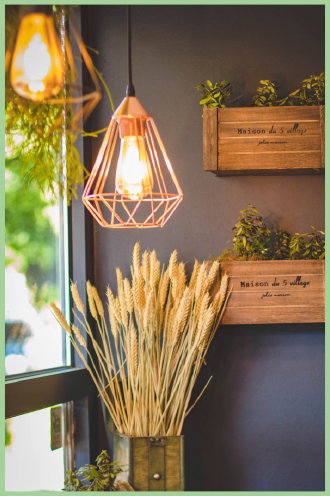
The Rosebank Killarney Gazette is proud to bring you the third edition of our Home Life feature. Here, you will find industry experts’ tips to make your home renovations simple. This month, we share a few tricks of the trade to help you spruce up your home and garden for spring. How do you make your home look the best it can for the new season? Think feature walls and touches of decor. Add a mirror and decorative lights to transform a space. Urban Hardware has all the supplies you need in one place. Make your next renovation project a breeze as the Gazette guides you through what you need to know.

Let there be light
Brighten up your world with gorgeous lighting. Whether task, ambient or accent lighting, one small change can transform a space. An essential element in any room, the right lighting can change the atmosphere from dark and dingy to cosy and welcoming with the flick of a switch.
Tip 1: Light only what you want to see
You can use lighting to direct people’s attention to certain things you want them to notice in your home. Lighting can amp up visual drama like nothing else.
Tip 2: Try backlighting or uplighting
Place a light below or behind an accent wall, a striking piece of art or another object to give it added presence and a glamorous halo effect.
Tip 3: Dimmers can brighten your life
Dimmers make it easy to control lighting. It provides the option of turning the brightness all the way up or all the way down. It also saves electricity and prolongs the life of the bulb.
Sourced: diynetwork.com and Eurolux
Add a bit of texture to your home’s interior
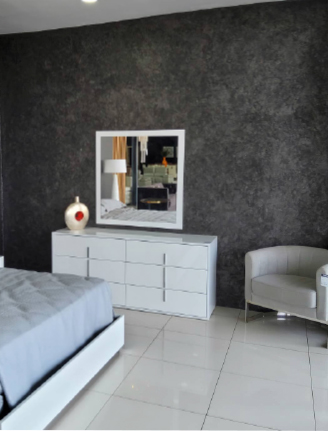
Have you ever considered a dark, rich paint finish for your decor project? It’s all about texture – on your walls and floors! Create an inviting and harmonious atmosphere, a place to retreat and enjoy some homely comforts. Elite Deco Paints is proud to boast the highest quality paint colours using top-class ingredients. Whether you want to paint a whole room or a statement wall, here are a few products to get you started.
RAWAAA: Quick-drying, eco-friendly interior decorative wall paint that simulates a view of rough sandhills. It adds warmth and cosiness to the room and can be dispensed in any colour of your choice.
UTOSHINTO: An elegant, sophisticated finish for interiors that produces a velvet effect, rich in shading and soft to the touch – and suitable for both classical settings and modern contexts. It allows the most sophisticated decorative needs to be met, according to the user’s imagination and the application technique used.
LAZER: This is characterised by extraordinary sparkling and gleaming precious crystals which come from opaque pigmented micro-areas, and gives natural light and dark shades.
Spring into action: How to water your lawn effectively
Winter is almost behind us, which means most gardens are ready for a clean-up and reboot. It’s time to get back into the garden for a beautiful summer ahead. Luckily, Urban Hardware is just around the corner at 60 Riviera Road, Killarney Mall, for your convenience – and the convenience of your home and garden.
To prevent your plants from hanging their heads in summer, they need plenty of water. But how much or how often should they be watered?
Gardena, one of the garden life suppliers for Urban Hardware, suggests:
Rule 1: Keep evenly moist
Most plants depend on even moisture. However, slight drying out before watering promotes root growth of plants.
Rule 2: Water less frequently, but thoroughly
In the flower bed, one to two watering sessions per week are usually sufficient. It is better to water less frequently but with plenty of water, rather than a little water often.
Rule 3: Water late in the evening or early in the morning
When you water cool soil in the evening or night, less water evaporates than with hot soil during the day. And the plants can then sufficiently supply themselves with water before the next day’s heat. Also, remember water restrictions in Joburg – be water wise!
Rule 4: Keep leaves dry
Wet leaves become diseased leaves. If kept wet overnight, leaf-mould diseases may occur. Leaves that are made wet in the sunlight develop slight burn marks (burning glass effect of water droplets).


Taking proper care of your inverter and batteries will ensure good performance and a longer lifespan. Here are some great tips:
When do you need to charge the batteries?
When batteries are left unused for long periods of time, they simply discharge until there is no power left in them. It is recommended to keep the inverter connected most of the time, this ensures the batteries stay ‘topped’ up and will last longer.
It is good practice to ‘lightly exercise’ your inverter if it hasn’t been used for a month or longer. Charge it fully. Switch off the mains and then run a small load using about 15% of your inverter’s battery capacity.
When do you need to replace the batteries?
A number of causes can determine that your inverter’s batteries need replacement.
The real cost of batteries lies in the need to place them periodically. Every three to five years, depending on the quality of the batteries and the way they were treated or if they have reached the end of their life.
It is a good idea to regularly inspect and test your inverter’s batteries.
Which appliances should you NOT connect to the inverter?
You should never plug in appliances such as kettles, irons, heaters, washing machines, tumble dryers, air conditioners and fridges. These will surely damage the inverter.
Smaller, rechargeable battery-operated products such as flashlights, shavers and night-lights that are pluggged directly into the mains socket to recharge is not good for your inverter either. Always ensure that your inverter is plugged in independently from other appliances.
Do you need to keep it clean?
Dust settles everywhere and can eventually clog up ventilation openings and cooling fans. Regularly wipe your inverter with a cloth and ensure the openings are dust-free, otherwise it can lead to hydrogen
gas accumulation which may lead the battery to burst.


INDOOR AND OUTDOOR LIGHTING FAQ:
Q: What is the difference between indoor and outdoor lighting?
A: Outdoor lighting is made to withstand exposure to the elements while indoor lighting is not. This means it is generally acceptable to use outdoor fixtures inside but not the other way around. Indoor lights are often not made using robust, durable materials, nor are they sealed for protection against wet conditions (with the exception of some bathroom lighting).
Q: What are some of the innovations for indoor and outdoor lighting?
A: LED grow tubes produce wavelengths that promote photo-biological processes in plants. Another great advancement to consider is smart lighting, which allows you to control your lighting via an app on your smartphone or with a remote control.





Solar lights are fast becoming a popular choice for homeowners. A sunny, cloud-free day will always offer optimum conditions for charging solar panels. But this doesn’t mean your outdoor solar lighting is rendered useless in overcast weather. Winter skies can be dotted with cloud cover a lot of the time but solar lighting will charge regardless. This is because it does not rely exclusively on sunlight to charge – exposure to long periods of daylight works too.
Points to get the most out of your solar lighting, year-round:
– Install your fixtures in allocation that won’t become shaded as the sun moves during the day(north-facing is best).
– Depending on where you live, winter weather often means rain and wind
which can cause leaves, dirt, and debris to fly around and settle on your
solar fixtures, inhibiting their performance.
– Keep the panels clean by giving them a wipe with soapy water and a soft cloth.

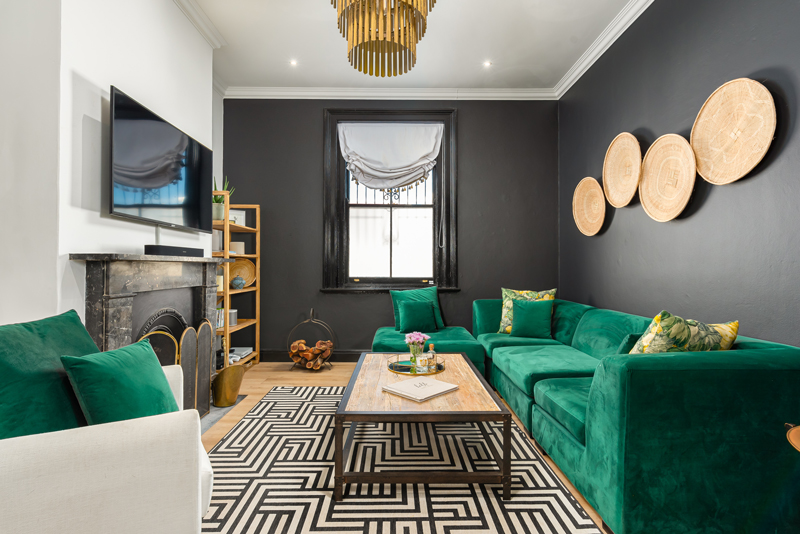
Penzance Place by Lederle Design shows how a pop of colourful paint can bring warmth to your home. Mix elements such as wood, bright tones such as emerald green with two painted featured walls, by Lederle Design.
Colourful winter trends to keep your home cosy
Sue Lederle is the owner and lead interior designer of Lederle Design.
She is known for her smart use of bold colours and textures in and around the home.
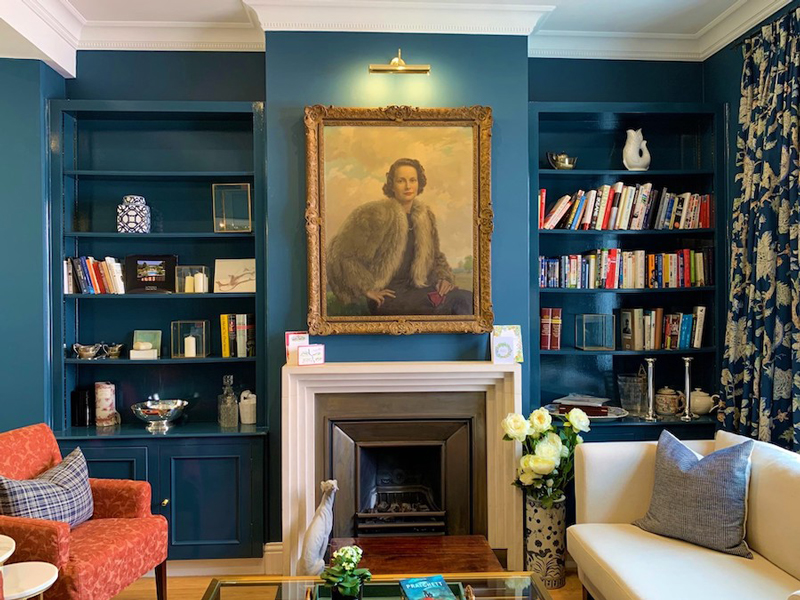
Lederle shared her advice for adding some warmth to your home this winter:
• Texture: A new throw or cushion on a bed with a lovely textured fabric can make a room feel cosier.
• Candles: You can never have too many candles. Pop some candles beside a vase of roses on your bedside table to add warmth and joy to your space.
• Wood: I often use wood for countertops, as it warms up a space, especially in the heart of the home – a kitchen. Wooden tops are comfortable to dine, work or relax at. I also love bringing wooden elements into my work through shelving and cupboards.
How to add pops of colour:
• Add a colourful cushion, a bold wardrobe or paint a wall. Colour used in the right way can take a great design to a sensational one.
• Tones: Colours don’t have to match. For example, if your wall is green you don’t need the same green cushions. Use complementary tones of different shades to mix it up.
• Paint: Painting is a very easy and effective way of adding colour to a space. It is also easy to change it up if you want to refresh it. One mistake many people make is painting a single feature wall. To make the colour really pop, it’s best to use the colour on two adjacent walls rather than just one.
Visit: www.lederleholdings.co.za/lederle-design/ for more decor ideas https://lederleholdings.co.za/lederle-design/
But what colour do we choose?
Choosing your paint colour is probably the most difficult choice you are going to have to make. There are a few essential aspects you need to consider before falling in love with a certain colour. Consider the guarantee that a brand offers, if you are looking for long-term colour, then splurge on one with a longer guarantee. Or, if you are into sprucing up your design every couple of years, go with something more flexible.
What finish do your walls have? Rough, gritty, sandstone or smooth – standard options are usually either matt or low-sheen. Also, keep in mind what kind of maintenance is needed. Have you got muddy dogs who might rub against your walls? This leads you to acknowledge the elements in your area. Are you in a dry, wet or very windy suburb or close to a wetland?
Flexiwall from Duram is an all-weather, matt paint for interior and exterior walls and trims that is tough and flexible. Your exterior colour is the first and last thing you or a potential buyer will see.
First, determine what existing features or finishes you would like to emphasise, for example, beautiful roof tiles, a striking fireplace or beautiful, big windows. If you have a natural stone structure – like an exposed brick wall – make sure that the paint colour you choose works well with it.
Be sure to consider which colours you are using in different spaces. Colours like reds and browns can look quite bold, whereas you can make a small area appear larger with light and cooler neutrals, blues or greens as these colours create the illusion of receding walls.
Remember that the colour you choose may look different at various times of the day and night. The warm tones of incandescent lights will have a different influence on the colour than natural light during the day which is why it is important to paint a test patch. Globally, Duram has noticed a trend towards warmer colours.
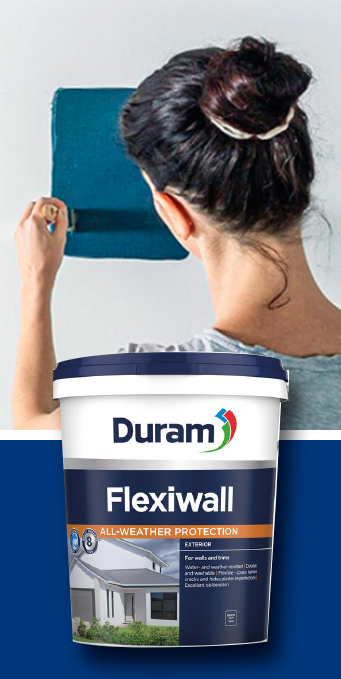
3 Tips to waterproof your exterior walls
Sealing out moisture and waterproofing your home are the most important maintenance tasks you can do. It is the first step if you are considering painting your exterior walls. This will help your paint last longer and help prevent serious problems like mould or cracking. Here are three tips to start you off:

Check walls for faults:
Waterproofing external walls is the best solution if the walls become damp as a result of rainwater or moisture. Before shopping around for waterproofing products, it’s important to eliminate any other causes of structural dampness.

Clean your gutters:
The problem with clogged gutters is not only that they may flow over the edge, down your walls – they also retain rainwater, potentially leading to a series of problems, including rotten wood, leaks and mould.

Select the right waterproofer:
A series of waterproofing products are available at Urban Hardware to help homeowners protect their homes. Riaan du Plessis, operations manager at Flash Harry suggests the following products:


‘A bad workman blames his tools’ – but not any longer! Here’s how to choose the correct paintbrush for the job at hand
Faced with an array of paintbrushes to choose from? Choosing the right paintbrush can be overwhelming. Don’t fret, we’ve got you covered!
– Match the bristle type to your finish: Paintbrushes are available with either synthetic bristles or natural bristles made from animal hair. If you’re using paint or varnish that can be cleaned with water, then choose a brush with synthetic bristles. If you’re applying oil-based varnishor paint, a natural bristle.
– Choose the right size for your project: If you’re painting or varnishing woodwork, choose a small brush for more precise control. The only time
you should consider a brush wider than 7cm, is if you’re painting wide siding, fencing, panelling or other wide, flat surfaces.
– Choose the right shape: If you’re planning to use the brush either to paint a trim or cut in before rolling walls, then choose a brush with an angled tip.
– Choose a square-tipped brush if you’re painting wide, flat surfaces.
Source: www.familyhandyman.com
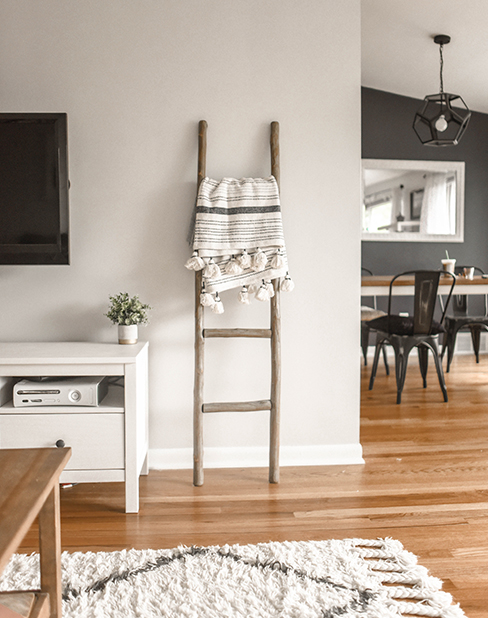
How to decorate a small room
Between the winter weather and the rising numbers of Covid-19 infections, it is likely that many homeowners will be spending much of their days confined within their living rooms over the next few months.
Those with smaller spaces can easily start to feel cramped in by the four walls that surround them. Luckily, there are a few interior design tips homeowners can try to trick the eye into believing that the room is bigger than it is.
Make the ceilings appear higher:
Rooms with high ceilings tend to feel far more spacious than their low-ceiling counterparts. To trick the eye into believing the roof is further away than it is, homeowners could hang their curtains slightly higher than the windowpane – just be sure to purchase curtains that are long enough to reach the floor.
Do not shrink the furniture:
Many homeowners make the mistake of placing small items of furniture to fit in the small spaces. This ends up highlighting how small the room is. Instead, homeowners should invest in one or two larger pieces, such as a couch or coffee table. It is all about creating balance in the space. Items that are too small or too large both have the same effect of making the room appear even smaller.
Invest in large area rugs:
Rugs tend to break the area down into small blocks, which means that the bigger the rug, the bigger the floor space will appear. Instead of purchasing smaller rugs that fit in between the couch and the TV unit (for example), purchase a rug large enough to go underneath both these items.
VISIT US TODAY