Getting to know Naledi
PARKTOWN – A lot of the furore surrounding the announcement of the discovery of Homo Naledi fossils found in the Cradle of Humankind has finally begun to settle down.
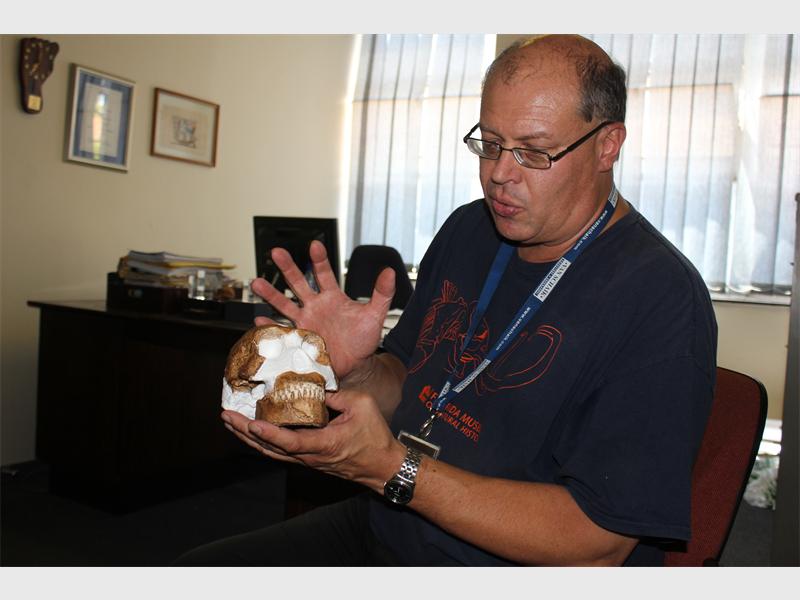
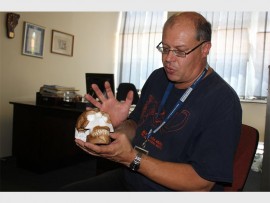
Yet, there are still many questions to be asked as to how this discovery affects humanity and why it is of such importance. Fortunately, that’s where Doctor Bernard Zipfel stepped in to clarify the significance of the find for those of us who aren’t experts in the field of palaeontology.
Zipfel is the curator of the Fossils and Rock Collections at Bernard Price Institute for Palaeontological Research at Wits University and recently hosted a talk at Roedean School on the subject.
He is one of 40 experts who have studied more than 1 500 fossil elements unearthed in 2013, and is a paleoanthropologist with a special interest in the biomechanics and evolution of the human foot, the origins of hominin bipedalism, paleopathology and the preservation of natural history collections.
“An [excavation] was launched where they managed to get archaeologists into a little chamber where they had to do an exceptionally meticulous excavation of an area of four by four metres,” Zipfel explained.
“They started bringing up the fossil pieces bit by bit over a period of 30 days.”
He continued that what made the find so exceptional is that normally they find only one odd hominin fossil within an archaeological site which will be surrounded by remnants of other animal species. “In this case, we only found hominins, nothing else. In our studies, we found the remains belonged to about 15 individuals who all belong to the same species,” Zipfel continued.
“When looking at Homo Naledi, you find a prominent brow ridge which you don’t find in modern humans. The brain was also about a third of the size of a normal human brain. Although the teeth looked very human-like, upon closer inspection they were found to have more primitive traits.”
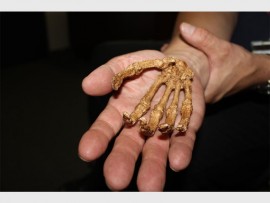
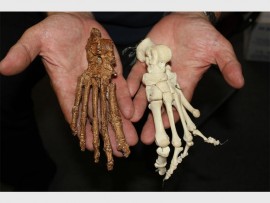
Although there were many parts to analyse and study, it was the hand and foot specimens which fascinated Zipfel the most.
“Portions of its wrist were quite human-like, which suggests it could perhaps have grabbed structures and used them to make things with,” said Zipfel. He also said their fingers were curved, unlike human fingers, because they must have been climbers.
It’s the foot, however, that is the most puzzling aspect for the doctor. “The foot is barely distinguishable from the modern human foot. So we have a creature with feet like humans, a skull that has some human features and is partially ape-like, and various other contrasting traits between primitive and modern human.”
So is Homo Naledi the ‘missing link’ which has been sought for so long?
“No, we don’t refer to the find as that. That subject is far too complex, biologically speaking. We don’t even refer to them as human ancestors, but moreover, we call them ‘relatives’.
Details: www.wits.ac.za