To address the longstanding issue of illegal street racing in Parkwood and surrounding areas, the Johannesburg Metro Police Department (JMPD) and the Rosebank Community Policing Forum (CPF) have implemented stringent measures to discourage this dangerous activity.
Last year, CPF member and resident Sarah McKerron spoke out about the problem, describing how supercars caused distress by racing from the Pantry and Relish restaurants along Jan Smuts Avenue into residential areas during the early hours of weekend mornings.
These incidents prompted Rosebank police and JMPD to increase their visibility, aiming to deter not only the alleged rowdy behaviour at the restaurants but also the illegal racing itself.
Read more: Ward 74 calls on the City of Johannesburg to act against illegally occupied property
Despite these interventions, unlawful road usage persisted. In July, a massive crash on Jan Smuts Avenue involving five cars left two people dead. At Relish, another incident involving overcrowding, an assault, and a shooting led to a case being opened at Rosebank SAPS.
According to JMPD spokesperson Xolani Fihla, the department adopted a proactive, intelligence-led approach to dismantle these gatherings. “Rather than reacting to races already in progress, the officers utilised unmarked vehicles and plainclothes officers to blend in with the crowds at night,” he said.
This undercover presence allowed JMPD to:
- Gather real-time intelligence: Officers mingled with racers to obtain direct information on active drag racing sessions.
- Prevent future events: They identified dates and locations of planned races before they were publicised or executed.
- Strategically disrupt gatherings: Intelligence was fed back to regional members, enabling them to mobilise and shut down events before they began.
Fihla noted that these consistent interventions were having an impact.
“It appears that the enforcement pressure has been effective, as the racing groups seem to have shifted to locations outside our region.” The publication spoke to the manager of Pantry, who did not want to be named, and said he was unaware of any illegal street racing.
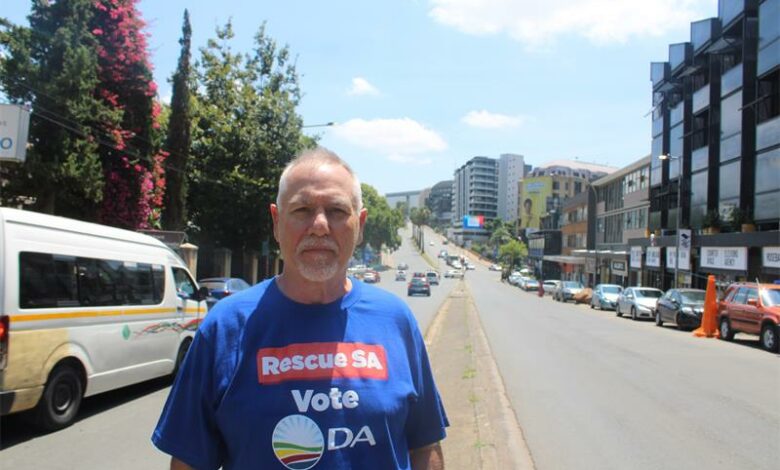
Ward 117 councillor Tim Truluck explained that tackling illegal street racing was complex. “Especially since it needs cooperation from the three spheres of government: municipal, provincial and national,” he said.
Rosebank CPF chairperson Bruce Young confirmed that street racing remained a standing agenda item for the forum. “At one stage, Relish got out of hand, overcrowded, and there was an assault and shooting. Their management has clamped down on this and has banned car revving, loud music and unruly behaviour, and the situation appears much calmer now.”
Also read: Parktown Boys racer William Budler revving up South Africa’s motorsport scene
Relish’s manager, who also wanted to remain anonymous, added that the establishment had since beefed up security to ensure patrons felt safe and to discourage unwanted behaviour. He noted that there had been no rowdy incidents since.
Young cautioned against oversimplifying the issue by linking it solely to restaurants. “It is often sporadic, unplanned, and sometimes only one car and not competitive racing as such. It reflects a broader societal issue and a car culture and is not confined to Rosebank.”
McKerron, also a member of the Street Racing Action Group, explained that the group served as a support network for community members affected by illegal racing. “We are not able to achieve much except report the racing with JMPD and keep a log of the calls and ref numbers.”
The publication reached out to the Johannesburg Roads Agency (JRA) to assess whether traffic control measures were suitable for Parkwood. JRA’s acting head of mobility and freight, Sipho Nhlapo, emphasised that the agency followed a safety-focused approach when considering speed humps, in line with National Department of Transport guidelines.
“Eligibility is not determined by request alone. Speed humps can be considered on residential streets, while raised intersections and raised platforms are suitable for local collector roads. Traffic calming should not be implemented on freeways, highways, major arterial or major collector roads.”
A formal petition of support is required before JRA can approve installation. Applicants can register petitions online at www.joburg.org.za under the petition portal. Based on the outcome of a technical investigation, JRA compiles a report for approval by the City of Johannesburg Petition Steering Committee.
This approach ensures speed humps are placed only where they will effectively enhance safety for all road users, without causing unnecessary inconvenience or delays for emergency services.
Follow us on our Whatsapp channel, Facebook, X, Instagram and TikTok for the latest updates and inspiration!