Raising awareness on Parkinson’s disease this World Brain Day
SANDTON – The association will also be providing vital information on how to navigate Covid-19 while living with Parkinson’s disease.
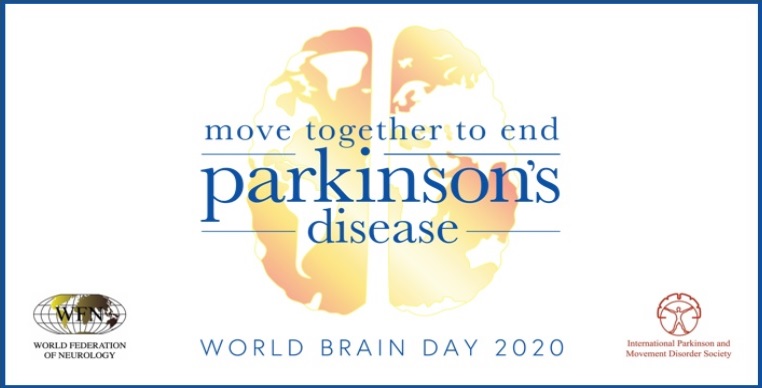
This year we dedicated World Brain Day (22 July) to raising awareness to improve the lives of those living with Parkinson’s disease and their caregivers.
To support the 6th annual World Brain Day, the Neurology Association of South Africa (Nasa) has partnered with the World Federation of Neurology (WFN) and the International Parkinson and Movement Disorder Society.
Parkinson’s disease (PD) is a neurodegenerative disorder which affects multiple regions of the brain and produces the most well-known symptoms of tremor, slowness, stiffness and problems with walking and balance.
According to Nasa President Dr Patty Francis PD also affects sleep and cognitive ability, it causes pain and gastrointestinal issues, provokes anxiety and depression, reducing motivation and quality of life.
“Parkinson’s disease affects over 7 million people around the world [and] our goal is to raise awareness for Parkinson’s disease and its impact on society in an effort to improve access to quality neurological care and life-changing treatments,” added Francis.
The association noted that the symptoms can generally develop at a slow pace over the years.
The cause is largely unknown and there is no cure but many highly effective treatment options do exist.
Treatments can range from medication to highly selective surgical procedures which must be supported by physical therapy, exercise programs, social and psychological support.
According to Sandton neurologist Dr Marcelle Smith, in recent decades, there have been rapid changes in Africa with regards to the increase of life-expectancy.
“The average healthy life expectancy increased from 46.1 years in 1990 to 55.2 in 2017. This is still far below the average life expectancy in high-income countries of over 70 years [but] this has been sufficient to increase the burden of age-related and neurodegenerative conditions such as Parkinson’s disease,” said Smith.
She added that it is believed that PD is less prevalent in Africa countries but incidence and prevalence studies for Africa are lacking.
African countries, much like many other countries, experience a unique set of challenges when it comes to the diagnosis and treatment of PD.
This includes:
- There are far fewer neurologists in Africa countries in comparison to other high-income countries – 0.03/100 000 in Africa versus 4.84/100 000 in Europe as per the World Health Organisation.
It is recommended that there is at least 1 neurologist per 100 000 people.
In South Africa there is 1 neurologist service provider per 400 000 people – the United Nation’s estimates South Africa’s populations at 59 308 690 people at mid-year 2020.
- Many African countries are also overburdened with Malaria, TB, HIV and other infectious diseases such as Ebola hence there are very few facilities and resources dedicated to non-communicable diseases.
- Medication is also only available to 12.5 per cent of Africans diagnosed with PD, compared to the 79 per cent in Europe.
To advocate for patients World Brain Day is spreading awareness by asking people all over the world to Move Together to End Parkinson’s Disease through the use of the hashtags #WorldBrainDay and #WBD2020.
In the coming months Nasa will stand with a number of organisations in asking patients, caregivers and loved ones around the world to share their stories about Parkinson’s on social media.
The association will also be providing vital information on how to navigate Covid-19 while living with Parkinson’s disease.
“When we all move together, we raise the voices of those impacted while uniting the world in a mission to end Parkinson’s disease,” said WFN President Professor William Carroll.
Related articles:
https://www.citizen.co.za/sandton-chronicle/279124/your-mental-health-matters-when-dealing-with-childhood-cancer/
https://www.citizen.co.za/sandton-chronicle/278126/buccleuch-heart-hero-celebrates-10-year-anniversary-of-first-open-heart-surgery/