Illovo intersection blitz questions City of Johannesburg enforcement plan
Renate van Onselen calls for measurable outcomes and sustained enforcement following a municipal operation at a busy Oxford Road intersection.

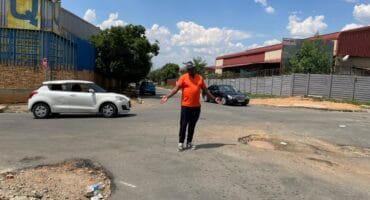
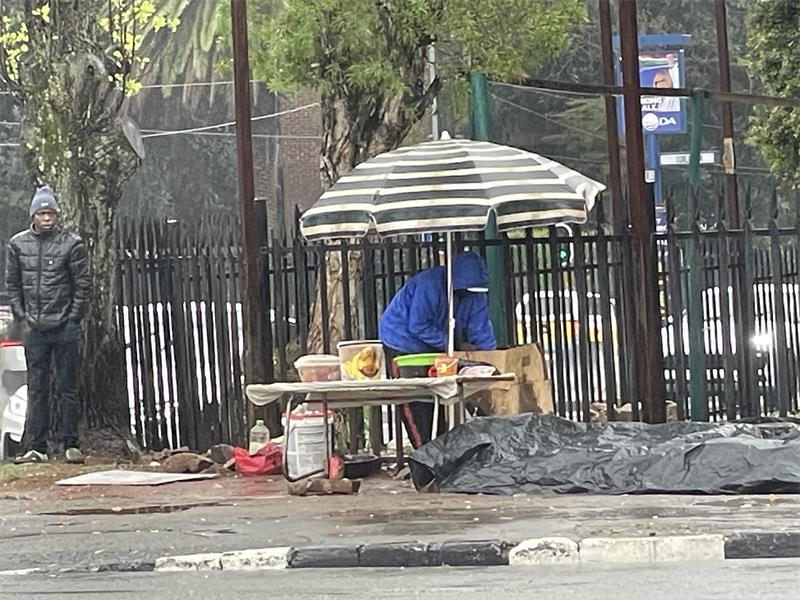
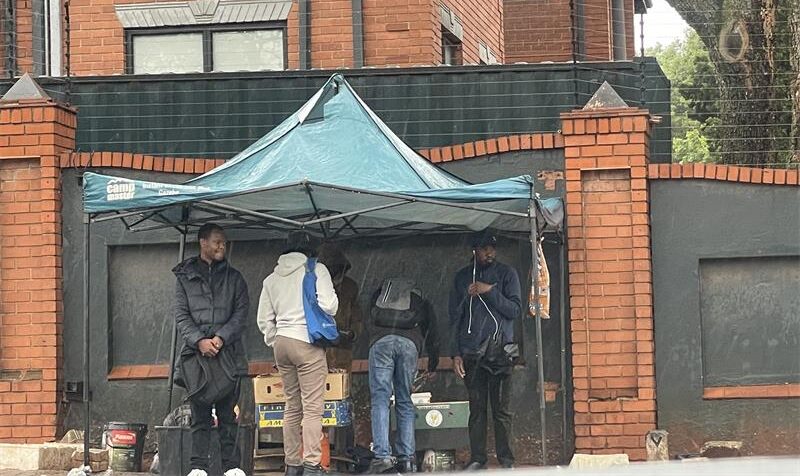
The return of informal traders and homeless people to an Illovo intersection following a high-intensity municipal operation has renewed questions about whether the City of Johannesburg’s service delivery blitzes are achieving lasting change or merely offering temporary relief.
Ward 90 councillor Renate van Onselen believes the municipality needs to demonstrate what these operations accomplish beyond clearing pavements for a day, calling for greater accountability, sustained enforcement and practical interventions to address homelessness and informal trading.
Read more: JRA says Pretoria Avenue project within budget despite delays
The operation was conducted on September 8 at the intersection of Oxford, Hurlingham and North roads, where the municipality sought to address informal trading without the required permits and the presence of displaced people people.
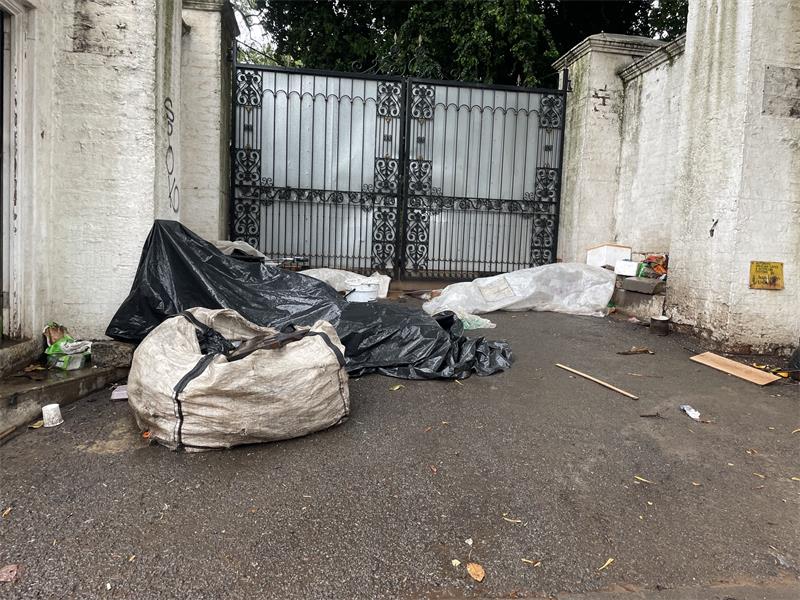
However, when Van Onselen visited the area with the Sandton Chronicle on September 30, informal traders had returned to their previous trading spots, while a homeless person was again occupying a driveway outside a property on Oxford Road.
“To my mind, it takes a lot of time and resources, but there’s no focus on the actual outcome of the operation,” said Van Onselen. “So, for one day, people are moved away, the pavements are clear, everybody seems happy, but five minutes later, everybody is back.”
According to Van Onselen, the issue is not simply whether the city can remove people from pavements and intersections, but whether it has a plan to address the circumstances that bring them back.
“What I, as a councillor, want to understand, is what the measurable outcomes of these high-intensity service delivery operations have been,” she said.
“Moving a homeless person from one pavement to another does not constitute a social development intervention. We need to understand why that person is there, what assistance is available, and whether the intervention has actually made any difference to their circumstances.”
She called for closer coordination between the city’s homelessness policy, the Department of Social Development, outreach programmes and available shelters to ensure that vulnerable people receive appropriate support.
Van Onselen said the same principle should apply to informal trading, where enforcement alone cannot resolve the economic pressures that lead people to sell goods on pavements. While acknowledging the need to enforce municipal regulations, she argued that traders should have practical opportunities to earn a living legally.
“Confiscating an informal trader’s goods does not remove their need to earn a living,” she said. “We should be regulating informal trading, not pretending we can eradicate it through confiscation exercises. A law that is enforced once a month, but ignored for the remaining 29 days, is hardly an effective deterrent. What appears to be missing is sustained implementation, co-ordination and accountability.”
Van Onselen also highlighted previous court judgments concerning the treatment of homeless people and informal traders during municipal enforcement operations.
Also read: National treasury secures $1b NDB loan for South African metro services
She said in Ngomane and Others v City of Johannesburg (2019), the Supreme Court of Appeal found that the confiscation and destruction of homeless people’s possessions during a clean-up operation was unconstitutional and unlawful, and compensation was awarded.
“The Constitutional Court ruled against Johannesburg in the 2014 South African Informal Traders Forum matter after the city unlawfully removed traders during Operation Clean Sweep,” she said. “The relevant statutory processes had not been followed.”
The Sandton Chronicle sent a media enquiry to city spokesperson Nthatisi Modingoane on September 30.
The enquiry sought clarity on the specific outcomes the city intends to achieve through High Impact Service Delivery operations, measures to sustain outcomes, the role of the Department of Social Development, follow-up interventions when shelter is declined, and post-operation monitoring for the September 8 operation.
The deadline for comment was October 2, but no response was received from the municipality at the time of publication on October 19. Updates will be provided once available.
Follow us on our WhatsApp channel, Facebook, X, Instagram and TikTok for the latest updates!