From my Hide: Remembering Dr Anthony Hall-Martin
DAVID HOLT-BIDDLE shares some personal thoughts on a great South African conservationist.
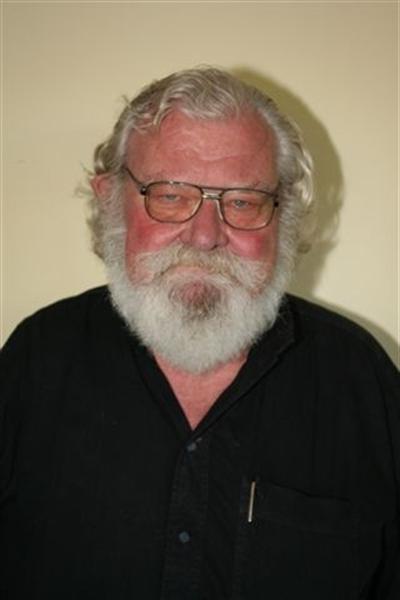
AS a journalist I have spent much of my adult life asking people questions, we call it ‘interviewing’. I have done this with notebook and pen for the print media, and with microphone for radio and television. Some interviewees are an absolute nightmare, filling their answers with ‘ums’ and ‘ahs’ and generally speaking, not speaking generally at all.
Then there is the other kind, and Dr Anthony Hall-Martin was one of those. We might be sitting in an office, or far more likely standing in the shade of a thorn tree in the bushveld or lowveld peering into a boma full of elephants, and I would be pointing a microphone at Anthony.
He would sail into the answer to a question and be word perfect for seemingly minutes, but then he would hesitate, realising that he had ‘fluffed’ and instead of barging on as would a lot of people, he would stop for exactly a second (that would be 15 inches of quarter-inch tape for any radio types reading this, just the right amount of space needed for a clean edit in those long gone days of tape) and then start his sentence ‘from the top’. He was brilliant.
He died in Cape Town today after a long illness, at the age of 69 (Wednesday, May 21). He was born in Cape Town, but his love of and interest in wildlife and conservation started as a schoolboy in Pretoria. He followed through with degrees in botany, zoology and wildlife management at the universities of Pretoria and Natal, and ended up as one of the world’s foremost experts on the African elephant and the black rhino.
He travelled and worked widely in southern Africa (his career really started in Malawi), and in East and West Africa, practising his art (for it was surely more than just knowledge), but then he was also a true artist with the camera and the pen, for he wrote literally dozens of scientific papers and authored, and illustrated, a pile of memorable books.
Dr Anthony Hall-Martin established the Rhino and Elephant Foundation in 1988 with those fellow South African conservation greats, Clive Walker and Peter Hitchins, with, notably, Chief Mangosutho Buthelezi of the Zulus as its patron. His main professional career, however, was with the South African National Parks Board, with whom he served for 25 years, 14 of them as a director. He later became a consultant for the private sector, both locally and internationally.
Like so many great conservationists before him, Anthony’s memorial is all around us, in his case particularly in the many formal conservation areas that owe their existence to his efforts. It was his love for Africa and its wildlife, not just elephants and rhinos either, but all of Africa’s wildlife and wild places, that drove him.
Anthony leaves his wife, Katrina, and two daughters, but he also leaves a huge gap in the international world of conservation. Cheers and go well, Dr Hall-Martin, and thanks for all those one-second pauses.