Tent Travels: Spring time in the Tankwa
Some corners of the arid park were looking decidedly green.
WHEN we first visited the Tankwa Karoo National Park, a few years ago, it was still very much in a development stage and only informal camping sites were available.
It was quite extreme camping, actually. Apart from a small tree that gave sparse shade and the ruin of an old mud-walled building there was absolutely nothing at Pyper se Boom site where we set up camp. We had to provide everything we needed, including water, and the dreaded spade that, in some camping situations, is required in lieu of any sort of ablution facilities.
To add to our discomfort while we were visiting that seriously arid park the temperature soared to around 48 degrees. It says a lot for the Tankwa that, in spite of all the hardships, this dramatic national park was one of our priorities when we planned our ‘Filling in the Gaps’ road trip. In fact, when we left Calvinia after our comfortable night there, we were in a great hurry to return to this intriguing arid Eden to get to know it better.
Of course, camping in that magnificent park has suddenly become great deal easier. Instead of just the informal sites you now have a choice of eight luxury sites, two at Langkloof and six at Perdekloof. Each site has its very own bathroom, toilet and kitchenette and, like the luxury campsites at Mokala National Park, offers a glamping experience, Sanparks style. Comfortable self-catering accommodation is also available if you don’t fancy the canvas option.

On our second visit we also appreciated the fact that the winter rains had brought some relief to this dry land. If not exactly lush, the vegetation had perked up remarkably and some corners of the park were quite green and pretty. Our camp, so remote and peaceful, was situated alongside a water course and was ringed by mountains. In a well-watered section of the park, it was lush and pretty, the lime spring leaves on the sheltering sweet thorn trees adding to the greenery.
The park was also much cooler than on our previous visit, although we did have one extreme weather experience, in the form of an evening thunder storms. What remained unchanged, though was its uniqueness that is very hard to explain. One of the things that makes it so special is that it is situated in South Africa’s only internationally recognised arid area hotspot, the succulent Karoo. It is rich in endangered and endemic plant species and, because of the uniqueness of the vegetation, it supports an interesting mix of birds, including many specials and endemics.

Its history goes back to the 1960s when its conservation was already under consideration. By 1986, various state farms had been consolidated to form the fledgling 27 000 ha park. However, as its immense value as a conserved area was better recognised SANparks began to expand it. After much negotiations with local farmers a further 44 00ha were added in 2003. The expansion continued and today the national park is about 143 600ha in size.
It has also been restocked and, as well as being home to small mammals like duiker, steenbok and jackal, it now boasts populations of Cape mountain zebra, red hartebeest, gemsbok and springbok. In places the game viewing was very good, much better than on our first visit.
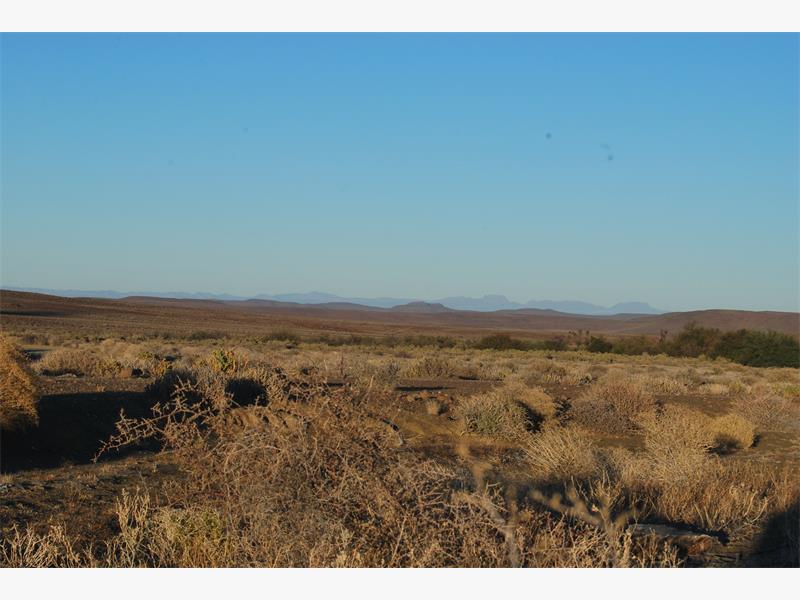
But more than the interesting plants, birds and animal, it is the harshly beautiful and constantly changing scenery, the dramatic vistas, the amazing emptiness of its wide open spaces that beguiled us. The Tankwa is a silence that sings.

We travelled to the park for our two-day stay along the arrow straight road from Calvinia and arrived there soon after 9am. As we could only book into our luxury campside at Perdekloof after 2pm, we drove the big loop from the main reception area past the Oudebaaskraal Dam, stopping at a sheltered spot overlooking the dam for tea. When it was built by Judge Alwyn Burger in 1969, this incongruous body of water in a particularly dry corner of the park was the largest privately owned dam in South Africa.
Much of this route covered harsh, stony ground or flaky gravel and was exceedingly dry and colourless. The soil ranged from dun and dull brown to almost black in places and what little vegetation managed to survive was parched and grey.
Heading back to reception then on to our campsite the vegetation greened up considerably and game became far more plentiful. We were thrilled to reach the lovely Perdekloof camping area and soon set up a comfortable camp in this green and pretty oasis.

The next day was the Heritage Day public holiday and we were grateful to be able to celebrate our green heritage in such a wonderful place. After a leisurely breakfast and a spot of productive in-camp birding, we headed off to explore a particularly lovely section of the park, the scenic Gannaga Pass, stopping on the way at at Pyper se Boom, where we’d stayed on our previous visit.
Gannaga Pass, built in the 1930s to provide work for those hard hit by the depression, snaked its way upward along steep mountains slopes thickly carpeted with lush, bushy, flower-bedecked vegetation. The view of the Tankwa plains from the top of the pass was beautiful. It was like looking down on the soft, muted colours of a massive Persian carpet.

Driving back to camp for our Heritage Day braai, our progress was slow as there was a photograph waiting to be taken round every corner. We were also delayed by a Mexican stand-off between a jackal and a very angry wild cat it had accidentally disturbed. After glaring at each other for ages, both little creatures suddenly turn tailed and ran off in different directions.
In the morning we packed up camp and left early, if reluctantly. Although we were looking forward to a family reunion and the wedding of one of our much-loved nieces, it wasn’t easy to leave the Tankwa National Park. Mountains or plains, lush vegetation or stark aridity, this amazing national park offers those who fall for its charms a constant, ever-changing feast of grandeur.
Perhaps the most amazing experience of our Tankwa visit was on our first evening there, when we watched one of the most dramatic thunder storms I have ever seen – but let’s leave that for next week.