Tent Travels: Mountain reverie and a world heritage site
The barrier of spears is a mighty edifice.
LIVING where we do, on KwaZulu-Natal’s sunny southern shores, we are triply blessed.
We are so privileged to live by the sea among friendly, laid-back people, on a coastline that boasts much natural beauty and an almost perfect climate. We are also close to many wild and wonderful places, including the magnificent game reserves of Zululand.
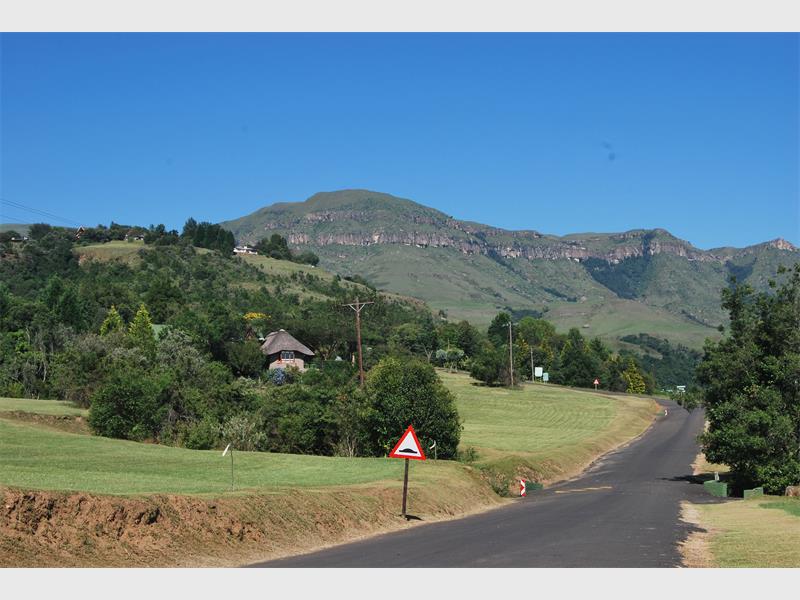
Then we have South Africa’s awesome Drakensberg – the Dragon Mountains, the Barrier of Spears – almost in our backyard. And what a mighty edifice is this barrier of speaks. On a clear day, heading inland from our coastal home, the Drakensberg suddenly shimmers into view, a massive, rugged, uninterrupted buttress that stretches right across our horizon.
Distance lends the summer-green or winter-drab mountains a bluish purple hue. And sometimes the top of the Berg is aglitter with the snow that gives the wind a bitter bite throughout our province, even along our balmy shore.
Ranged roughly north to south for about 240km, the Drakensberg stretches from Mpumalanga and the Free State through KwaZulu-Natal and into the Eastern Cape. Throughout its length it forms the escarpment between South Africa’s Lowveld and eastern coastal plain and its lofty interior.

What a terrible obstacle it must have been to the Voortrekkers, transport riders, explorers and other European pioneers who had to cross these towering mountains in simple ox wagons; but what a formidable barrier to the interior this mighty mountain range has always been – and what an uplifting sight it always is.
The inaccessibility of this hostile terrain made it a perfect refuge for different waves of people during times of war or persecution. It also kept agriculture and development at bay, leaving the mountain wilderness largely untouched. And thankfully, much of this amazing wilderness is now formally conserved.
From our home it is just a few hours drive to many Drakensberg resorts, either within or surrounding that huge slice of the mountain range preserved as the uKhahlamba-Drakensberg World Heritage site. This mega-game reserve is composed of a mosaic of a dozen or so protected areas that were established between the beginning of the 20th century and the 1970s.
As well as being a pristine chunk of mountain wilderness and a haven for many endemic or threatened plant and animal species, the park is an important repository of one of southern Africa’s cultural treasures.
Throughout the Berg, fascinating San rock art can be found, offering us a tantalising glimpse of the lives and beliefs of the little people who once sought refuge in this inhospitable place.
Sadly, they are gone now but their art lives on in caves and overhangs, telling their story. Because of this treasure trove of ancient art, because it is a place of awesome natural beauty and because of its huge value from an environmental and biodiversity point of view, uKhahlamba-Drakensberg Park is one of only 23 places worldwide that have been declared World Mixed Heritage Sites.

Now that is a good reason to feel proudly South African, but that’s not all. uKhahlamba-Drakensberg , more than 242 000ha in size, has now been combined with the spectacular 6 500ha Sehlabathebe National Park in Lesotho to form the Tranfrontier Maloti Drakensberg Park and an even bigger World Heritage Site.
In this transfrontier park’s safekeeping are all sorts of rare, endangered and endemic species, all sorts of animal and plant treasures that are being preserved for generations to come. What a thrill it is to see the Cape vultures gliding on a thermal, a pair of Verreaux eagles soaring above the mountain tops or, perhaps the most special avian sight the Drakensberg has to offer, a magnificent bearded vulture flying overhead.
These are some of the most spectacular natural treasures but there are also many exceedingly rare plant and animal species that are more easily overlooked. For instance, the yellow-breasted pipit is a species only the ardent birder would recognise, but this little bird is globally threatened. Then there is an insignificant little fish, the Maloti minnow, a critically endangered species only found in Sehlabathebe.
The Lesotho national park also has a water plant, commonly known as the Sehlabathebe crown jewel that goes by the Latin name of Aponogeton ranunculiflorus. These delicate little white-flowered water plants are found growing in the soft mud in the clearest of the rock pools in Sehlabatebe and occur nowhere else on earth.
The plant life is simply amazing in the Drakensberg and a walk in the mountains in spring and summer is a walk through one of South Africa’ s most colourful natural flower gardens. Within the transfrontier park there are more than 250 endemic plants, many of them rare and beautiful alpine or sub-alpine species.

Perhaps the Drakensberg’s biggest drawcard is its scenic beauty, its shapely mountain and peaks and towering sandstone buttresses; its waterfalls, rivers and crystal streams; its rolling high altitude grasslands and the enchanted forests hidden away in deeply incised ravines, alongside boulder-strewn river beds.
Particularly during the summer months, the Drakensberg is a watery place. It boasts extensive high-altitude wetlands, for which it has been declared a RAMSAR site, and hikers are seldom too far from a clean water source in the form of a sparkling stream.
So it comes as no surprise to discover that it is southern Africa’s most important water production area. This massive escarpment is also the watershed for two of South Africa’s most important water courses, the eastward-bound Thukela River and the westward bound Orange of Senqu River.
We recently took advantage of our proximity to these wondrous mountains – as well as an opportunity to spend a week in a comfortable Berg cottage – to enjoy a mini-holiday in the mountains. We spent a couple of nights camping at Spioenkop Nature Reserve, a week in the cottage in the Champagne Valley and another couple of days camping at lofty Highmore.
The wonderful time we spent there reminded us of just how lucky South Africans are to have access to this wonder-filled mountain paradise. For the next few weeks, let’s put on our virtual hiking boots, fill our lungs with mountain air and take a slow amble through the Drakensberg and its lovely surrounds.