‘Mafia’ style taxi feuds get worse on the South Coast
Police confiscated numerous weapons during the violence.
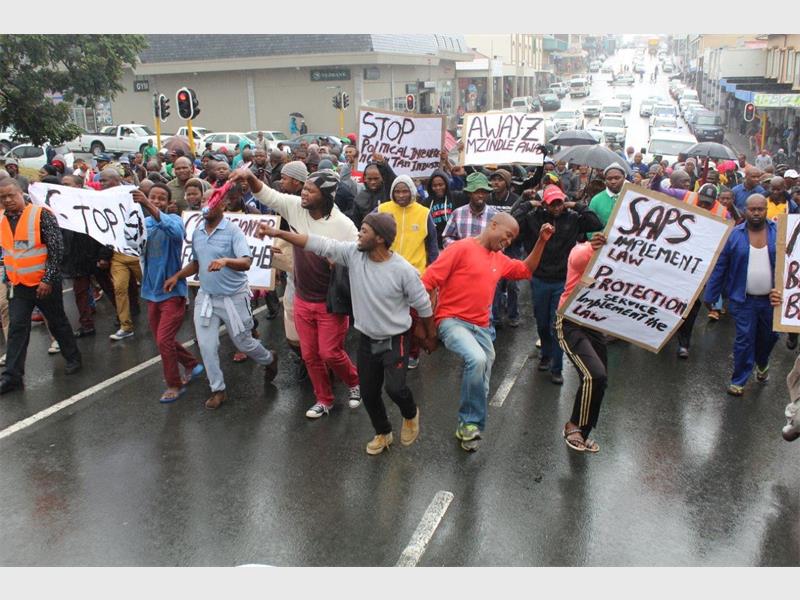
SUSPICIONS are that the murder of municipal employee and Zamokuhle Long Distance Taxi Association’s deputy chairman, Mlungisi ‘Bhoro’ Ngcobo, who was gunned down last Wednesday, could be related to the South Coast taxi route rivalries.
According to the Mercury, KwaZulu-Natal’s transport MEC, Willies Mchunu has obtained an interdict to stop President Jacob Zuma’s taxi-boss nephew and his associates from threatening, assaulting or harassing their rivals.
The MEC was granted the interdict by the Pietermatizburg High Court last Thursday, prohibiting Sonke Long Distance Taxi Association from using key Durban and South Coast taxi ranks.

Sonke spokesman Vuyo Mkhize said they would obey the order though they believed that taxis operating between the South Coast and Durban were obliged to work with a Duban-based association.
Last month in Park Rynie scores of taxis blocked the off-ramp in protest against Sonke. Irate operators from Port Shepstone, Highflats, Umzinto, Ixopo and Umzimkhulu called for MEC Mchunu to step in again.
Eventually, in court papers lodged in Durban about two weeks ago, Zamokuhle successfully interdicted Sonke from using its routes and taxi ranks. In the papers President Zuma’s nephew, Mfundo Gcaba, was identified as the main aggressor. He was also accused of using Zuma’s name to intimidate opponents – a claim which he denies.
Taxi wars have plagued the South Coast for months this year. The main source of conflict has been the use of the Margate to Durban routes largely by local Bambanani and long distance Zamokhuhle taxi associations. In addition the Gamalakhe and Nyandezulu associations are fighting over the Marine Drive route between Port Shepstone and Margate.

In June this year, to try to keep the peace between the Port Shepstone taxi associations, MEC Mchunu presided at the signing of a cooperation agreement. The MEC even warned that those who continued to operate illegally would be dealt with harshly. But it seems that the peace order was not effective as taxi violence seems to be getting worse on the South Coast.
During these taxi conflicts the most affected people are the commuters, who are left stranded because of the violence. Hibiscus Coast Law Enforcement has had to close the Margate and Port Shepstone taxi ranks quite a few times because of taxi feuds. The closing of the taxi rank left passengers unable to get to and from work. But some taxi drivers end up picking up passengers from around the area, not from the rank, putting commuters and other road users at risk.
Another source of conflict in the taxi industry seems to be greed. Earlier this year Oshabeni commuters were left stranded because, taxi drivers went on strike and blocked Ugu buses from picking up passengers from their area. Oshabeni taxi drivers claimed that, because the buses were cheaper, they were losing passengers. Taxi fare is R12 from Oshabeni to Port Shepstone, the bus fare is only R9.50. Police had to be deployed to monitor the situation.

A commuter from Oshabeni said that the bus stopped operating after the strike which was earlier this year. “I travel from Oshabeni to work from Monday to Friday which costs me R125 a week; a bus would cost me R95,” said the concerned commuter.
The police have confiscated many weapons during taxi violence, ranging from guns to knobkerries. In May this year the police arrested seven men and seized a total of nine firearms as well as ammunition and impounded two vehicles. The men appeared in court for public violence.
To receive news links via BBM, add us using the pin 2BABF7D1.
The South Coast Herald is also on Facebook and Twitter – why not join us there?