Tent Travels: The song of the sea people
We went to take a look at the iconic Hole in the Wall
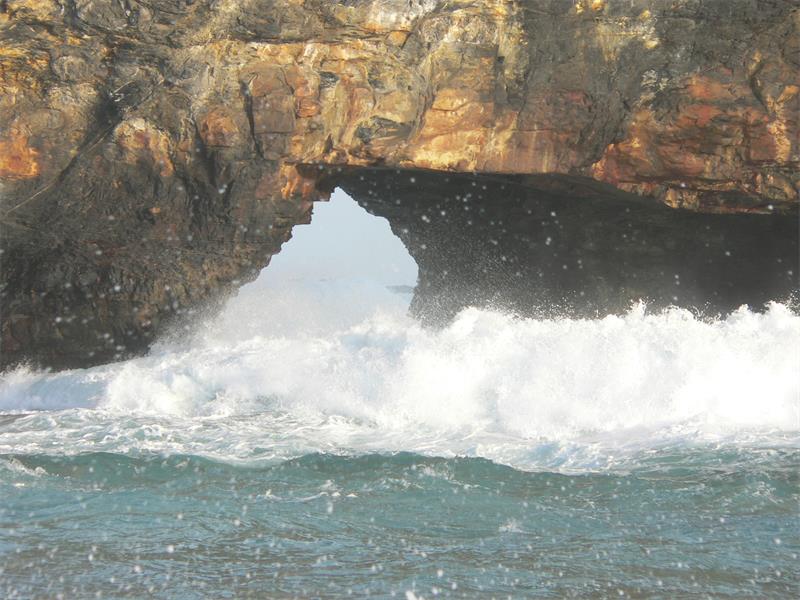
PERHAPS one of the Transkei’s most recognisable images is its strange offshore geological feature known as Hole in the Wall.
We went to take a look at this iconic landmark, a few years ago, at the end of an Eastern Cape camping trip. We’d found ourselves with a few days to spare before we needed to be home. It was well worth the detour, not only because of the impressive rock formation and the beauty of the surrounding coastline.
It was most interesting to see a substantial tourist node developing in that area. There was array of well-established resorts, hotels, backpacker lodges, camping grounds, restaurants and other tourist-related businesses in neighbouring Coffee Bay, White Clay and Hole in the Wall.
While the backpacker lodges, the laid-back resorts and camping grounds gave this area a vibey, youthful atmosphere, the area as a whole seemed very family orientated. Then there was the attractive owner-managed Ocean View Hotel in Coffee Bay. Although a particularly friendly and welcoming establishment that lacked airs and graces, it was decidedly upmarket in an attractive, understated way.

Altogether the area seemed to be holding its own as a successful tourist destination and we suspected the good tarred road leading from the N2 down to Coffee Bay had a good deal to do with it. The secondary Transkei roads branching off to the coastal beauty spots are often notoriously bad, putting off less adventurous spirits or would-be visitors without sturdy vehicles. Certainly, the accessibility of Coffee Bay and its surrounds, combined with a good choice of accommodation options and reasonable infrastructure, must have upped the area’s appeal as a holiday destination.
There is much talk about the proposed new N2 Wild Coast tollroad bringing prosperity to the area. Without a massive upgrade of the tourist roads from the N2 to the coast I fear an upgraded N2 might well have the opposite effect. It might encourage people just to hurry through the Transkei, even by-passing the towns along the N2 route where at least some tourist spend now takes place. Generally, improved tourist roads and other infra structure is desperately needed to boost the Transkei’s at the moment rather tardy tourism industry. There is such amazing potential there, too.
It was mid-afternoon by the time we reached Coffee Bay so we didn’t do any exploring. Instead, we went straight to Hole in the Wall holiday village via a short, rather bumpy but reasonable gravel road. The village was quite a big complex, neat, well-maintained and attractive with a nice, old-fashioned family resort feel to it. There was also a rather zany little backpackers’ lodge that offered camping facilities so we decided to spend the night camping there.

As soon as we’d erected our handy rooftop tent and set up a simple overnight camp we headed off to find the famous hole, accompanied by a little red dog who seemed to have taken a fancy to us. A pleasant walk took us through a grove of venerable milkwood trees to the beach overlooking the famous rock formation.
It really was most impressive, a large, grassy-topped offshore sandstone stack through which the waves had punched an impressive hole. The incoming spring tide made it even more dramatic, the foamy waves pounding the stack and rushing noisily through the hole. It was easy to see why the Hole in the Wall had earned the Xhosa name of esiKhaleni, meaning `the place of the sound’. What was harder to explain was the rather strange vibes that seemed to emanate from the impressive rock formation. Perhaps it had something to do with the fact that people had come to grief while trying to swim or take a boat through the hole or trying to climb the stack.

It might also have had something to do with a charming Xhosa legend that added to its mysteriousness. According to the old story, a young Xhosa maiden once fell in love with one of the mythical sea people from that area. So strong was his love that her lover and his people rammed a hole through the wall with the help of a huge fish so that he could reach her. She was never heard from again but, according to many, the sighing of the sea when the tide is high is actually the sound of her singing with the sea people.
The coastline overlooking the Hole in the Wall was particularly pretty, with the nearby river mouth sporting a beautiful pebbly beach. Alongside the beach was a stand of twisted, gnarled milkwoods and other dune tress, including some spectacular strangler figs. Some of the trees were festooned with indigenous orchids, all in flower at that time, while strange, otherworldly fungi clung to the branches.

It was a magical little woodland and we lingered there for quite a while before heading back to our camp. The little red dog followed us home and kept us company at our braai fire that night. When we went to bed, she curled up and made herself comfortable at the foot of the ladder leading to our rooftop tent. She was still there the next morning although she wandered off when she noticed us packing up to go.
We were fond of her by then and if she had needed a new home we could easily have added her to our own canine family back home. I think, though, she lived a very good life as part of the Hole in the Wall welcoming committee.
To receive news links via BBM, add us using the pin 2BABF7D1.
The South Coast Herald is also on Facebook and Twitter – why not join us there?