Proposed Umzimkhulu weir is inappropriate solution
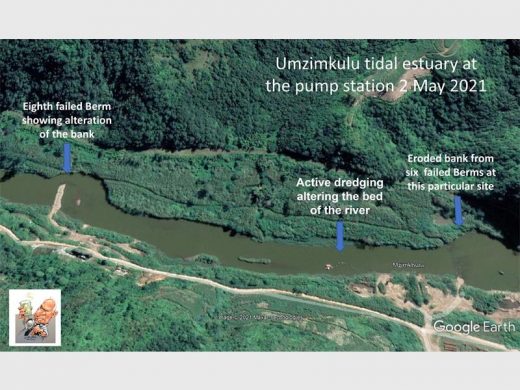
Forensic evidence of this unlawful alteration is available on Google Earth, and has been captured in various PPT presentations that are now in the public domain.
Water security is needed at city level to restore investor confidence, so municipalities will increasingly play an important role in unlocking the value of water as an economic enabler.
Professor Anthony Turton, who has immense knowledge and experience in water management, particularly rivers and estuaries says the SA Business Water Chamber has been working closely with the Presidency, Treasury, COGTA and National Planning Commission (NPC) via the Public Private Growth Initiative (PPGI).
“The objective is to initiate policy reform to unblock the impediments to job creation and economic growth. We are calling for five percent sustained and inclusive growth per annum for the next two decades to restore prosperity to this country.,” he says.
Prof Turton says that the reason they need an independent water regulator is the obvious failure of Department of Water and Sanitation (DWS) in its regulatory role.
Many examples exist, but include the sewage disaster at Emfuleni, the Harrismith disaster, and the saline intrusion at the St Helens Rock Pump Station on the Umzimkulu River.
The Emfuleni case is well documented, but the Port Shepstone case isn’t, so Prof Turton is raising it to one of national interest, because the Umzimkulu is our last free flowing river and is as ecologically significant as the Okavango.
He is calling on DWS to implement Section 21 c and I of the National Water Act where unlawful alteration of the bed, bank and flow of the Umzimkulu has been taking place over the last half decade.
Forensic evidence of this unlawful alteration is available on Google Earth, and has been captured in various PPT presentations that are now in the public domain.
“If DWS was an effective regulator, we would not have saline intrusion at St Helens Rock, and we would not need the proposed weir. That weir is an inappropriate solution to a misdiagnosed problem,” he said.
He said he is willing to explain the technical reasons in detail to anyone interested in listening.
Saline intrusion has been caused by unregulated alteration of the bed and bank of the river, so the rehabilitation fund of the mining operation ought to pay for the restoration of the ecological integrity of the estuary.
Prof Turton said that the rehabilitation fund is regulated by the Department of Mineral Resources (DMR), so I am also calling on them to intervene as demanded of them by the Mineral and Petroleum Resources Development Act (MPRDA).
Prof Turton questioned why must local ratepayers be expected to pay for an inappropriate intervention (the proposed weir) when the problem was caused by the failure of two regulatory authorities – DWS and DMR?
The Green Net, a community-based environmental organisation, is encouraging the public to give input about Ugu District Municipality’s plans to construct a weir at at St Helens Rock on the Umzimkhulu River.
The objective of the proposal under consideration by Ugu, is the permanent construction of a weir across the river with the intention to prevent periodic saline intrusion into the pump station.
HAVE YOUR SAY
Like the South Coast Herald’s Facebook page, follow us on Twitter and Instagram