
DRIVING through the mountains to Sehlabathebe, Lesotho’s stunning national park, the mist grew thicker and thicker as we gained altitude. After reaching the park entrance we proceeded slowly onwards and upwards for about 10km along a steep, muddy, gravel road, catching tantalising glimpses of the lush, green mountainous terrain. By the time we reached the lodge on the plateau, it was almost completely hidden by the mist.
Going to Sehlabathebe was one of those spur of the moment decisions that add spice to life. We’d impulsively decided to take a short pre-Christmas break and hadn’t even bothered to try and book into the comfortable, reasonably priced park lodge. Although camping facilities would be almost non-existent, we are self-sufficient campers and were quite happy to put up a tent and make it our mountain home for a couple of days.
It is a bit disconcerting, though, choosing a camping site when the world is swathed in a thick white blanket. We found a level spot that seemed suitable, erected our rooftop tent and put up the awning attached to our vehicle. Ten minutes later, the kettle was boiling and we were cosily ensconced under the awning, looking out on a wet, white world.

A little breeze shook the leaves of a nearby tree – and nudged the swirling mist away, lifting the curtain on a fabulous scene. Towering emerald mountains shifted into view and all around us the lush green grass was dotted with multi-coloured flowers. Silvery little streams and wetlands completed the beautiful picture. What a feast for the eyes – but the visual treat did not last long. The swirling mist soon drifted back, erasing the magical mountains and flower-filled fields. We’d have to wait until morning to enjoy ahlabathebe’s charms.
Sehlabathebe, Lesotho’s first designated National Park, was proclaimed in 1970. It is 6 500 hectares in extent and, with an average elevation of 2 400m, is set high in the Drakensburg mountains, on the border between Lesotho and KwaZulu-Natal. Although most people go there by road, an intrepid hiker can reach the park from KwaZulu-Natal via the rugged Bushman’s Nek. It is apparently not a route for the faint-hearted. The terrain is rugged and the berg weather, notoriously changeable and extreme.
We experienced a sample of the berg’s fickle weather later that night, when a cold, fierce wind picked up, violently rocking our roof-top tent.We’d left the awning in place and were worried that the wind would damage it. After clambering down from our roof top tent and packing up the awning, we dived into the vehicle and unearthed our Lesotho blanket. This, we’d acquired quite a few years ago while travelling through Lesotho and we always keep it in the vehicle. Many are the times we have appreciated its warmth.
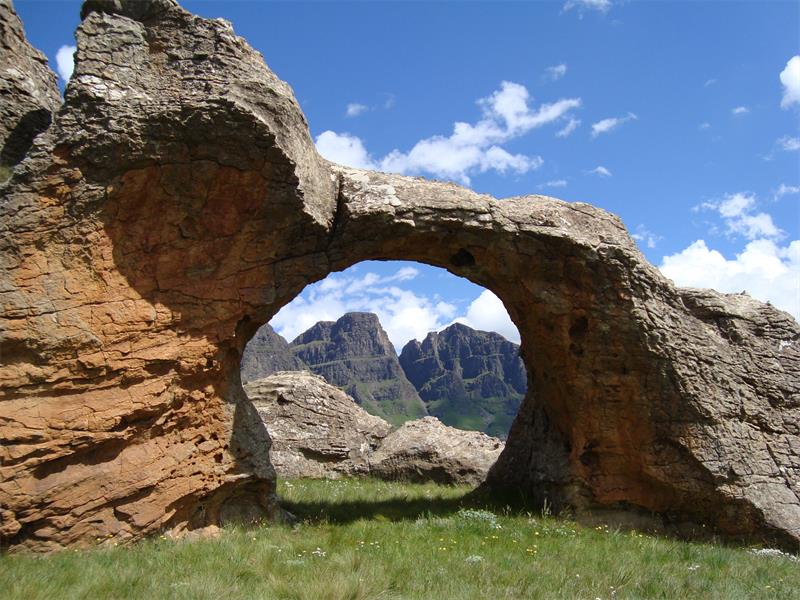
At least the wind chased the rain and mist away. We woke to a glorious summer morning and a view so incredible that we immediately set out on a walk to explore this lovely place. Strolling in one direction, we came across some amazing rock formations, massive clumps of jagged, rust-coloured rocks, forming arches, niches, rugged outcrops and extensive, clear pools. In one of these pools we found a treasure, the so-called crown jewels of Sehlabathebe. The lodge attendant showed them to us. He and wife were on their way to the edge of the escarpment, overlooking KwaZulu-Natal, to pick up some cell-phone signal. When they caught up with us they detoured from their route to show us these marvels.

We followed them to a deep rock pool, the surface of which was covered in exquisite little white, yellow-centred flowers. Officially, they go by the Latin name of Aponogeton ranunculiflorus but their common name is well earned. These delicate little plants are only found growing in the soft mud in the clearest of the rock pools in Sehlabathebe. They were discovered the year the park was proclaimed and are found nowhere else in the world.
Our young friend was gratified by our enthusiastic reaction. Sadly, some guests hardly seemed interested when he showed them this little floral treasure, he said. He also told us about the park’s other exclusive species. A small fish, the Drakensberg or Maluti minnow, Oreodaimon quathlambaue, was thought to be extinct but has been found in the Tsoelikana River, which flows through Sehlabathebe.
For a while our companions walked along with us, pointing out some of the more striking rock formation, then they strode off to communicate with the outside world. Big white clouds were rolling up the escarpment by the time we made our way back to our camp and soon the rain came pouring down. It rained on and off for most of the afternoon but in between showers the sun came out and we made short forays into the surrounding grasslands. The crown jewels are not Sehlabathebe’s only floral wonder. The park boasts an amazing variety of grassland and marshland sub-alpine species of wild flowers and, at midsummer, they were at their colourful best.
And, although we didn’t manage to see the bearded vultures that apparently had a nest on a nearby cliff, the interesting high-altitude birds around camp kept us well occupied, too.

The wind came up again that night but it didn’t keep us awake too long and, once again, the sun was there to wish us a bright good morning. There was all sorts of frenetic activity taking place around the lodge and soon visitors began to congregate there. Some rode in on horses, other came in luxury vehicles. Most of the men sported traditional Lesotho dress, including bright blankets draped over their shoulders. The women were smartly dressed in expensive, mostly western outfits, some conservative and matronly, others more trendy.
They congregated around the lodge, where they enjoyed a lavish picnic breakfast then most of them went out walking. We particularly admired a couple of elderly women who, in spite of their high-heeled shoes and smart outfits, did a long walk that took them a good couple of hours. They didn’t seem at all tired – or inconvenienced by their unsuitable footwear – when they returned.
There was more feasting, lots of laughter and congeniality, then they all disappeared back down the mountain. They appeared to be locals of high standing but we never did discover who they actually were. All the same, it was nice to see the park so well appreciated.

We, too, enjoyed some pleasant walks before the afternoon showers arrived. By then we were quite content to spend the afternoon beneath our awning, reading and looking out through the rain at the magical mountain paradise. The wind blew a little less strongly that night and we slept well, tucked up warmly beneath our much-travelled blanket. Driving down from the heights the next morning, we discovered what we had missed on the way up. Without the rain and mist obscuring it, the scenery was simply out of this world.
I still have a wildflower booklet from Sehlabathebe and I treasure this little acquisition. It reminds me of the flower-filled, mountain Elysium that is now linked to South Africa’s uKhahlamba Drakensberg Park to become a part of the Maloti-Drakensberg Transfrontier Park, yet another wonderful southern African environmental victory.
To receive news links via BBM, add us using the pin 2BABF7D1. The South Coast Herald is also on Facebook and Twitter – why not join us there?


