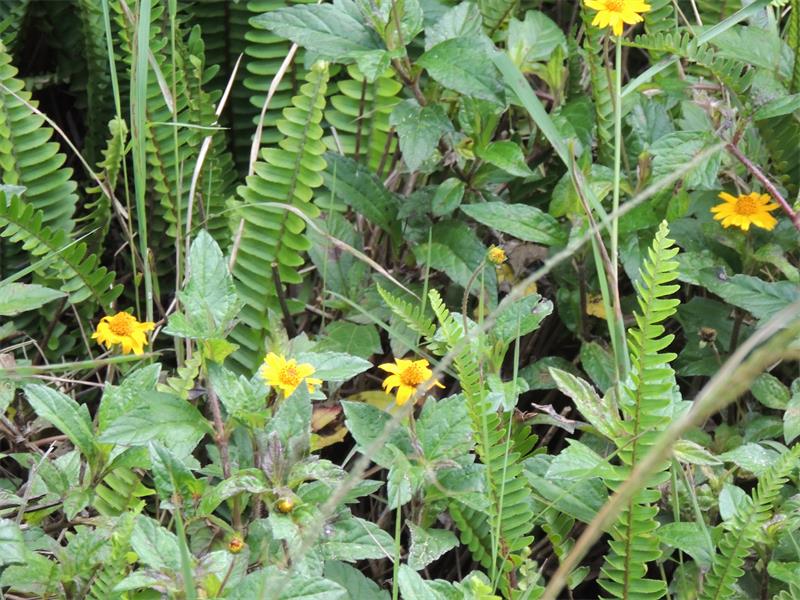
THE Singapore daisy, a pretty but troublesome yellow daisy-like invasive weed, seems to be encroaching on our pristine grasslands more and more, pushing aside and crowding out those wonderful floral treasures that naturally grow there.
Sphagneticola trilobata, as it is known in botanical circles, is a Nemba category 1b invasive in our province. A perennial plant, it forms a thick mat, blanketing and smothering the indigenous vegetation. It has fleshy, hairy, toothed leaves and bright yellow flowers.
If you have this species in your garden give it its marching orders and replace it with one of the many interesting indigenous ground covers that are available from most nurseries.
You could even replace it with a rare and wonderful little plant that deserves a bit of nurturing from green-minded gardeners.
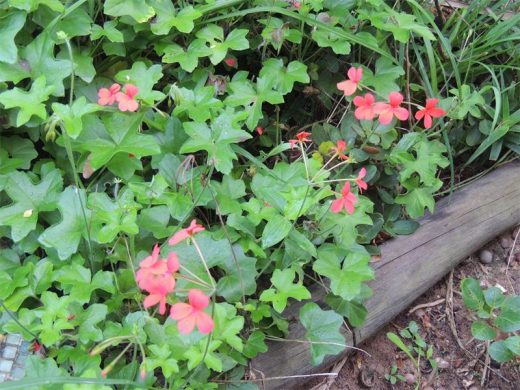
It goes by the name of Pelargonium tongaense or Tonga pelargonium and flowers freely from spring right through to autumn. Its dainty, bright scarlet flowers are guaranteed to add lively colour to any garden bed and they contrast well with the showy, bright green, slightly hair hand-shaped leaves.
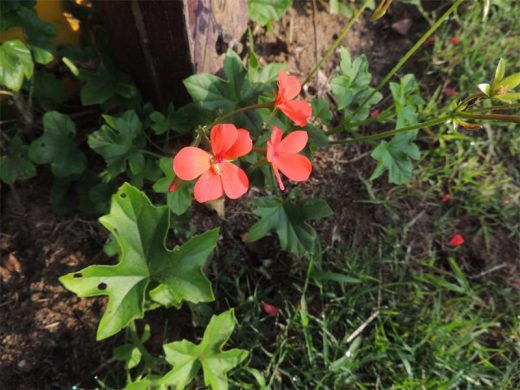
This special little plant is a shy forest dweller and is endemic to a small area of north-east KwaZulu-Natal. It was discovered relatively recently and I believe puzzled the experts who initially wondered if it was a cultivated garden escapee.
YOU MIGHT BE INTERESTED IN: More Invasives and Natives
Its credentials as one of our indigenous floral treasures have now been soundly confirmed.Interestingly, one of the first botanists to take an interest in this plant was Dr Ian Garland, a visionary KwaZulu-Natal environmentalists who established an environmental centre in Mtunzini about 70 years ago.
One of his employees, Jobe Mafuleka, brought him a specimen of this bright little scarlet lady – and the rest, as they say, is history. It now graces many gardens in KwaZulu-Natal and is quite easily obtained from indigenous nurseries.
As a garden subject it likes a bit of shade and the sandy soil that reminds it of its home. However, like many plants it is partial to leafmould, so don’t rake up and bag those fallen leaves then send them to the landfill site. Scatter them into your flower beds and watch your garden grow – the natural way,
It isn’t fussy either and, although I think of it as a shade lover, it has established itself in corners of my garden that receive quite a bit of sunshine.
In the wild, it is quite a rare little plant but it seems to thrive in gardens with very little care. It seeds itself and is also very easily grown from slips. A very rewarding plant all round it is lovely as a ground cover, makes a pretty border, grows happily in a mixed flower bed and does well in containers. Give it a home and it will show you ample gratitude.
By the way, both the Pelagonium genus and Geranium genus belong to the Geraniaceae or geranium family. It is an economically important family as these lovely and varied flowering plants are used to produce aromatic oils, are used in the florist trade and are lovely garden subjects.
Many of those lovely ‘geraniums’ that we use to fill our window boxes and hanging baskets are, in fact Pelargoniums.
According to wildlife-friendly gardeners Charles and Julie Botha, the petals of the Geranium flowers are roughly equal is size, unlike the Pelargonium flowers. The name Pelargonium apparently comes from the Greek word that means ‘stork’s bill’ referring to the shape of the seeds.
South Africa has more than 200 Pelargonium species, many of which have found their way into gardens and containers all over the world. In fact our beautiful, naturally occurring Pelagonium and Geranium species are another reason to be proudly South African.
HAVE YOUR SAY
Like our Facebook page, follow us on Twitter and Instagram
For news straight to your phone, add us on BBM 58F3D7A7 or WhatsApp 082 421 6033