Invasives and Natives: Pretty pushy plants and a rare native
Nectar rich sunbird bushes make welcome additions to the bird friendly garden.
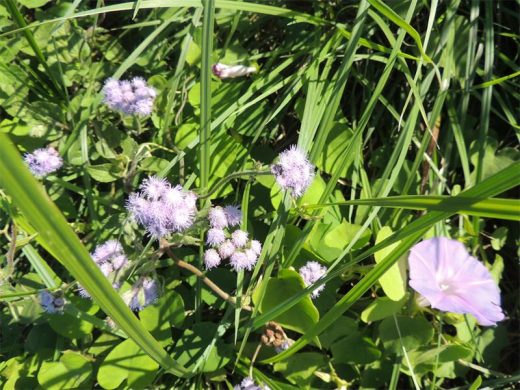
WITH its pretty but fairly nondescript flowers and its habit of mingling, seemingly innocently, with the wild flowers and grasses that are found naturally in the areas it invades, Mexican ageratum appears a fairly innocuous weed.
However, Ageratum houstonianum, as it is known in botanical circles, and its close and similar relative, Ageratum conyzoides, are both insidious alien invaders that have made our national invasives list.
YOU MIGHT ALSO BE INTERESTED : Invasives and Natives: Grey leaves, good and bad, and small Barlaria wars
They produce plenty of seeds that germinate easily and once they establish themselves in your garden or in a conserved landscape where they are not wanted, they can prove very tricky to evict.
Both are widespread in KwaZulu-Natal where, according to the Wildlife and Environmental Society of South Africa (Wessa) invasive alien plants handbook, they invade a wide range of environments.
With their fluffy blue flowers, they are easy to spot. Look around and you’ll see them everywhere. And when you do encounter them do the environment a favour and weed them out.
According to Wessa, a stand of these aliens should also be treated as a warning. As pioneer weeds, they indicates land that is susceptible to invasion by more dangerous invasives like Chromolaena and Lantana.
A native plant that shares these species’ ability to multiply quietly without being noticed is my Metarungia longistrobus. Not that I mind. It is very welcome in my garden.
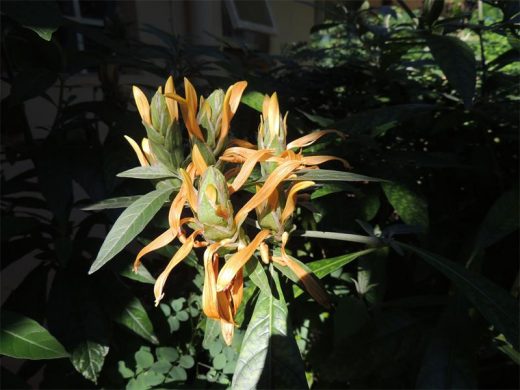
It has a knack of quietly sowing itself in empty, partially shady corners that need a little brightening. This plant is most attractive, with olive green leaves that contrast beautifully with the unusual golden brown flowers. Although its common name is the sunbird bush, mine seem to be more attractive to visiting bees.
It really is one of those plants that don’t need any fussing. As Pitta Joffe points out in her useful book, ‘Creative Gardening with Indigenous Plants’, the Metarungia longistrobus is worth experimenting with as a pot plant – use a big planter, though as it is quite a large subject.
One of these plans has managed to seed itself successfully in the leftover soil in a big, vacant planter in an overlooked corner of my garden. It is thriving there quite happily – and very prettily.
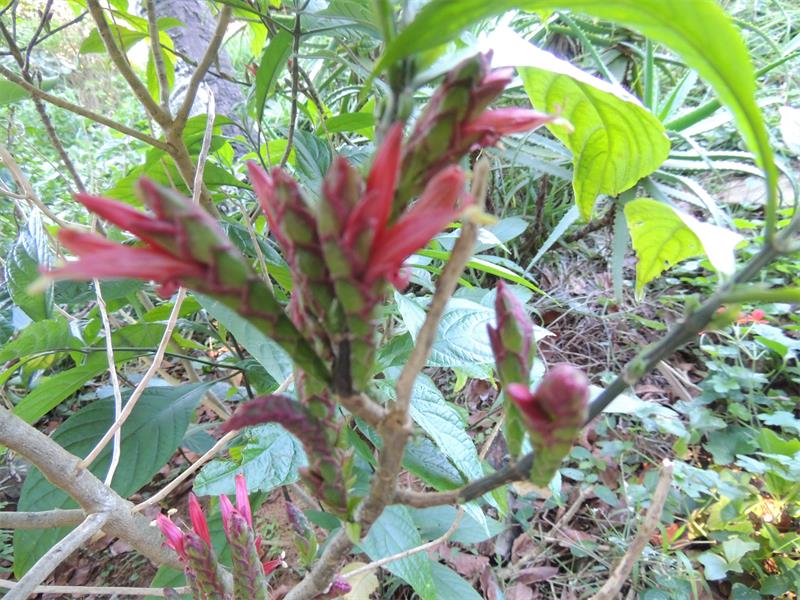
Not quite so easy to cultivate is a close and rather rare cousin of this useful native a plant. It is called Metarungia pubinervia or red sunbird bush.
I was lucky to obtain one at the annual Botanical Society Indigenous Plant Sale and Fair, held in Durban every year at the beginning of spring. If you love plants, you really need to get there.
Geoff Nichols, in his book, ‘112 Plants For You and Your bushbuck’, has an interesting story to tell about this species. “You can imagine my excitement in early April 2000 when a friend by the name of David Styles phoned me to say he had a specimen of a plant that he had never seen before.”
Geoff explains that David is a “keen member of a group of mildly eccentric plant nuts, of which, I must add, I like to include myself”.
This band of flower people spend quite a bit of time in the Krantzkloof Nature Reserve in Durban and that is where David found the puzzling plant.
Botanical boffs love a puzzle and soon they started doing some detective work, contacting a wider circle of botanical experts until the puzzling species was identified as a Metarungia pubinervia.
Needless to say, the exciting plant detective story adds value to my lovely plant and I am always thrilled when it rewards the attention I lavish on it by producing its lovely red flowers.
The red sunbird plant story also illustrates an important environmental issue as it highlights the need to look after our green beauty spots within our towns and cities.
YOU MIGHT ALSO BE INTERESTED IN : Invasives and Natives: Triffid trials and a soapy native
“Surrounded by a sea of suburbia above and a semi-informal settlement below, the Krantzkop gorges are a life raft for a vast number of plant species, many rare or endangered,” Geoff points out.
According to him, forest sunbirds like our grey, olive and collared sunbirds are the Metarungia pubinervia’s primary pollinators so, by making use of this species, you might well attract these little flying jewels to your garden.
HAVE YOUR SAY
Like our Facebook page, follow us on Twitter and Instagram
For news straight to your phone, add us on BBM 58F3D7A7 or WhatsApp 082 421 6033