May 14: On This Day in World History … briefly
One critical observer called the trial 'one of the most bizarre court-room sessions ever held in the United States.'
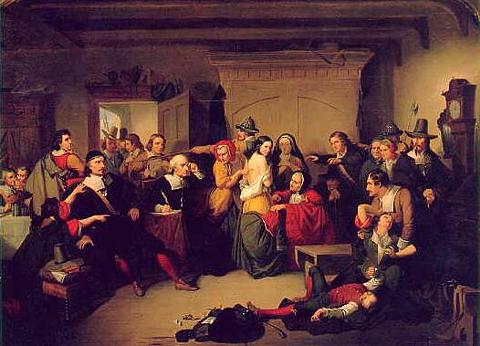
1878: Last witchcraft trial held in the USA
The Salem witchcraft trial of 1878, also known as the Ipswich witchcraft trial and the second Salem witch trial, was an American civil case held in May 1878 in Salem, Massachusetts, in which Lucretia LS Brown, an adherent of the Christian Science religion, accused fellow Christian Scientist Daniel H Spofford of attempting to harm her through his ‘mesmeric’ mental powers. By 1918, it was considered the last witchcraft trial held in the United States. The case garnered significant attention for its startling claims and because it took place in Salem, the scene of the 1692 Salem witch trials.
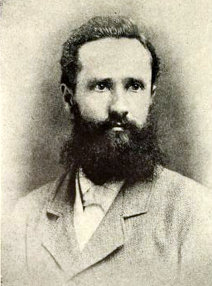
Lucretia Brown was a 50-year-old spinster who lived in Ipswich, Massachusetts, a town about 12 miles (19km) northeast of Salem, Massachusetts. An injury to her spine during childhood left her an invalid, but she said she had been healed through Christian Science. She suffered a relapse in 1877 and again in 1878 and accused Spofford of having interfered with her health through ‘mesmermism’. Her lawsuit stated:
“…that Daniel H Spofford of Newburyport is a mesmerist, and practices the art of mesmermism, and by his said art and the power of his mind influences and controls the minds and bodies of other persons, and uses his said power and art for the purposes of injuring the persons and property and social relations of others and does by said means so injure them.
And plaintiff further showeth that the said Daniel H Spofford has at diverse times and places since the year eighteen-hundred and seventy-five wrongfully and maliciously and with intent to injure the plaintiff, caused the plaintiff by means of his said power and art great suffering of body and mind, and spinal pains and neuralgia and a temporary suspension of mind, and still continues to cause the plaintiff the same.
And the plaintiff has reason to fear and does fear that he will continue in the future to cause the same. And the plaintiff says that the said injuries are great and of an irreparable nature, and that she is wholly unable to escape from the control and influence he so exercises upon her and from the aforesaid effects of said control and influence.”

Judge Gray dismissed the case, noting the claim was vague and the complaint ‘framed without a knowledge of the law of equity.’ The court ruled it was not clear how it could prevent such mental control, even if it were to imprison Spofford. Brown appealed the court’s ruling, but the appeal was dismissed in November 1878.

Most notable historic snippets or facts extracted from the book ‘On This Day’ first published in 1992 by Octopus Publishing Group Ltd, London, as well as additional supplementary information extracted from Wikipedia.
HAVE YOUR SAY
Like our Facebook page, follow us on Twitter and Instagram