September 26: On This Day in World History … briefly
The exact number of fatalities remains unknown because there were victims who managed to obtain passage on the ship at the last minute, and others who cancelled their tickets just before the incident occurred.
1954: Japanese ferry sinks during typhoon, killing 1 172
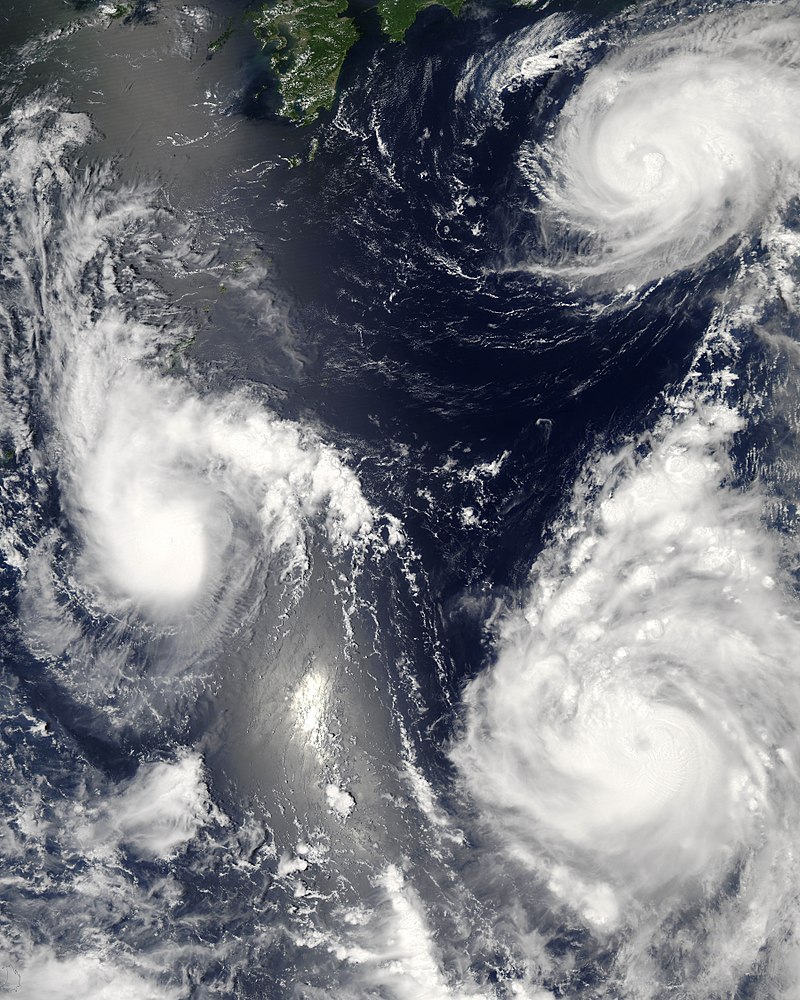
Tōya Maru was a Japanese train ferry constructed by the Japanese National Railways which sank during a typhoon, later known locally as the Tōya Maru Typhoon, in the Tsugaru Strait between the Japanese islands of Hokkaidō and Honshū on September 26, 1954. The Japanese National Railways announced in September 1955 that 1,153 people aboard were killed in the accident. Tōya Maru was launched on November 21, 1947. She was 118.7m (389ft) long and 15.85m (52.0ft) at her beam and she had a gross register tonnage of 3 898 grt (11 040 m3). She could accommodate 1 128 passengers and was operated by a crew of 120. She covered the distance from Aomori to Hakodate in four hours and 30 minutes. As early as 1950, she was fitted with radar equipment, becoming one of the first Japanese sea liners to be so equipped. She was used by the emperor the month before she sank and was also famous as the flagship of the Tsugaru Strait. Typhoon Marie, which had previously blown through Honshū, was in the Sea of Japan at 12 noon on September 26, 1954, heading northeast with wind speeds of more than 100 km/h. It was predicted to reach the Tsugaru Strait at around 5pm.
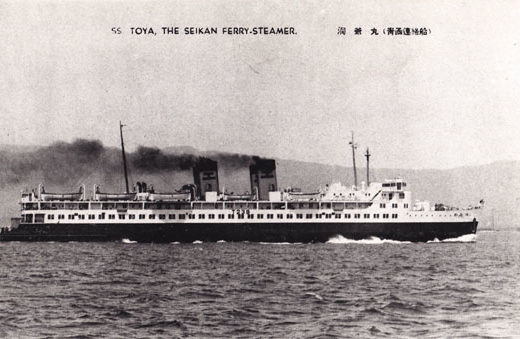
At 11am, Tōya Maru arrived at Hakodate after its first journey that day from Aomori. She was originally scheduled to return at 2.40pm, to arrive at Aomori just before Typhoon Marie. However, due to the expected storm, another ferry – Dai 11 Seikan Maru, a somewhat poorer quality vessel – could not depart on her scheduled journey to Hakodate. Therefore, passengers and vehicles were transferred to Tōya Maru, delaying her departure. The captain of Tōya Maru decided to cancel its journey at 3.10pm. At 5pm, following heavy rainfall in Hakodate, the weather cleared up and the outlook improved. The captain, presuming that the typhoon had now passed as predicted, decided to proceed with the journey to Aomori. However, by this time the typhoon had only slowed down and was predicted to remain over the strait for an entire day. Atypically, the typhoon gained strength in the Sea of Japan. It was considered to have already become an extratropical cyclone when it reached Japan. At 6.39pm, Tōya Maru departed from Hakodate with approximately 1 300 passengers aboard. Shortly thereafter, the wind picked up coming from a SSE direction. At 7.01pm, Tōya Maru lowered its anchor near Hakodate Port to wait for the weather to clear up again. However, due to high winds, the anchor did not hold and Toya Maru was cast adrift. Water entered the engine room due to the poor design of the vehicle decks, causing its steam engine to stop and Tōya Maru to become uncontrollable.
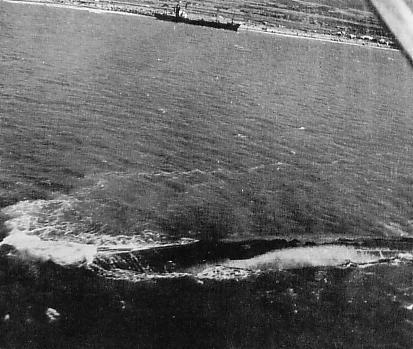
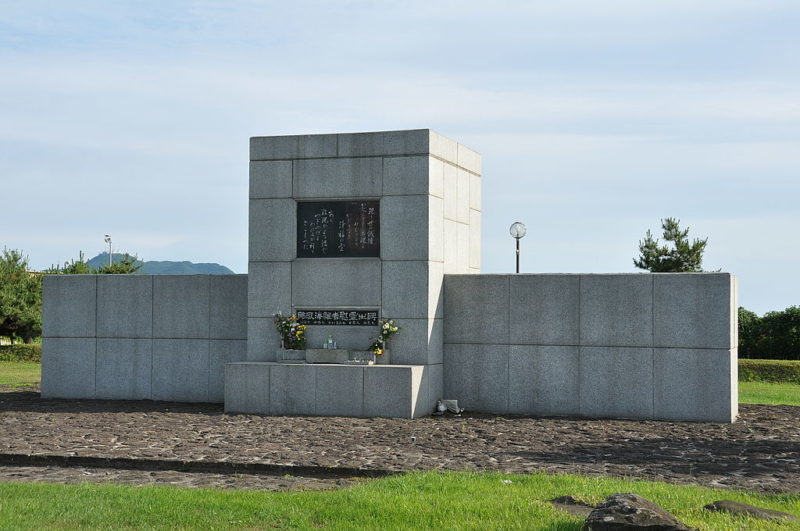
The captain decided to beach the sea liner onto Nanae Beach, on the outskirts of Hakodate. At 10.26pm, Tōya Maru beached and an SOS call was made. However, the waves were so strong that the sea liner could no longer remain upright and at around 10.43pm, Tōya Maru capsized and sank at sea several hundred meters off the shore of Hakodate. Of the 1 309 on board, only 150 people survived, while 1 159 (1 041 passengers, 73 crew and 41 others) died. Among those killed were 35 American soldiers from the US Army’s 1st Cavalry Division Artillery who were traveling from Hokkaidō as an advance party to set up a new camp (Camp Younghans) at Higashine, Yamagata, near Sendai. One soldier survived when he was swept through a port hole. Another, Second Lt George A Vaillancourt, Battery C, 99th Field Artillery Battalion, 1st Cavalry Division, was posthumously awarded the Soldier’s Medal, the highest non-combat medal at the time, for his courage during the tragedy. The football field at Camp Younghans was dedicated to Lt Vaillancourt on September 24, 1955.
Four other ferries sank in the same typhoon, making a total loss of life of 1 430.
Most notable historic snippets or facts extracted from the book ‘On This Day’ first published in 1992 by Octopus Publishing Group Ltd, London, as well as additional supplementary information extracted from Wikipedia.
HAVE YOUR SAY
Like the South Coast Herald’s Facebook page, follow us on Twitter and Instagram
To receive our FREE email newsletter, click HERE