

For the love of bees
Honey bees are certainly not pests and an average colony of bees can be 40 000 or more.
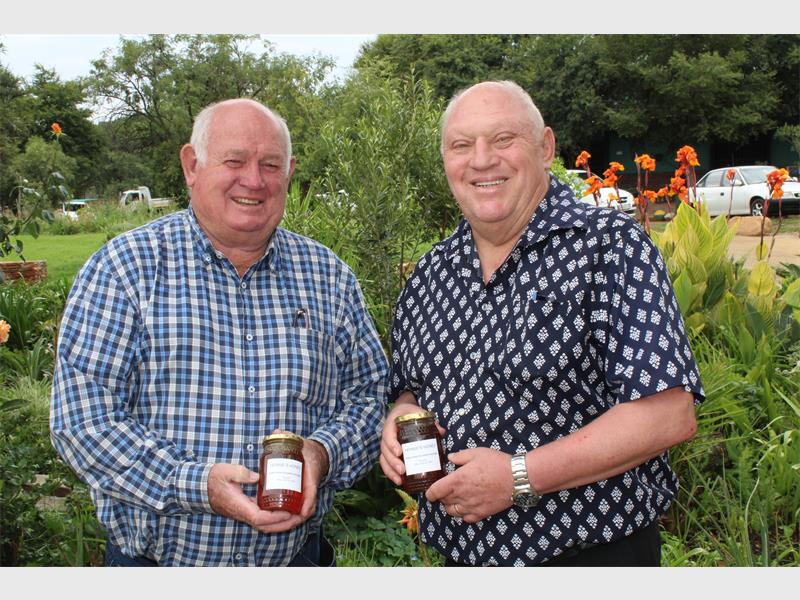
JOHANNESBURG South Garden Club welcomed guest speaker Hennie van der Merwe to its January 31 meeting, where he spoke about his love for bees.
“Bees are very structured insects and dutifully go about their business. Honey bees are certainly not pests and an average colony of bees can be 40 000 or more. About 13 000 of these bees will leave the hive during the day to collect nectar, water and pollen, while the other bees will stay behind in the hive to clean and guard the young larvae,” Hennie explained.
“There are two main species of bees in South Africa, apis mellifera scutellata, which is found throughout South Africa, except the Cape areas, and apis mellifera capensis, the Cape bee, which was originally restricted to the Western and Eastern Cape area. The scutellata species is commonly known as the African ‘killer bee’, which is known for its hard work and being ferocious, and has become this way trying to protect its supply of honey by those who don’t know how to collect its supply professionally.
“The capensis species used to be only found in the Western and Eastern Cape areas until they were introduced into the Transvaal in the 1980’s. These bees can reproduce their own kind through egg laying, while the scutellata can’t do this. Being invasive bees, the Cape bee roams and invades the scutellata hives, taking over and eventually destroying the scutellata swarm. A scutellata hive with Cape bees has to be destroyed to prevent the spread of the Cape bees to other hives,” said Hennie.
He explained what the various kinds of honey are, stating creamed honey is a honey that has begun to crystallise and this is then put through two marble rollers to crush the crystals. “If you buy a jar of honey and it starts to crystallise, don’t put it in the microwave as this will kill all of the goodness. Rather put it into the oven on 50 to 60 degrees celsius for about 15 minutes or put the jar in hot water,” said Hennie.
“Did you know there are even bees in the Sahara Desert? Morocco has the most beautiful honey,” he added.
“As well as being delicious to eat, honey also has healing properties. For bruising, smear honey onto the bruised area and cover with cling film. In most cases you’ll find the bruising nearly gone altogether by the next day.
“If you are stung by a bee, don’t rub the area where the bee stung you, scrape the sting out and apply methylated spirits.
“I’m also often asked why beeswax is so expensive. To produce one kilogram of beeswax, the bees have to eat 10 kilograms of nectar.”
This interesting talk was enjoyed by all the members.
If you have a swarm of bees in your home or garden or require emergency bee removal contact Ant Lawrence on 072 765 2603 (there is a cost involved).
If you would like more information on bees or beekeeping, phone the Southerns Beekeepers Association on 074 038 3315 or email: info@beekeepers.co.za.
Also Read:
Johannesburg South Garden Club May meetings
Joburg South Garden Club’s Christmas lunch
For free daily local news in the south, visit our sister newspapers Alberton Record, Comaro Chronicle, Southern Courier and Get it Joburg South Magazine.
Remember to visit our Facebook, Twitter and Instagram pages. You can also email our offices on cvdwalt@caxton.co.za, juliem@caxton.co.za or luckyt@caxton.co.za
Add us on WhatsApp today! Comaro Chronicle: 079 427 8074 and Southern Courier: 079 404 5789.