

Power of cuddles and kangaroo care help Mondeor twins’ recovery
The power of cuddling is celebrated at the kangaroo care unit.
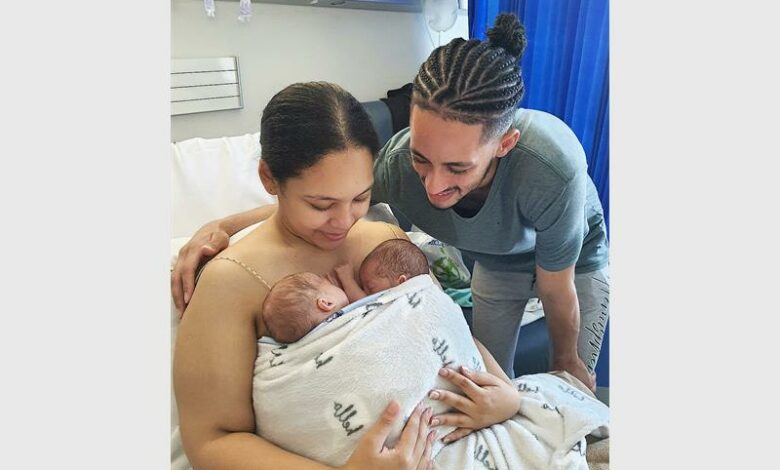
Mondeor twins, Aryan and Arianna who were born prematurely and underweight will experience their first Christmas with their parents after a rocky start to their lives.
Little did the parents know the healing power of cuddles and kangaroo care would be a big part of their babies’ recovery.
“Our twins were delivered at 33 weeks and were small babies – one was under two kilograms and the other just over,” said the babies’ mother, Nourah Wax, 10 months after their birth.
The newborn boy and girl had difficulty breathing and were transferred to the specialised neonatal unit at Netcare Garden City Hospital.
“These are my first children and it was very nerve-racking to be separated from them, as I had to remain in the hospital where I gave birth for another two days after they were transferred to the Garden City Hospital.
“As soon as I was discharged, I went straight from one hospital to the other to be with my babies – I didn’t even stop at home.
“I was so happy to see them. Their father, Antonio, and I were anxious about our precious babies at first. The doctors and nurses encouraged us to hold them, ensuring that our skin touched our babies’ skin as much as possible as part of their treatment. In my heart it felt instinctively good to be so close to my babies,” she said.
Verena Bolton, an experienced neonatal nurse and national coordinator of Netcare Ncelisa human milk banks added, “Kangaroo care, so named because it mimics the close contact of a mother kangaroo carrying her baby in a pouch close to her body, has particular benefits for premature or low birth weight babies. Although it is recognised as being valuable for all mothers and babies in appropriate circumstances.”
The World Health Organisation supports kangaroo care, which is close, continuous skin-to-skin contact between parents and babies in the first days, weeks and months after birth. This bonding practice is actively encouraged in Netcare maternity and neonatal facilities. Netcare Garden City Hospital is the first in the Netcare Group to establish a dedicated kangaroo care unit in recognition of the scientifically supported clinical benefits it offers.
“Not only does kangaroo care enhance breastfeeding and bonding, but it also has physiological benefits. Just as breastfeeding provides vital biological substances that ensure a healthy and normal digestive tract, skin-to-skin care ensures that a new born baby’s skin matures and develops a healthy micro biome that contributes to the development of a strong immune system,” noted Bolton.
Benefits of kangaroo care
Furthermore, kangaroo care has shown added benefits, including better temperature regulation for the baby and improved cardiac and respiratory function. When a baby is nursed in this way, they tend to have more stable heart rates, more regular breathing, stable blood pressure and better oxygen saturation levels,” Bolton explains.
“Benefits for the mother include increased production of breast milk. Both parents feel the strength of that close early bonding experience and the emotional well-being that comes with holding your child and giving them your protective loving warmth,” explained Bolton.
The twins’ father Antonio was hands-on from the beginning. “My husband loved the kangaroo care. He thinks it was the best thing ever. With two babies, we wanted them both to have the full benefit of every kangaroo care session and so while I was cuddling one baby, daddy would ‘kangaroo’ with the other.
“Sr Trudie Botha, manager of the kangaroo care unit, explained that it has to be skin-to-skin contact. The baby is wearing just a nappy and they strap them onto the mother or father’s naked chest. You can feel every breath they take. You can feel each other’s hearts beating and you get to know your baby’s unique scent. It’s like you can feel their every need. You can connect more with your baby when you are that close and in our experience, we felt it was excellent for bonding,” said Nourah.
At first, the parents would have three kangaroo care sessions a day with their babies and later Nourah was able to stay in the hospital for a week. “That week, I would kangaroo with my babies all day, it was wonderful, and I could see them getting stronger every day,” she recalled.
After three weeks at Netcare Garden City Hospital, including two weeks in the kangaroo care unit, Aryan and Arianna gained weight. their breathing improved and they could go home for the first time with their parents.
“Now 10 months later I want to thank the hospital, the doctors and the nurses for looking after our babies so well. The nurses were so involved and handled them with such care that it felt like they were our babies’ second family.
“We are looking forward to a big family Christmas, a very memorable one for us because we will be celebrating our first Christmas as parents with our twins,” said Nourah.
Bolton added, “The kangaroo care unit at Netcare Garden City Hospital is one example of how families are encouraged to become co-carers. This is making them active members of the healthcare team, contributing to the well-being and development of their baby to ensure better overall underdevelopment outcomes.
“Emphasising the importance of bonding by facilitating kangaroo care is an inclusive practice that not only enhances the role of parents as co-carers. It also empowers parents and makes them less fearful of taking their baby home. It helps facilitate a smooth transition from hospital to home, which we believe is a fundamental aspect of the family-centred care we provide.”