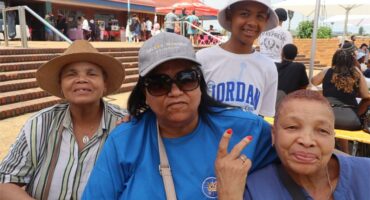
Cancer survivor Ouma Mamatela shares her journey leaving with breast cancer
Mamatela was diagnosed with breast cancer in 2015, after having to go through the ups and downs of Chemotherapy she was to face the sad reality of having both of her breasts removed.
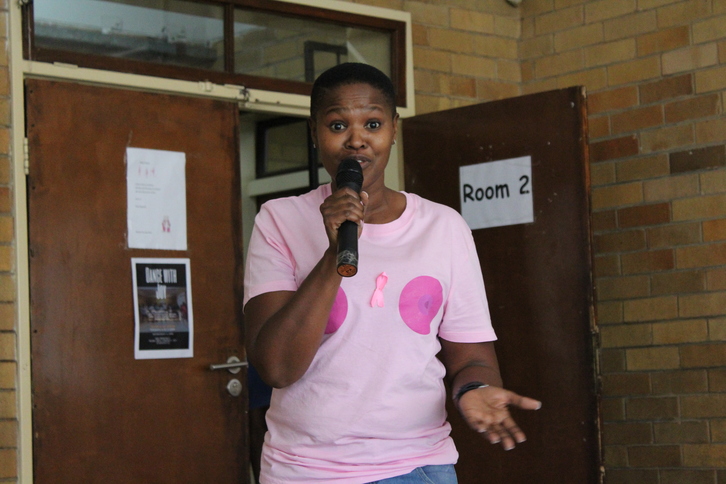
On February 28, Ouma Mamatela who is a breast cancer survivor and counsellor at the Helen Joseph Breast Clinic shared her story of how she beat breast cancer.
Mamatela was diagnosed with breast cancer in 2015, after having to go through the ups and downs of Chemotherapy she was to face the sad reality of having both of her breasts removed.
The survivor shared that breast cancer is not painful but it is a silent killer. Mamatela said that she realised that one just needs to be grateful for life, and just be happy. She demonstrated to the residents who attended the awareness event on how to examine their breasts and said that it is not just women who should do the examination on themselves but men too.
[also read] – Men fight cancer at the Hollard Dare Devil Run
The early signs of breast cancer is; a hot, tender breast, changes in the breasts skin, a lump or swelling in the breast, collapsed nipple or spontaneous discharge (Mamatela also mentioned that people need to stop pressing their nipples to see if something comes out), itching around the nipple or change in skin, change in the shape of the breast, unusual swelling in the armpit and specific areas of pain or tenderness.
Mamatela recommended that residents get familiar with their bodies and that they should at least do the examination once a month so that if there are any changes, one can go to the breast clinic for a check-up at Helen Joseph.
According to the counsellor, residents can visit the breast clinic on a Tuesday with a cost of R75 for an examination by the doctors at Helen Joseph Breast Clinic. Breast examinations at home can be done as follows, according to the Breast Health Foundation:
Feel for any changes in the breast tissue that could feel like a thickening or a hard lump
1. Changes are more easily detected when laying down, and ideally when your hands are wet and soapy; in the bath or shower. Use the three middle fingers on either hand to examine the opposite breast.
2. Using light pressure, then medium than firm pressure in a circular motion on your breast.
3. Now feel for any changes above and below your collarbone and in the area of your armpit.
4. Now repeat on your left breast.
If you go for an examination at the breast clinic there is a change that you will get sent for an ultrasound or mammogram, (mammograms are for people over the age of 40.) For more information on breast health, you can call 086 028 3343 or visit www.mybreast.org.za
Follow Us Here:
Catch the latest news by visiting our other platforms: