
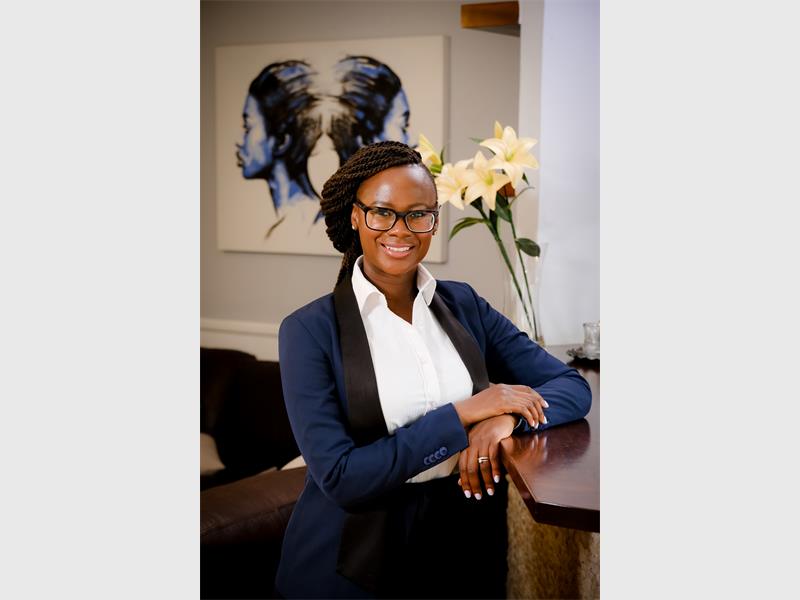
Dr Lydia Kilani (36) is living her childhood dream.
As a young girl the only thing she ever wanted to be was a doctor.
After 12 long years of studying, internship and community service, she’s a general surgeon at Life Springs Parkland Hospital.
How did you know you wanted to be a doctor?
Growing up, there were these magazines that were sold that focused on different educational things for children.
When they started the series on the human body, I was fascinated by it.
I wanted to understand how the human body worked, the organs, and more.
I begged my parents to buy them for me. I couldn’t see myself doing anything else.
Also read: Get to know Pastor Jonathan Coates
Is your fascination with the human body the reason you went into general surgery instead of other specialities?
Yes, I did medicine so I could become a general surgeon.
Most people, when I tell them that I’m a general surgeon, ask what part of the body is that?
Then I have to tell them it’s literally every part of the body, from head to toe.
That’s why I love it. One day you’ll be operating on the thyroid in the neck, the next day an ulcer in the stomach and then the breast.
So I love that. One day is never the same as the next.
How long have you been a general surgeon?
I graduated in 2018 from Wits.
It’s a five-and-half year programme to become a general surgeon after you’ve qualified as a doctor, done your internship and community service.
So I got my specialist certificate in 2018, but you’re constantly learning.
There’s always more you could learn, different courses you can do, new techniques coming up every day.
You’re going to different units to glean specialised skills from them.
The minute a specialist says they’ve stopped learning is the minute they become redundant or obsolete.
Also read: Get to know the proposed automotive industry code of conduct
How has Covid-19 affected how you do your job and the patients coming in?
As surgeons before Covid-19 we sat back and waited for people to come to us.
You would go to your GP and they would then refer you to us.
Even people who find a lump in their throat would come and ask us to investigate.
But now, with Covid-19, people are scared to come to the hospital.
The one thing I want to stress is that hospitals, if you come for the right reasons and if you follow the protocols, is probably one of the safest places you can be.
Don’t run away from the hospital if you have a legitimate issue.
You’re a surgeon that operates on women who have breast cancer. How is it treated?
The first thing we do once we’ve confirmed your lump is figuring out what stage your breast cancer is at.
Is it confined to your breast?
Breast cancer can go anywhere in the body, but it loves going to bone, the liver, chest and brain.
So we screen for those organs, always.
Once you’ve been diagnosed with breast cancer, that now puts you in a different category of treatment. Treatment is based on the stage you’re in.
You need a multidisciplinary team to treat breast cancer.
Surgery is the most important and I work with the oncologist, the radiologist and the radiation oncologist.
Giving the patient added therapies like radiation or chemotherapy along with just taking out the lump can save their breast and gives you as good a survival rate as if we just cut off the whole breast.
Also read: A dream come true for aspiring teacher
You’re passionate about women’s health and have recently started the Maboneng Centre for Women’s Health at Parklands. How did that come about?
It really wasn’t planned. I started here two years ago and I’m the only female black general surgeon.
While I love my colleagues, there are certain things women aren’t comfortable seeing men for.
They want someone they can relate to.
I just got thrust into this platform of, “I really want to see Dr Kilani, she’ll understand when I tell her”.
It’s easy to talk to a woman. So I was kind of thrust into that space.
And then I thought there’s a need for a place like the Maboneng Centre for Women’s Health.
Are you going to cater to specific conditions?
Any surgical issue a woman has we will be able to deal with it.
We’re focusing a lot on breasts because October is Breast Cancer Awareness Month.
But after that we’re going to be doing more campaigns and educating women about other parts of their bodies.
We’ve tried to be holistic in our approach, so not just the surgery side, but the psychological side with a psychologist, dieticians, plastic surgeons, and more.
As women we can relate to other women and the things they’ve been through.
Follow us on social media: